Nine months is an absurd amount of time to prepare for a moment that most people experience as a click. In July 2025, an American shopper could discover Nuki's new smart lock, read a review, watch a YouTube demonstration and buy it on Amazon before lunch. To the shopper, the whole thing looked immediate. To Cliffhanger, the Miami Beach communications agency behind the U.S. introduction, it had begun three seasons earlier.
The firm started by introducing Nuki to technology and lifestyle journalists. Two months before launch it began embargoed outreach, placing more than 15 test units so reviews could arrive together. Founder interviews and influencer content followed. On launch day, Cliffhanger counted 43 earned stories, more than 317 million impressions and over 100,000 YouTube views; its later case study puts the campaign total above 503 million impressions. The theatrical reveal was really an exercise in calendar management.
This is the useful thing about Cliffhanger. Its name suggests suspense. Its public work suggests choreography.
- Map each audience
- Brief trusted reviewers
- Stack proof and voices
- Release in concert
A story has more than one door
Cliffhanger is a privately held agency led by CEO Brian Metcalf. The current Florida company was formed in 2024, but its operating history runs through GreenRoom, the agency Metcalf co-founded in 2012. GreenRoom first specialized in social media, then widened into public relations and digital marketing. Cliffhanger carries that hybrid instinct forward. Its service list spans earned media, analyst relations, awards, whitepapers, investor communications, affiliate programs, media training, experiential work, crisis preparation and influencer relations.
That long menu makes more sense when you look at the clients. A radon monitor is a technology product, a health product, a parenting product and, in January, a seasonal news hook. A home energy monitor belongs in consumer electronics reviews, but it also belongs in an EV owner's forum, a discussion about electricity bills and an executive's argument about the grid. Cliffhanger's work is to find every legitimate door into the same room.
“Our strategic approach tracks back to business objectives.”Cliffhanger, describing its method
Consider Airthings, the Norwegian maker of indoor-air monitors. Before CES 2019, Cliffhanger built a pipeline of product testing, expert commentary and award entries. Technology writers got a smart-home device. Parenting outlets got a way to discuss the air children breathe. Health reporters got the overlooked danger of radon. A former Olympic hockey player who had developed lung cancer after radon exposure gave the issue a human voice.
The campaign produced national television coverage, a CES Editors' Choice award, a CES Innovation honor and recognition from Time and Fast Company. Cliffhanger reports 1.93 billion online impressions from January CES coverage alone. When the athlete's interview circulated through the news cycle, Airthings' sales and web traffic spiked. The website temporarily went down. In most businesses, a crashed website is a failure. Here it was also a rather dramatic receipt.
The first plan is allowed to become wrong
The sharper example is Emporia Energy. Cliffhanger began its digital program conventionally: create content, publish consistently, manage the community. Then the team noticed that the most valuable activity was not happening beneath its own posts. Customers were asking detailed questions about energy monitors, smart plugs and EV chargers across Reddit and owner forums.
So the program changed. Cliffhanger monitored mentions and created official accounts wherever Emporia was already being discussed, including forums for Ford Mustang Mach-E and Rivian owners. The brand entered after a customer mentioned it, answered questions and clarified claims. The posture mattered. It was closer to technical support than a sales ambush.
There was a physical obstacle too: some products needed an electrician, and testing an EV charger required an EV. That made quick review cycles impractical. Cliffhanger leaned harder on briefings, podcasts, bylined articles and YouTube demonstrations. Later, it retargeted visitors who had considered Emporia's $399 charger but had not bought it. The agency reports a 16.3-times return on ad spend and says Emporia reached the top EV-charger position on Amazon during the cited quarter.
This is not a magic trick. It works because the team was willing to demote its original content calendar when customer behavior revealed a better one.
Small lists can make very large numbers
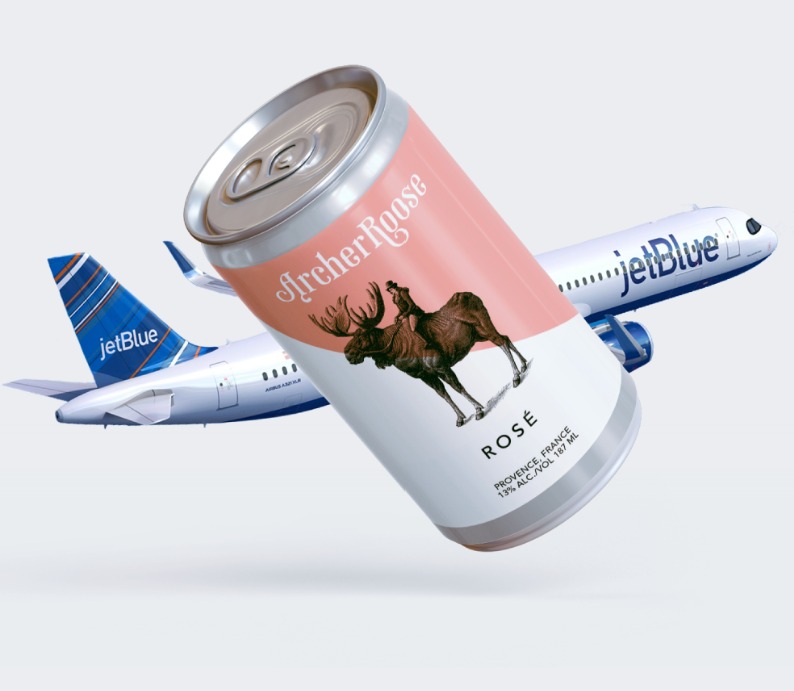
For Archer Roose, Cliffhanger helped introduce canned wine aboard JetBlue. The eventual totals were enormous: 37 placements and roughly 488 million online impressions for the announcement, with more than 175 placements in the first ten months of the agency relationship. But the revealing number is 25.
That was the size of the handpicked media list that received personalized, sustainable mailer kits ahead of launch. Cliffhanger and JetBlue first shaped a compact story around quality, adventure and lighter packaging. They sought an exclusive, prepared reviewers, distributed the broad announcement and kept the campaign moving with influencers as the airline switched from Sauvignon Blanc to Rosé. One billion eventual impressions began with 25 specific people.
The agency occupies a busy market. A brand can hire a global network, a boutique specialist, an influencer shop, a performance agency or its own communications team. Cliffhanger's case is that these functions should touch. An earned review can supply the credibility for a retargeting ad. An expert interview can make a technical category intelligible. An influencer's demonstration can answer the practical question a press release cannot.
Its portfolio crosses smart locks, metal detectors, radar sensors, energy monitors, bamboo sheets, licorice and canned wine. Range alone is not differentiation. The interesting part is the repeated habit beneath the range: split the audience, locate the friction, choose a messenger and build each moment so it increases the odds of the next.
What a smaller team can borrow
- Begin before there is news. Relationships and testing time are part of the launch.
- Write a different reason to care for every audience instead of sending one universal pitch.
- Put credible evidence in circulation: reviews, data, awards, expert access and customer experience.
- Watch where real questions appear. If the community moves, move the program.
- Connect attention to a next action, whether that is a product page, retailer, affiliate link or informed reply.
Attention needs somewhere to land
There are conditions behind the method. It depends on a product sturdy enough for testing, experts worth interviewing, access to useful evidence and a client willing to prepare early. Synchronized reviews cannot rescue a disappointing device. A community account that arrives only to sell will be treated like one. A sudden television hit is less valuable if inventory, support and the website cannot absorb it.
Cliffhanger's own language is blunt: it will not tell a client what the client wants to hear. That is sensible, because the public relations business is full of flattering abstractions. Awareness. Buzz. Reach. The agency's better work happens when those words are forced into an order of operations.
First, decide who must care. Then understand why they might. Give a credible person something specific to say. Let reviewers touch the product. Prepare the destination. Repeat across the audiences without pretending they are all the same. The public gets a launch day. The publicist gets nine months.