The origin of BML Public Relations is almost comically modest. In 2006, Brian M. Lowe took a $300 press-release project and began an agency. Not a seed round, not a strategic roll-up, not an origin myth burnished by a communications department. Three hundred dollars and a document. The company that followed would eventually become much more interested in things that cannot fit inside a document: a pineapple with pink flesh, a pizza that tastes like autumn, an Olympian deliberately beginning a race in last place.
This is the useful contradiction at BML. It is a public-relations agency, but its signature work often happens before the public relations begins. The team tries to manufacture the fact that makes the pitch worth opening. A press release can describe a pink pineapple. It cannot make the pineapple pink. Once the strange object exists, the distribution problem becomes easier because the product and the headline have collapsed into the same thing.
The press release escaped into the real world
Lowe came out of large-agency consumer work on brands including OREO, Verizon, Progressive Insurance, BRILLO, Disney Mobile and Campbell's Chunky Soup. He built BML in Florham Park, New Jersey, as an independent shop. Today its menu is broad: media strategy, message development, press materials, product launches, events, media training, crisis work, internal communications, content production, community management and influencer relations.
The business model is less exotic than the output. Brands hire the agency for customized communications engagements; BML does not publish a rate card. Its customers tend to be consumer-facing organizations for which attention can move traffic, trial, tickets or reputation - restaurants, franchises, retailers, travel businesses, entertainment properties, food companies and home brands. It is a services company whose most recognizable products are temporary moments.
BML's preference is explicit: lead with earned media, then amplify. That sounds like an argument about channels, but it is really an argument about quality control. Paid distribution can force a message into view. Earned distribution first asks whether anyone outside the company finds the message interesting. It is a harsher test. BML's answer is to make the story physical, photographable and easy to repeat.
A fruit that carried its own headline
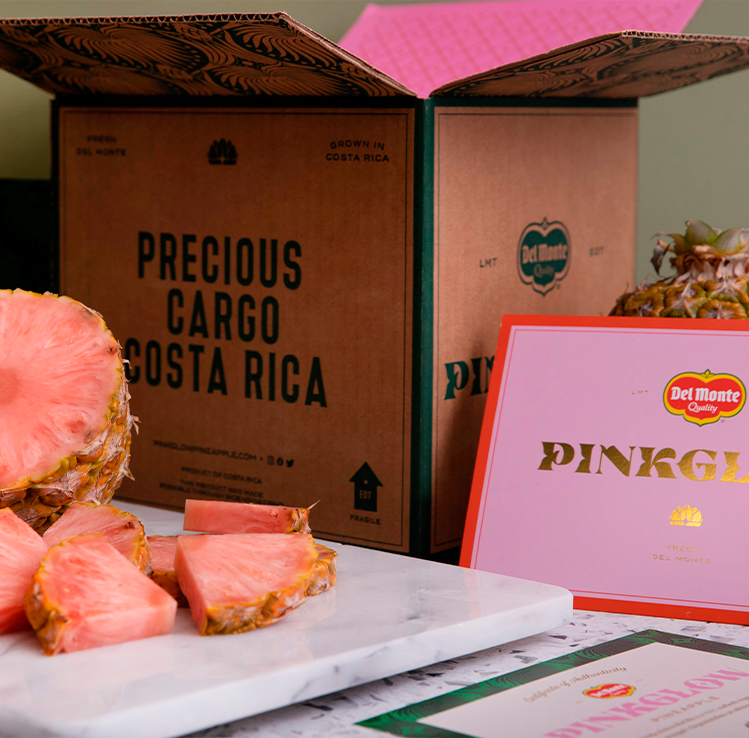
Fresh Del Monte's Pinkglow pineapple is the cleanest example. The inside of the fruit is pink. BML built the launch around that novelty, sending product to media, targeting national and local outlets, and adding a giveaway for a virtual party with pineapples for ten people. The agency reports more than 800 stories, 2.6 billion impressions and tens of thousands of pineapples sold. Those are BML's campaign figures, not an audited census, but they reveal what the firm thinks success looks like: coverage, reach and business movement in the same frame.
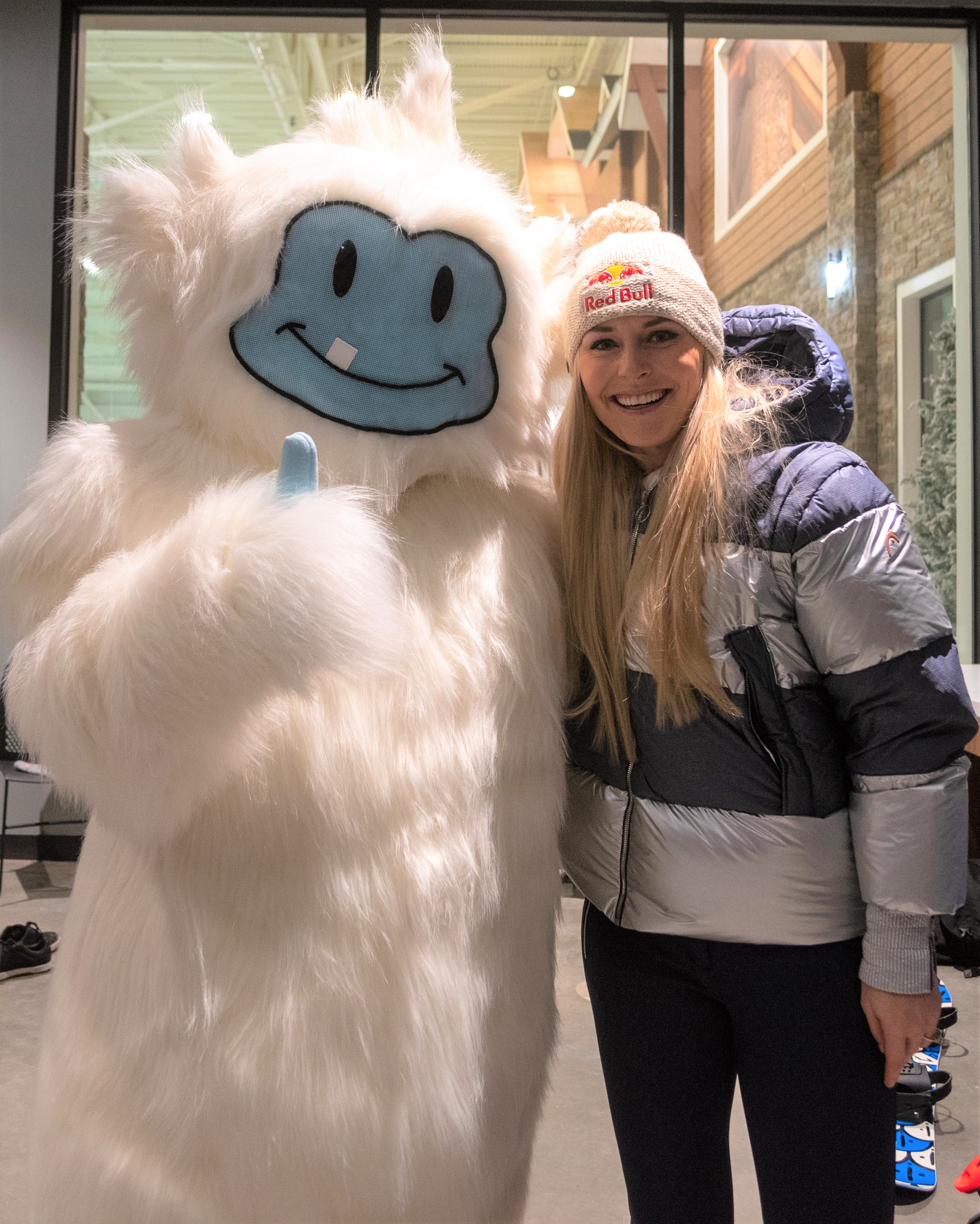
At Big SNOW American Dream, the raw material was different but the logic held. The indoor ski destination had been delayed for years. BML turned opening day into a visual event with Olympic athletes Lindsey Vonn, Kelly Clark and Red Gerard, plus on-snow experiences created for national media. The company reports more than 1,000 stories, 1.9 billion impressions and consistently sold-out sessions.
Scale is relative to the largest campaign shown. Figures are published by BML.
The lipstick did not work the first time
The cheerful portfolio can make invention look instantaneous. Pepperoni Pucker, a pizza-flavored lipstick created for Villa Italian Kitchen, is the corrective. The assignment began with an ordinary business problem: the restaurant chain wanted more email registrations and hoped to lift average store reviews from 4.1 to 4.3 stars. BML found National Kissing Day on the calendar and proposed lipstick that smelled and tasted like pepperoni pizza.
Then reality objected. Finding a company willing and able to manufacture the thing became the first obstacle. The team located a dozen laboratories and tested several versions before settling on the formula. This is the overlooked half of a stunt: procurement, iteration, packaging, photography, legal checks, delivery. The weird idea earns nothing while it remains on the whiteboard.
Once made, the lipstick became the reward for joining Villa's email list. BML sent imagery and video to food, lifestyle, beauty and features reporters. According to Ragan, the campaign produced 348 stories and more than 500 registrations. Average reviews reached 4.5, beating the original target. It also won a PR Daily award. The novelty was not the objective; it was the mechanism attached to the objective.
Starting last was the whole point
The most elegant BML idea may be the least edible. For the first in-person ASICS Falmouth Road Race after the pandemic interruption, Olympic marathon bronze medalist Molly Seidel began behind everyone else. Every runner she passed triggered a donation to Tommy's Place, a vacation home for children with cancer. She passed 4,761 runners. The race doubled its pledge; sponsors and the charity matched funds; the total reached $38,088.
Notice how little translation the idea needs. The athlete's progress is the fundraising meter. Her celebrity matters, but only because it powers the mechanic. A conventional appearance would have produced a photograph. Starting last produced a plot.
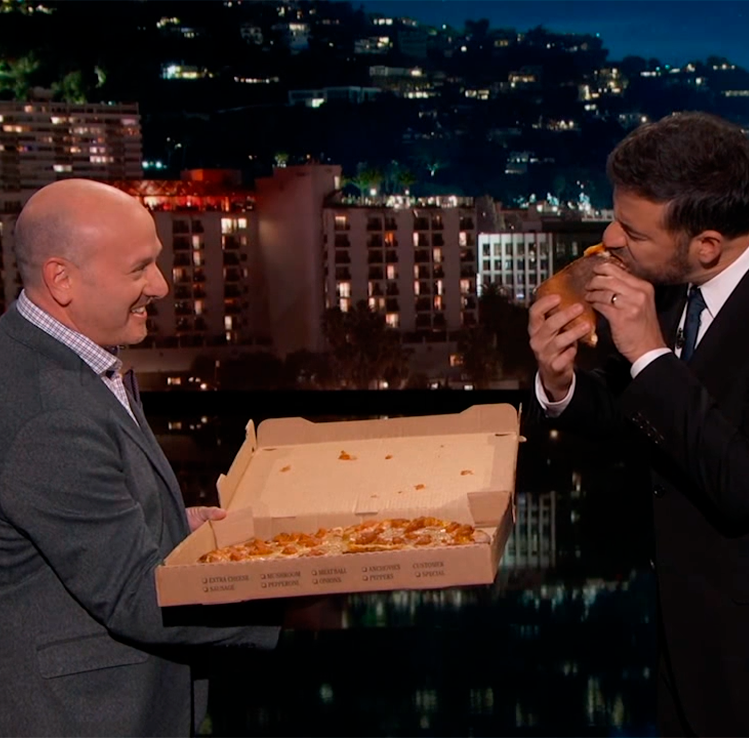
Pumpkin-spice pizza worked by another route: disagreement. BML timed Villa Italian Kitchen's product to the first day of fall and made it with pumpkin-pie filling and mozzarella. People who disliked the idea were almost as useful as people who wanted a slice, because both groups repeated the premise. BML reports 990-plus stories, one billion impressions and 90 million social mentions. The product reached national morning shows and Jimmy Kimmel's desk.
The copyable part is not the costume
A marketer could glance at this portfolio and conclude that the lesson is to make food behave badly. That would be a costly misunderstanding. A $10,000 pizza bikini is memorable, but arbitrary weirdness exhausts quickly. The more durable method has four parts: begin with the commercial or reputation problem; locate a familiar cultural tension; turn that tension into an action or object; make participation advance the original goal.
This approach suits products with visual novelty, franchises that need local and national hooks, attractions that can host an event, and causes with a countable action. It is less convincing when the spectacle has no honest connection to the brand, when operations cannot satisfy the attention generated, when the subject demands restraint, or when the audience would reasonably see the joke as trivializing the problem. Crisis counsel and internal communications require a different register than pumpkin pizza.
That boundary explains where BML sits in the market. It is smaller than the global networks and broader than a lone publicist. A reported staff of roughly 14 can offer senior involvement and fewer layers, while still handling social, events, issues and media relations. The tradeoff is execution risk: when the campaign depends on a lab, an Olympian, a television booking and fresh pizza arriving hot, the agency cannot hide behind strategy slides.
BML's competitive idea is not simply that a small agency cares more. Every boutique says that. Its sharper claim is that earned attention should be designed into the work before distribution begins. The press release is still there, somewhere. It just has to keep up with the pineapple.
Keep exploring BML