creator-tools
(45)
Peatix sells the ticket. The return visit is the real business.
A ticket gets you through the door. Peatix wants to give you a reason to come back - and its latest redesign admits how much work remains between those two things.
Allstar gives your best game a second life
The clever part of Allstar happens after the match: game data becomes a shareable video, with the editing work done in the cloud. Its business grew by making that small act of showing off easier.

BlogTalkRadio gave everyone a radio station. The telephone was the trick.
A phone call became a live show, then a podcast. BlogTalkRadio made broadcasting approachable - and its January 2025 closure exposed how much a creator can leave inside somebody else’s platform.

Descript and the Power of the Delete Key
An audio-tour company built an editor for its own headaches. The editor became Descript - and turned a humble transcript into a new way to make video.
Threads and the trouble with a borrowed crowd
Instagram could get people through the door. Keeping them there required a different guest list - and a lesson in the unglamorous business of building a habit.

The Million-Dollar App and the Price of an Edit
A fitness creator spent years and, by his account, more than $1 million on a custom app. Passion.io offered him a less glamorous prize: the power to fix the next thing himself.

The Social Media Company That Showed Its Work
Buffer began with a queue for tweets. It grew into a business that publishes its salaries, revenue, and mistakes - including the hiring spree that forced ten layoffs.
Mewtant Found a Business in the Margins of the Picture
Its product, PixAI, began with a simple bargain: describe an anime character and see one appear. The more interesting business emerged after the image was made.
The Camera Inside the Headset
VR is thrilling to inhabit and famously dull to watch. LIV built a business by fixing that awkward translation - first with green screens, now with a camera that lives inside the game.

The Four-Day App That Taught Podcasts to Answer Back
Castbox started as a holiday-weekend Android experiment. Its lasting bet was stranger and more useful: if every spoken sentence could become an index, a podcast library could behave less like radio and more like the web.
The Podcast Company That Outgrew Podcasts
Podcastle began by turning articles into audio. Six years later, it changed its name because the product had become an AI studio, a model switchboard, and a voice API - all before the market finished deciding what a podcast tool should be.

Two People, Thirty-Five Days, and a Very Different Game Studio
Series Entertainment began with an AI engine for professional game makers. Three years later, it is testing a bigger wager: that the studio, the store, and the audience can become one product.
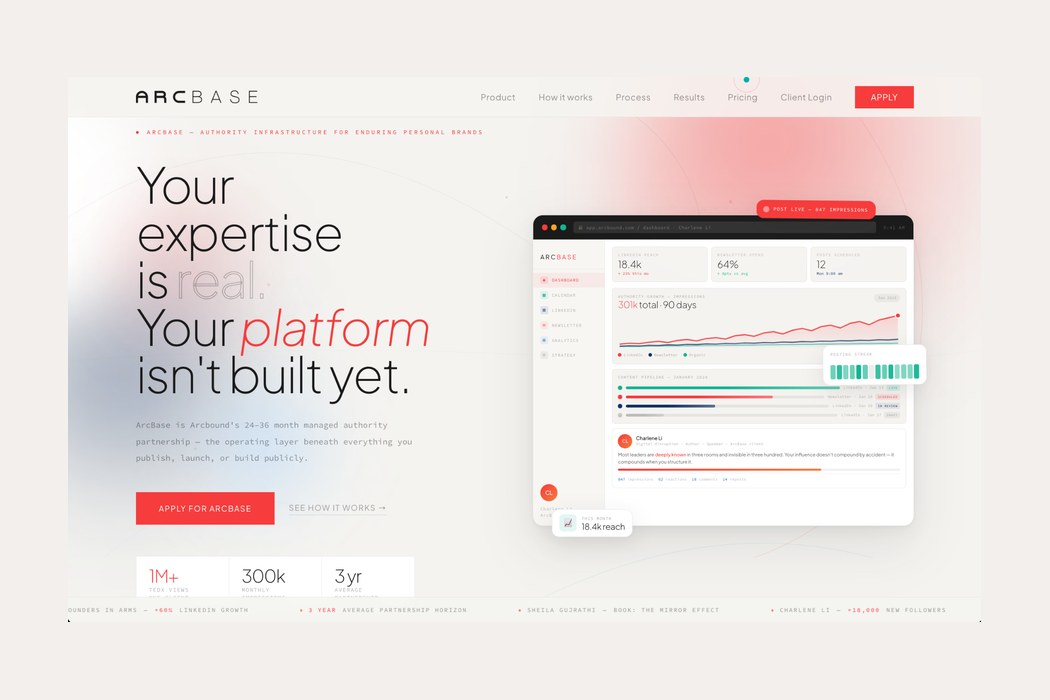
Arcbound Learned That a Personal Brand Is Not a Posting Schedule
It began with $20,000 of debt and an $800-a-month writing offer. Eight years later, Arcbound is betting that serious reputations need infrastructure, not an endless appetite for posting.
Artlist Sold Filmmakers One Simple License. Now It Wants the Whole Editing Room.
A filmmaker’s complaint about expensive music licensing became a $300 million recurring-revenue business. The next wager is harder: make generative AI behave less like a slot machine and more like a film set.
OpusClip Paid People to Use Its First Product. Then One Feature Found 5 Million Users
The livestreaming app stalled at roughly 200 users. Its clipping tool did the opposite - revealing a useful lesson about product-market fit, creator software and the limits of one-click editing.

Genies Burned Through Three Internet Eras to Make AI Wear a Face
The Los Angeles startup began with animated news, found money in celebrity cartoons, rode the NFT wave, and emerged with a more practical bet: persistent, game-ready AI characters. The lesson is not to predict the next platform perfectly - it is to keep the expensive technical core while replacing the story around it.

Sony’s Quiet Trick: Own the Camera, the Console and What Plays on Both
Sony spent decades assembling a strange collection of consoles, cameras, songs, films and sensors. Now the collection is becoming a system - and its smartest lesson is knowing when the pieces truly reinforce one another.
The $1,699 Lens That Explains Tamron’s 76-Year Bet on Doing More With Less
Tamron built its name by squeezing more range into less bag space. Its newest ultra-wide lens shows how a 13-person polishing shop became the Americas’ quiet alternative to camera-brand glass - and what builders can copy from the journey.

The Company Betting Creators Will Pay Rolls-Royce Prices for a Light
Formerly Hobolite, Harlowe makes photography lights that reviewers compare to Leica and Hasselblad. Here is how a lighting brand decided that taste, not lumens, was the thing worth selling.

The $80 Cable That Turned One Filmmaker Into a Camera-Gear Founder
Kondor Blue started with a filmmaker, a newly released camera and an absurdly expensive cable. Seven years later, it is trying to build the connective tissue around the modern camera - without losing the on-set instincts that made the business work.
The NFT Toolkit That Became Takashi Murakami's Tech Shop
NiftyKit spent the NFT boom making smart contracts feel less like software engineering and more like a creative tool. Then Takashi Murakami's company bought the whole shop - and the public platform went dark.

The Guitar Case That Decided Soft Didn’t Mean Fragile
MONO built a premium business around an unglamorous anxiety: getting a beloved instrument from the bedroom to the stage without breaking it. Its answer is part gig bag, part industrial-design thesis, and increasingly an entire mobile rig.
Snap Is Building the Computer That Hopes You’ll Look Up
Snapchat made disappearing photos feel natural. Now Snap is using that private, camera-first habit - plus ads, subscriptions and an army of Lens creators - to finance a much stranger bet on what comes after the phone.

Kickstarter
Kickstarter made the crowd a gatekeeper for creative work. Now it is trying to solve the less romantic part of the bargain - everything that happens before the campaign opens and after the funding meter turns green.
OpenSea
The company that taught millions to browse NFTs is rebuilding itself as a front door to the entire onchain economy. Its second act stretches from digital art to tokens, perps and stock-linked assets - without taking custody of the wallet.

Uscreen
The bootstrapped platform behind $1 billion in creator earnings is betting that the future of video isn't a bigger audience - it's owning the one you already have.
Podia
The all-in-one platform where 15,000+ creators sell courses, coaching, and community - and keep the whole business under one roof.

Kajabi
Kajabi is the operating system for human expertise - helping real experts build, sell, and grow trusted businesses with clarity, momentum, and AI-powered support.
Disciple
The London company behind branded community apps for the Rolling Stones and hundreds of quieter passion groups wants creators to stop renting their audiences from Facebook.
Circle
Build a home for your community, events, and courses - all under your own brand.