In virtual reality, the camera begins in the worst possible place: strapped to the face of the person having all the fun. The player ducks, twists and waves two plastic controllers with operatic conviction. The recording shows a nervous rectangle lurching through a synthetic room. It is accurate in the narrowest sense and false in every useful one.
- It gives VR games a controllable camera for video, screenshots and live streams.
- Its tools are free for game developers and creators; commercial licensing and production work sit behind them.
- Meta chose LIV as its recommended Quest capture solution in 2024.
- The copying lesson: put the sharing tool inside the experience, then remove every expert step you can.
AJ Shewki noticed this in 2016 when he tried to stream VR on Twitch. First-person footage did not explain the physical joke of the medium. So he and co-founder Steffan Donal used a green screen to place the player's real body inside the digital scene. Now the audience could see cause and effect: an arm swung here, a glowing block broke there. A clip could carry some of the experience through a flat screen.
That is what LIV does. Its Steam app still performs the signature PCVR illusion, compositing a person or avatar into a game. Its newer Creator Kit gives Unity and Unreal developers something broader: a camera object players can summon inside the world, point like a tablet, switch among selfie, first-person and third-person views, and use to record, photograph or stream without external capture software.
The box that did not travel
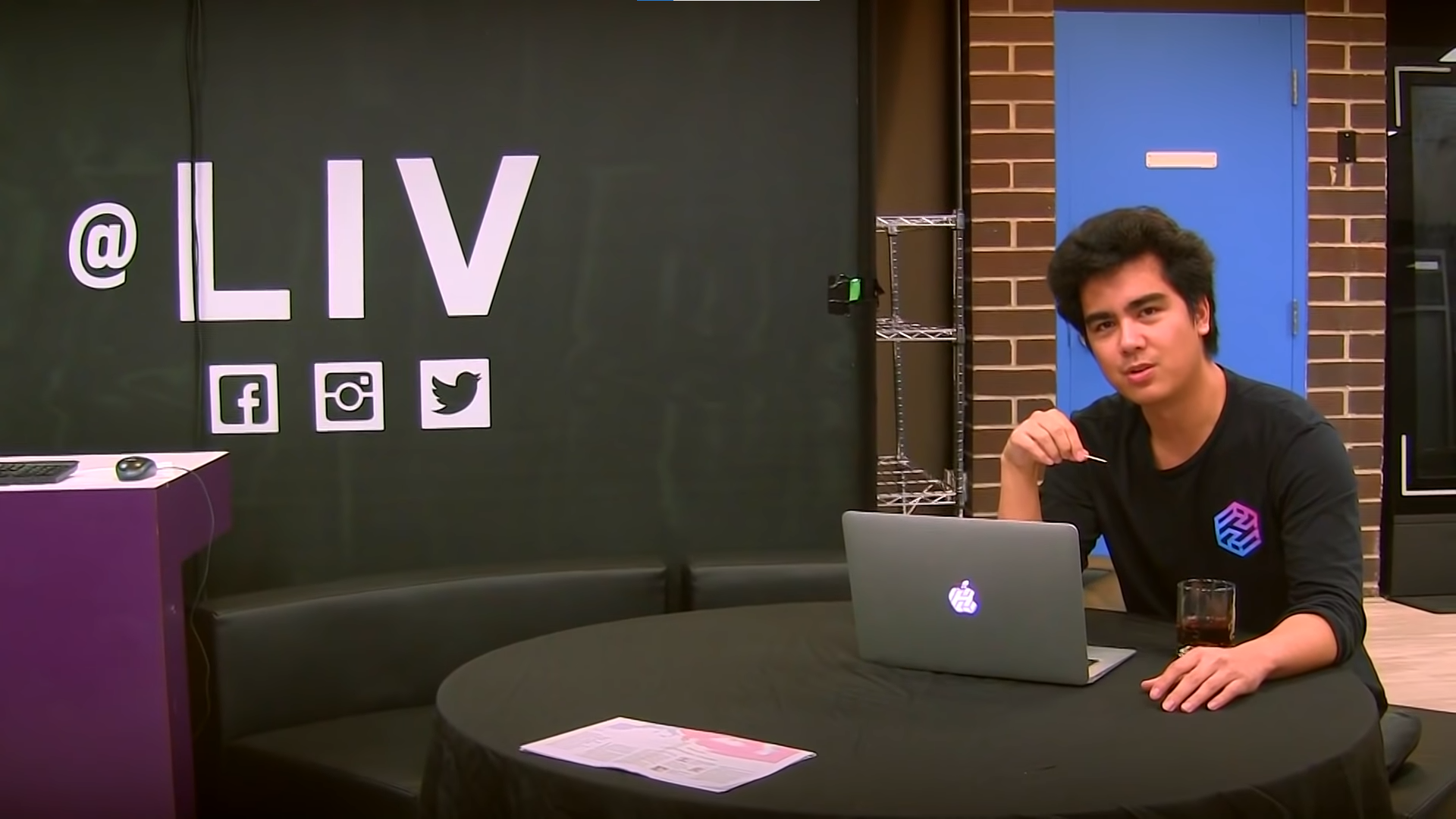
LIV's first answer was magnificently literal: a gigantic portable green box. The LIV Cube was an all-in-one mixed-reality studio intended for arcades, malls and enthusiasts. People queued to try it. The clips looked good. Distribution did not happen. Only a few official cubes escaped into the world.
This was the first important failure, and it contained the company's better future. The demand was not for a cube. It was for a view. LIV kept the view and shed the object. In 2018, alongside the early rise of Beat Saber, it released StreamerKit and a developer SDK. The camera became software that could travel from game to game.
“A first-person feed records what the headset sees. LIV's wager is that the audience wants to see what the player means.”The camera problem, in one sentence
The distinction sounds fussy until one considers marketing. A studio can build a wonderful VR game and still struggle to make a trailer that explains why anybody should put on a headset. LIV's production arm sells that translation as a service. Its software gives players the same basic power for free. A good clip can be both evidence and invitation.
A camera becomes distribution
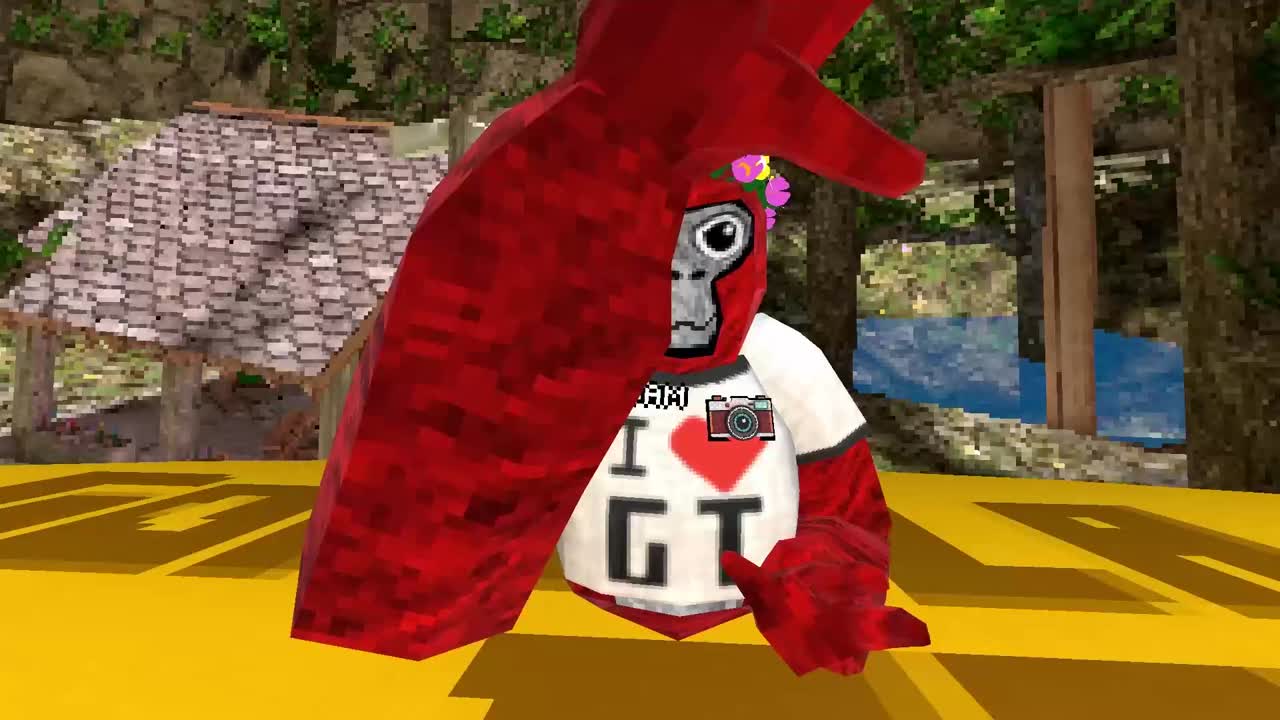
The customers arrive in pairs. Developers integrate the SDK. Players and creators use the camera. The resulting videos introduce the game to more players, some of whom make more videos. LIV says its tools now sit in more than 300 Quest apps, reach over one million monthly active users and generate more than 100 million videos a year. In Gorilla Tag alone, players make more than a million LIV videos in a month.
The camera loop
This is LIV's difference from OBS. OBS is excellent at recording a desktop. It does not place a handheld camera inside a virtual world, give it game-aware controls, or solve rendering, audio sync and hardware encoding on a standalone headset. A developer can assemble those pieces from native APIs, FFmpeg or WebRTC. That is rather like saying a restaurant can avoid buying an oven by beginning with iron ore.
LIV's offer to game developers is therefore priced at the most persuasive number in software: zero. The SDK and creator tools are free. Non-game developers ask about commercial licensing. A production studio makes commissioned trailers. Platform partnerships add another business line. LIV briefly put advanced direct-to-social camera streaming behind a plan listed at $3.99 a month or $35.99 a year, then removed the subscription requirement. By December 2025, camera streaming was free.
Meta changes the center of gravity
For years, LIV's cleanest work depended on PCVR, external cameras and, at the elaborate end, a green screen. That made fine footage and poor mass infrastructure. Standalone Quest headsets changed the market. They also imposed the harder engineering problem: render another camera, encode its video and keep the game smooth on a small device already doing a great deal.
In June 2024, Meta announced that it would retire the download path for its own mixed-reality capture workflow and recommend LIV instead. The partnership gave LIV an official place in the Quest ecosystem and a sharper product direction. Creator Kit moved capture on-device. Gorilla Tag received a custom camera. Photo mode, hand tracking and direct streaming followed. Unreal support entered public beta in late 2025.
The unglamorous middle
LIV published this gap itself in 2025. Downloads are curiosity; a shipped integration requires documentation, testing, performance work and a developer who survives the calendar.
The numbers reveal a useful restraint. LIV reported 2,082 apps with some Creator Kit activity by mid-2025, but only about 7 percent had launched publicly. Many were experiments, mods or fan projects. Developer tools do not win when somebody downloads a package. They win when a player can press record in a released game.
Keep the problem, fire the format
The cube was not LIV's only abandoned form. The company prototyped StreamCom, a game built around audience interaction, then chose to support other people's games. It pursued LIV Spaces, a streamer hangout. It announced ambitious volumetric work in 2022. Some of that impulse has returned, more modestly, as Project Spatial - a free pre-alpha that records Gorilla Tag sessions as explorable 3D memories. The recording currently happens on Steam; Quest can view the result.
There is a pattern here worth stealing. Define the problem at a level that outlives the first product. LIV's problem was never “sell green boxes” or “build a streaming destination.” It was “help people share virtual life.” The company could abandon hardware, shelve a game, remove a paywall and still move in the same direction.
The second copyable idea is less romantic: build sharing into the product. Do not ask users to become part-time broadcast engineers after the fun is over. Give them the camera while the interesting thing is happening. Make it feel native. Let a studio customize the object so it belongs in the fiction of the game. Then measure the entire journey from SDK detection to a capture in a public build.
This approach has edges. A desktop-only game needing an occasional screen recording may be perfectly served by OBS. An internal prototype does not need a production capture layer. A company whose core product is video may sensibly own its camera, encoding and audio stack. LIV is most valuable when the environment is real-time, performance-sensitive and spatial - and when player-made video is part of how the product grows.
“We exist to help people share the best parts of virtual life.”LIV
The charming oddity of LIV is that it sells a camera without making a camera. Its real product is a point of view - one that can make a person flailing in a living room look, correctly, like a person inhabiting another world. Virtual reality still needs that act of interpretation. The headset may be where the experience happens. The camera is how the experience escapes.