In startup years, Genies is old enough to have worn several embarrassing outfits. It launched in 2017 with an app that dressed your personalized avatar for the news. A geopolitical crisis might become a cartoon scene starring your digital double. The company said it would make Bitmoji obsolete. The product floundered. Then celebrities started using the characters, brands started calling, and the wardrobe changed.
The outfit became luxury fashion, then NFTs, then the metaverse, then user-generated games. Today Genies calls itself the visual and embodiment layer for AI. Underneath the changing nouns, however, sits a consistent verb: embody. The company has spent nearly a decade trying to turn a person, celebrity, fictional character, or software agent into something that can be seen, styled, animated, and carried into an interactive space.
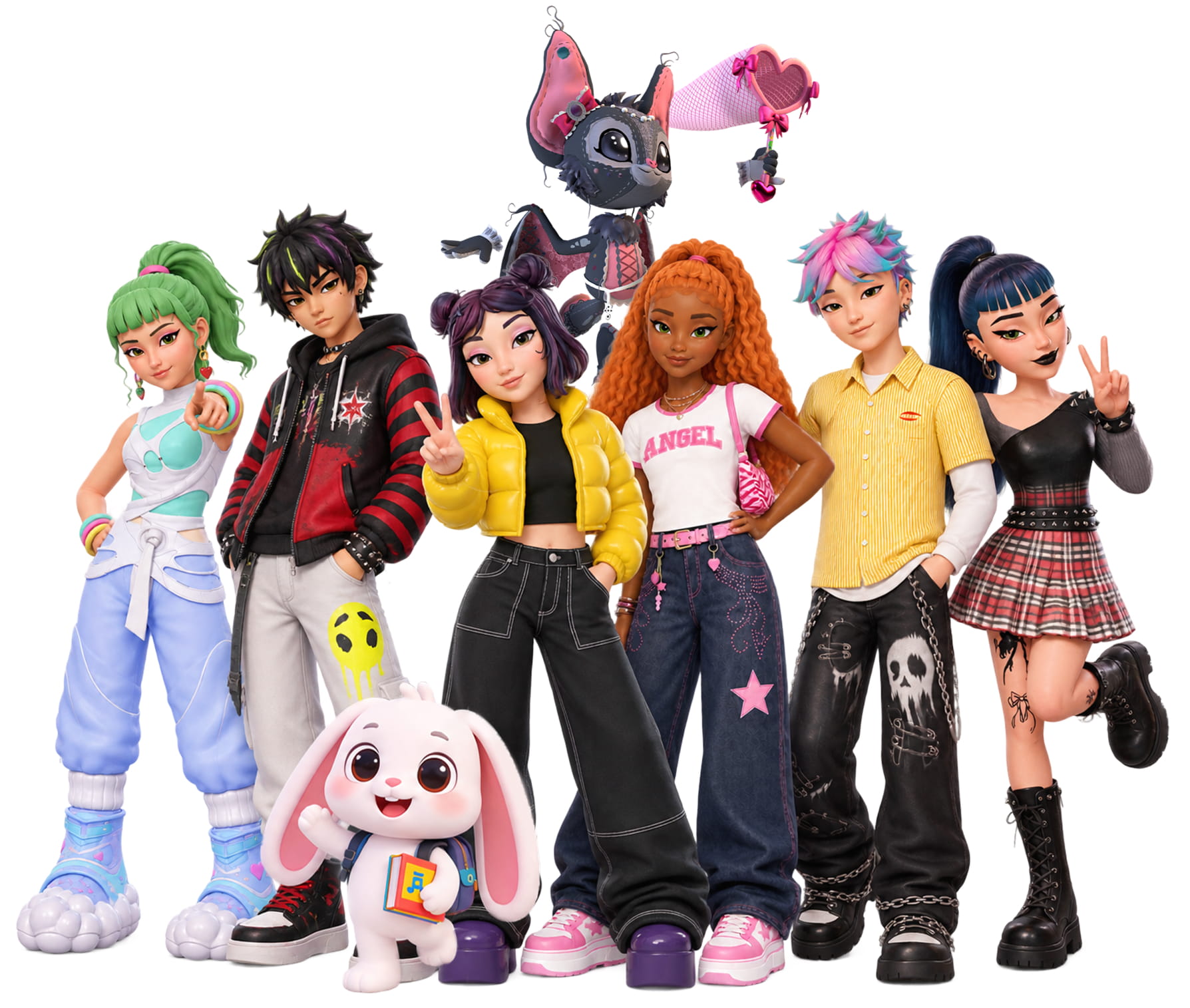
A failed app found a paying customer
Before Genies, co-founders Akash Nigam and Evan Rosenbaum built Blend, a group-chat app for college students. It did not gain traction. Nigam later described the team's early output with unusual efficiency: “We did a bunch of apps, and they sucked.” Bitmoji's durable place near the top of the App Store helped change their minds. They passed on a weak exit opportunity and pivoted toward avatars.
The first Genies launch had a waitlist and a provocative pitch, but its automated news scenes were not the thing people wanted. The meaningful signal came from tastemakers. Offset of Migos was an early adopter. Celebrity avatars appeared in music videos and social posts. Scooter company Bird asked to put its product into an avatar campaign. Gucci let users dress their digital selves in branded goods. According to Nigam, the commercial interest arrived about five years before he expected real revenue.
That distinction shaped the business. A consumer toy became a talent network. Bespoke character work became a software kit. Fashion became inventory. The avatar stopped being a funny image and became a container for identity, distribution, and commerce. In 2019, Genies raised another $15 million; earlier financing had already brought its reported total to $40 million. The company was not profitable then and did not publish revenue. It had, however, learned who would pay: brands and public figures looking for a new way to reach young audiences.
The metaverse disappeared. The plumbing remained.
Genies moved from 2D caricatures into 3D and struck rights deals with Warner Music Group, Universal Music Group, the NFLPA, and Bandai Namco. In 2021, it raised a $65 million Series B led by BOND and prepared a marketplace for digital wearables. Six virtual items tied to footballer Mesut Ozil reportedly sold for $500,000 through Nifty Gateway. The company had found a vivid demonstration of fandom as commerce, just as NFTs supplied a convenient payment rail and an unavoidable vocabulary.
Silver Lake then led a $150 million Series C in April 2022, valuing Genies at $1 billion. The announcement was explicitly about Web3 avatar ecosystems. Creators would own and commercialize their avatars, clothing, homes, and experiences. The funding was the cost of the long bet: years of computer graphics, animation, machine learning, identity systems, creator tools, and a workforce that company data now places somewhere between roughly 200 and 230 people.
Your avatar reenacts whatever happened today. Clever demo, weak habit.
Talent provides distribution; brands pay for digital product placement.
Fashion and collectibles turn identity into a marketplace.
IP owners get UGC game platforms built around persistent characters.
Memory, behavior, voice, and motion turn avatars into interfaces.
The NFT market cooled and the word metaverse lost its shine. Genies did not need to throw away the machinery. A wearable still has to fit. A character still needs a skeleton, animation logic, expressions, a visual style, and an inventory. A persistent identity still needs authentication. Those are useful whether the item is recorded on a blockchain or saved in an ordinary database.
The company changed the packaging again. Its 2024 “Parties” concept proposed customizable game platforms for brands and entertainment properties - small, IP-specific Roblox-like worlds with user-created games and goods. By 2025, the pitch moved toward smart avatars: characters with a look, a brain, behavior, voice, memory, and the ability to play. “We believe AI needs a face,” its current site says. Short enough for a billboard, specific enough to organize a product roadmap.

What the product actually does
The live wedge is the Genies Avatar SDK, released on the Unity Asset Store in November 2025. It is free. Developers can add a customizable 3D avatar, an editor, clothing closet, character controller, login, and persistent inventory to a Unity project. Clothing can be rewarded or sold. Genies' auto-rigging pipeline is meant to make new assets fit different bodies without a studio manually rebuilding every combination.
Around that live product is a wider stack. Genies Studio lets consumers create a character's aesthetics, personality, backstory, expressions, and voice. Genies Chat gives those characters somewhere to talk. Art Forge and content-creation tools generate and refit game-ready wearables and props. The developing Smart Avatar SDK adds memory, emotional responses, context, and autonomous behavior. Native, web, iOS, and Android access is opening gradually; Unity remains the most mature route.
For a small studio, that can remove months of character-system work. For an IP owner, the prize is different: one-to-one fandom at a scale that social feeds cannot provide. MLB Players, Inc. and the National Basketball Players Association signed 2026 deals for approved athlete avatars. WEBTOON's opt-in program lets participating creators turn characters into 3D chats and collectible experiences. Sanrio and King Records have also joined. Commercial terms are mostly private, but the routes are visible - custom integrations, licensed characters, paid interactions, in-app experiences, and digital goods.
Where Genies sits - and where it can break
There is no single competitor because Genies is trying to stitch together several markets. Bitmoji and Memoji handle lightweight self-expression. Meta, Roblox, and ZEPETO anchor avatars inside their own worlds. Epic's MetaHuman targets high-fidelity digital humans. Character.AI and Replika focus on conversation; Inworld builds game characters. A large studio can always assemble its own pipeline.
Fast, familiar, and platform-native. Limited behavior and portability.
Strong distribution and economies. Identity usually stays inside the walls.
Rich conversation and discovery. Often little body, movement, or gameplay.
One stack for body, brain, behavior, inventory, UGC, and licensed identity.
Genies' difference is the bundle: stylized art plus persistent identity, asset compatibility, real-time movement, AI behavior, and rights-holder access. Its independence is both advantage and burden. A portable avatar is valuable only when enough destinations accept it. Every new engine, art style, device, and rights regime adds integration work. The free SDK may attract developers, but adoption is not the same as active players or revenue.
The model will not work everywhere. A puzzle game does not need a lifelong digital identity. A studio with a beloved art direction may reject a shared framework. Rights holders may decide that an AI version of a person or character creates more reputational risk than engagement. Children and companion products raise hard privacy and safety questions. Memory is useful until it remembers the wrong thing; personality is charming until it leaves the approved script. Latency and inference costs still matter, even when a real-time rig is cheaper than generating video for every response.
The part worth stealing
Genies offers a useful founder playbook, though not a cheap one. Start with an audience that already has distribution. Watch for the first unexpected customer willing to pay. Turn repeated custom work into tools. Make the entry product free when network breadth improves the paid layer. Most important, separate the durable technical thesis from the temporary market story.
The copyable playbook
- Use a sharp wedge. Celebrities made an abstract identity platform visible.
- Follow early money. Brand demand mattered more than the original consumer roadmap.
- Productize the repetition. Custom avatar work became SDKs, pipelines, and login.
- Preserve the hard asset. Rigging, animation, and compatibility survived several trend cycles.
- Know the boundary. Portability, licensing, safety, and distribution can erase the advantage.
This is not a tidy story about prophetic vision. It is a messier and more useful one about persistence. Genies was wrong about animated news. Celebrity marketing was narrower than a universal identity layer. NFTs did not become the everyday wrapper for digital life. “Mini Roblox” platforms are still a demanding distribution problem. Yet each chapter funded or clarified another piece of the stack.
The latest version has a credible market-shaped problem. AI characters need more than words if they are going to inhabit games, represent public figures, or maintain relationships with fans. They need bodies that move cheaply in real time, identities that persist, assets that fit, and behavior that can be controlled. Genies has been building those pieces since before anyone called a chatbot a companion. Whether that head start becomes a business depends on the same thing that rescued it in 2018: customers doing more than admiring the demo.