Ira Belsky was not trying to become a licensing mogul. He was trying to finish films. The Israeli filmmaker kept running into a choice familiar to small production teams: cheap stock music that sounded like cheap stock music, or good tracks wrapped in expensive, fiddly rights. In 2014, after turning the problem over for months, he landed on a plainer deal - one affordable annual subscription, a curated catalog and a license a creator could understand without inviting counsel into the edit bay.
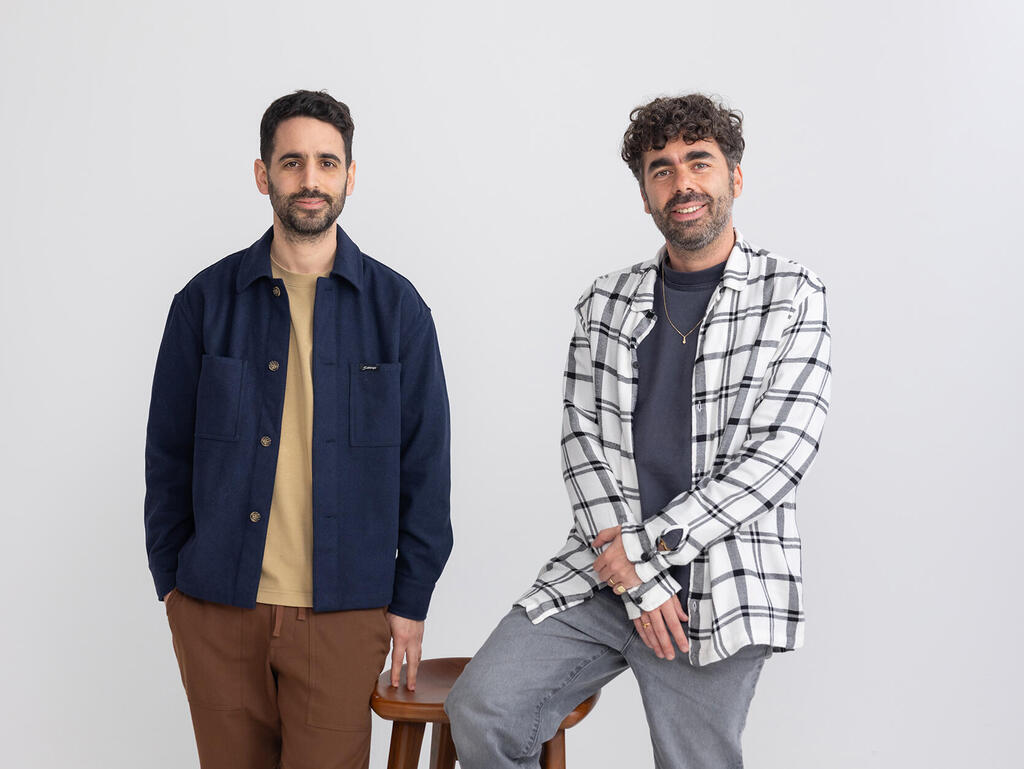
Belsky recruited two musician friends, Eyal Raz and Assaf Ayalon, plus technologist Itzik Elbaz. Artlist formally launched in 2016 from Kibbutz Afikim. The first version was almost quaint beside today’s platform: roughly 200 artists, 1,000 tracks and 40 categories. It was also profitable within two weeks, according to Belsky. That is the sort of origin detail that should make a product manager sit upright. The founders had not invented music, stock libraries or subscriptions. They had removed a tax on attention.
“You either had low-quality music, complicated legal terms, or high-quality music priced beyond the reach of most freelancers.”Ira Belsky, co-founder and co-CEO
The product was permission
Artlist is usually described as a royalty-free music service. Accurate, but incomplete. The product customers actually bought was permission: permission to audition widely, download without watching a per-track meter, publish across platforms and stop wondering whether a client video would trigger a rights dispute. The track mattered. The absence of dread mattered more.
That helps explain why the subscription model worked when a traditional licensing storefront did not. Video production was escaping television and film studios and flooding YouTube, Twitch and social feeds. A freelancer making six videos a month did not want six negotiations. A musician wanted distribution and predictable participation in a revenue pool. Artlist sat between them, curating the supply and standardizing the transaction.
The economics were straightforward enough to explain. In 2020, plans ran from $149 to $599 a year depending on media and usage. Today the menu is broader: a social music-and-effects plan has been advertised at $9.99 a month when billed annually; an Artlist Max offer has been cited at $39.99 a month annually; AI plans allocate credits; team plans add seats; enterprise terms are custom. The details move, but the proposition remains recognizable - replace uncertain transactions with a predictable bill.
A catalog learned to swallow the workflow
Once Artlist owned the soundtrack decision, the neighboring problems became obvious. It added sound effects. Artgrid brought in cinematic footage. The $48 million KKR-led growth investment in June 2020, joined by existing investor Elephant Partners, gave Artlist more room to expand. Later that year it acquired Motion Array, a marketplace for templates, presets, plugins, graphics, footage and audio. In 2021 it acquired FXhome, maker of HitFilm and Imerge. Artlist Max bundled much of the shelf into one subscription.
This was not diversification for its own sake. Each addition removed a trip to another vendor. Music, foley, stock shots, titles, color looks and transitions all arrive during the same production. The company’s competitive unit became less “a better song library” and more “fewer tabs between the idea and the export.” Its 2024 Canva partnership followed the same logic from the other direction, putting more than 100,000 videos and 15,000 music tracks inside a place where customers already worked.
The approach has a copyable rhythm. Begin with a recurring permission problem, not a novelty. Bundle the adjacent chores customers already perform. Then move the product to the surface where the work happens. Artlist’s August 2026 Premiere Pro plugin is almost diagrammatically perfect: generation, editing and a synchronized library appear inside the timeline, sparing the editor the browser-login-download-import routine.
The voiceover changed the company’s mind
Artlist’s first major generative step in 2024 was voiceover, a sensible bridge between a human catalog and synthetic media. It belonged beside music and footage, and customers knew immediately what to do with it. Feedback pushed the company to let creators use a voiceover script as the foundation for Artboards, which recommend music, footage and effects and let teams sketch a story together. That response shaped a larger conviction: AI should be attached to a creator’s workflow, not parked in a separate prompt playground.
Image and video generation arrived in 2025. The 2026 AI Toolkit gathered a changing cast of outside models for image, video and voice into one interface, alongside Artlist Original 1.0, which the company says was trained on its own premium footage catalog. The aggregator pitch is pragmatic. Creators do not have to chase every new model, learn another control panel and buy another bucket of credits. Artlist evaluates the machinery and puts selected options behind one account and a commercial-use framework.
Artlist reported $260 million in annual recurring revenue for 2025, up 50 percent from the prior year, then said ARR had reached $300 million at the start of 2026. The company added 120 employees during 2025 and ended the year with about 500. It also said first-quarter new-user growth in 2026 rose 600 percent from a year earlier. Those are company figures, not audited public-company filings, but they describe a business whose AI repositioning is already material, not a decorative tab in the navigation.
The second shot is where the demo dies
A gorgeous generated clip can be an accident. A sequence cannot. The character’s jaw changes, the room sprouts a different window and the coat forgets its buttons. Prompt again, receive another lottery ticket. This is the first failure Artlist Studio is designed to attack.
Launched in April 2026, Studio borrows the nouns of a film set. Users create and reuse characters, build locations, frame shots, set lighting, direct movement and continue a new shot from a chosen frame. A timeline holds the sequence together. The idea is not that one sentence produces a finished commercial. It is that filmmakers can make small, legible decisions without losing continuity each time the model runs.
“It’s not about endlessly prompting or tedious work, but creative decision-making, made in intuitive ways.”Ira Belsky on Artlist Studio
The ambition moved off the product page in June. Artlist announced it would finance and executive-produce Terrarium, a hybrid horror feature directed by Jason Zada and produced within a workflow intended to align with DGA and SAG-AFTRA requirements. Artlist’s tools are being used for scene development, extending or recreating shots and generating material that would otherwise sit outside the budget. A real production is a tougher test than a cherry-picked reel: consent, continuity, revisions and delivery all have to coexist.
Where Artlist sits when everyone sells everything
There is no single Artlist rival. Epidemic Sound, Musicbed and Soundstripe compete for soundtrack budgets. Shutterstock, Getty, Adobe Stock, Storyblocks, Pond5, Envato Elements and Freepik compete across assets. Runway, LTX Studio, Higgsfield, Sora and direct model tools compete for generated pictures and video. Adobe owns the editing surface. Artlist’s answer is the combination: curated human work, multiple AI models, production controls and a license under one subscription.
The useful difference
Artlist understands the order of operations in video. Search, license, generate, revise and edit belong to one job, even when competitors sell them as separate categories.
The exposed flank
A bundle is only as strong as its weakest asset, model or license. Specialists can be cheaper, deeper or earlier with a breakthrough feature.
Best fit
Frequent video makers who use several asset types, value commercial coverage and want fewer vendors gain the most from consolidation.
Poor fit
An occasional creator, a buyer needing one track, or a large company with unusual distribution rights may find a specialist or negotiated license cleaner.
Artlist works when the license matches the publisher. A freelancer’s plan, a seven-seat team and a company with more than 50 employees are not interchangeable. Broadcasters, apps, games, out-of-home advertising and unusual distribution can require business terms. The simple-license story survives only if the customer reads which entity, channel and project the plan actually covers.
There are product risks too. AI credits make the once-unlimited story more complicated. Third-party models change quickly. Generated voices or features can disappear, and continuity tools still demand taste and iteration. Human contributors may reasonably ask how their work fits beside synthetic output. Artlist’s August 2026 SOC 2 Type II certification helps enterprise security review, but it does not settle questions about creative quality, model provenance or labor.
The trick worth stealing
The Artlist lesson is not “bundle more things.” Bad bundles become junk drawers. The useful lesson is to map interruptions. What does a customer have to stop doing, open, negotiate, export or explain before the work can continue? Artlist first removed the negotiation around a song. It then absorbed more searches, more downloads and more licenses. Now it is trying to remove the roulette from AI generation.
That playbook depends on favorable conditions. The task must recur often enough to justify a subscription. The assets must be good enough that convenience does not feel like compromise. The rights must be legible. Adjacent tools must share a workflow, not merely a customer demographic. And the platform has to earn trust on both sides - creators buying coverage and artists supplying the material.
The company’s original promise could fit on a Post-it: find the track, license it once, finish the film. Ten years later, the promise stretches across a production stack and a thicket of AI questions. Yet the underlying product instinct is intact. Artlist does not need to generate the strangest image or own the world’s largest pile of clips. It needs to make the next creative decision arrive with less friction than it would anywhere else. The editing room is a bigger target than the music shelf. It is also where the money is.