Imagine winning a round so improbable that the only reasonable response is to tell everyone about it. Then imagine the sequel: finding the replay, recording it, trimming the dead air, choosing music, exporting the file. By the time you have finished celebrating, you have acquired a second occupation. Allstar lives in that awkward interval between doing something entertaining and producing evidence.
- Turns supported game data into videos rendered in the cloud.
- Packages music, effects and camera choices as Creator Cards.
- Serves players directly and supplies highlights to gaming platforms.
The distinction matters. Plenty of people enjoy games. Fewer enjoy managing video files. Allstar’s proposition is that a player should be able to remain a player while software handles much of the production. The company sells convenience at a particularly susceptible moment: when somebody has just done something worth boasting about.
First, keep the action. Then choose the camera.
A conventional screen recording preserves the view you had while playing. Allstar’s cloud approach uses game data to generate footage afterward. That gives it room to apply camera treatments and effects beyond a simple trim. The game supplies the event; Allstar supplies its presentation. Think of the difference between photographing a stage from your seat and being allowed to arrange the camera for the encore.
Its help center lists Counter-Strike 2, Dota 2, League of Legends and Fortnite. Depending on the workflow, players can request clips or use automatic capture. Allstar says its cloud processing avoids the gameplay performance cost of local recording. The attraction is obvious for someone whose computer already has quite enough to do running the match.
There is a boundary to that promise. This is a service for supported games and their available data, rather than a camera pointed at anything on your desktop. A player seeking footage from an unsupported title, a live broadcast, or a particular moment outside the replay needs a different capture workflow. Cloud processing also means the finished video must be processed before it arrives.
Editing, with a gamer’s vocabulary
Allstar Studio turns creative decisions into Creator Cards: choose the music or effect you want, and the system applies it. Its documentation describes effects being applied programmatically to the game demo before rendering. Clips can appear on a profile and reach Discord through AllstarBot. Remixing lets people apply cards to existing clips, including another user’s.
The design is shrewd. A card is familiar to a gamer; a video-production timeline may be less inviting. Instead of asking every customer to learn an editor’s craft, Allstar gives them choices they can recognize and preview. Montage tools join moments into longer sequences, while mobile formatting makes desktop action easier to watch on a phone.
In his August 2021 launch account, CEO Nick Cuomo explained the advantage of knowing when an event happens: music can be aligned to the action. He also admitted the original desktop experience needed work. Its replacement added an activity feed so people could follow their clips through processing. Even a clever backstage machine needs a decent front door.
The office closed. Later, the ad tap did too.
Cuomo, a former professional gamer, founded Allstar with CTO Gavin Silver in August 2019. Silver remembers two laptops at the Ace Hotel bar. It is a pleasingly modest setting for a company devoted to making people look cinematic.
According to Cuomo’s December 2023 account, the founders went without salaries for more than a year. COVID forced remote work shortly after they opened their first office and delayed their next financing. Then a tougher capital market pushed another decision: eliminating paid advertising from acquisition.
“In hindsight this was a great move we wish we made sooner.”Nick Cuomo, on cutting paid acquisition
Cuomo credits that constraint with better product decisions and stronger growth. That is his interpretation, rather than proof that cancelling an ad budget makes companies flourish. The useful idea to borrow is narrower: give customers something they already want to pass around, and make sharing part of using the product. A highlight carries its own reason to travel.

Allstar announced a $3.85 million seed round in May 2021 and a $12 million Series A led by Drive Capital in December 2023. Money bought room to develop the product and expand partnerships. It also explains the commercial challenge: somebody ultimately has to pay for the computers doing the rendering.
A free clip. A paid production habit.
The current subscription page offers Free, Basic, Standard and Unlimited plans. Free includes five clips per month, storage for ten clips and 720p output at 30 frames per second. Paid options add capacity and benefits such as downloads, editing controls, watermark removal and faster processing. The natural customer is an everyday player; the paying customer is someone whose occasional highlight has become a habit.
Allstar competes for that habit with tools such as Medal, which also offers automatic clipping. OBS and NVIDIA recording tools offer other routes to capturing play. Allstar’s particular appeal is the combination of game-data-driven rendering, creative treatments and distribution. It saves production effort; it does not supply the interesting play or guarantee an audience.
The highlight travels through other people’s products
There is another customer beyond the player. Allstar’s partner portal offers an API for gaming platforms that want highlights inside their own products. It lists partners including FACEIT, Overwolf, Tracker Network and Refrag. For a developer, the attraction is adding a personal video moment without building a rendering operation from scratch.
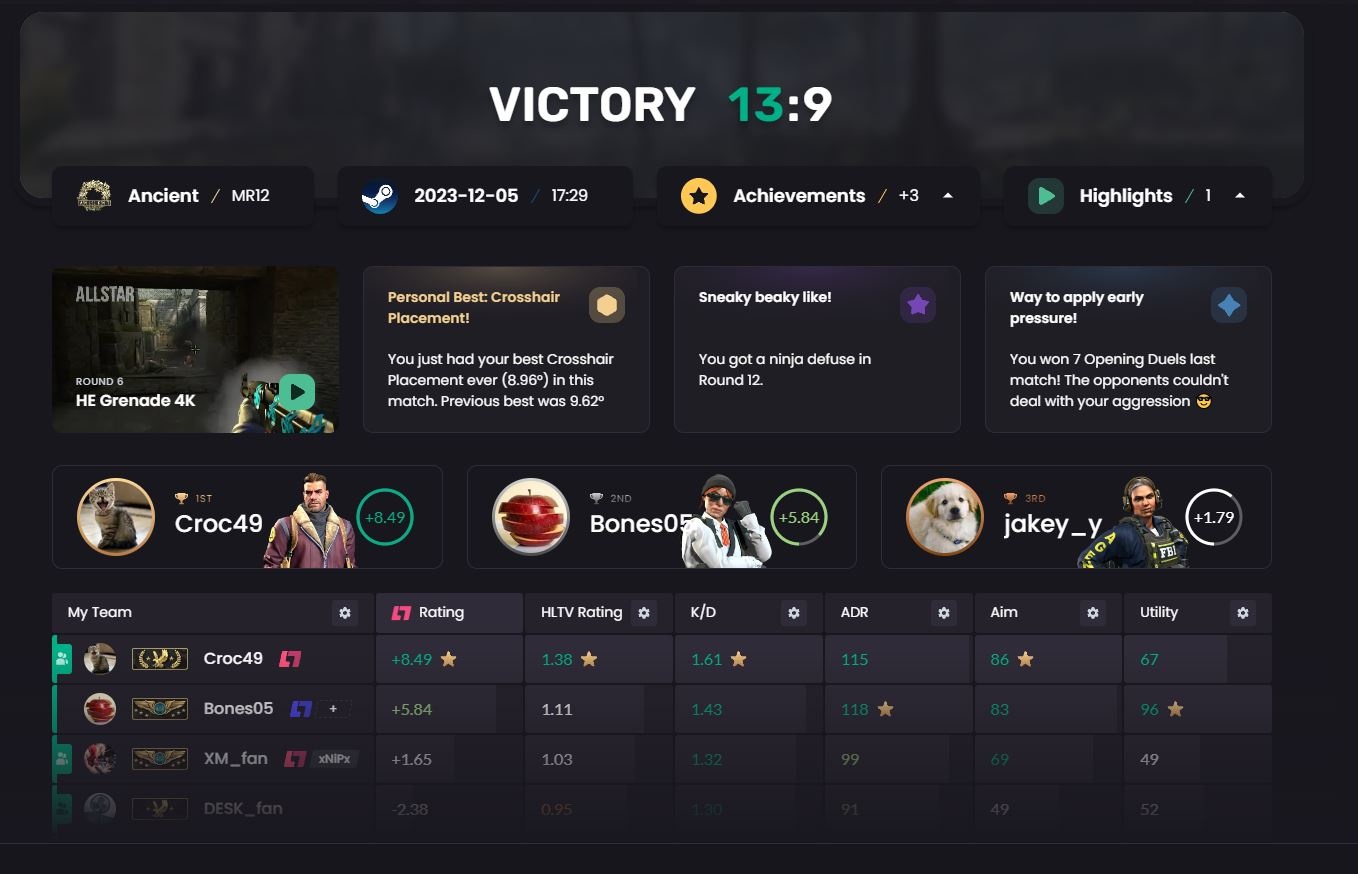
The distinction between a creator and a viewer is worth keeping. Allstar benefits when one player’s moment becomes entertainment for other people. Its bet is that there are enough such moments hiding in ordinary matches to support a business. The next great clip need not belong to a professional. It might belong to the friend who has been insisting, for years, that you really should have seen that round.