The first audience Peatix imagined did not turn up as expected. Taku Harada had worked in music, at Sony, Amazon and Apple. Independent musicians seemed an obvious market for a service that made selling admission easier. Yet, as he later told interviewer Tim Romero, they did not flock to it. Japan had just suffered the 2011 earthquake and tsunami. Gathering for entertainment was a complicated proposition.
- Peatix handles tickets, registration and check-in for independent events.
- Persistent groups help organizers invite the same people back.
- Its 2026 refresh tackles discovery with human editorial selection.
The audience that did not arrive
So the team went outside. Its evangelists attended events, met organizers and built relationships. Harada recalled that roughly 90 percent of early events came through the team’s efforts; by the time of that interview, more than 70 percent of Japanese events arrived organically. Those are historical figures. The mechanism still matters: an attendee today might become an organizer tomorrow.
Peatix launched in Tokyo in May 2011. Its four co-founders - Harada, Yuji Fujita, Emi Takemura and Naofumi Iwai - brought experience from established internet businesses. The company subsequently moved its headquarters to New York and established operations in Singapore and Malaysia. Expansion had a bill attached: it announced a $3 million Series A in 2013 and a $5 million Series B in 2015.
The group outlives the gathering
Imagine running a monthly drawing class. The first session needs a page, a price, a participant list and somebody at the door who knows who paid. The second session needs something less visible: a way to reach the people who enjoyed the first. Starting from scratch every month is an expensive way to be sociable.
Peatix packages those jobs together. Organizers create events within groups. People can follow a group from its page, an event page or the ticket-order page. Followers can receive notifications when new events appear; organizers can send messages. Registration forms, ticket types, sales analytics and mobile QR check-in address the administrative work surrounding the gathering.
“More than a ticket.”Peatix’s slogan, already present in its 2013 funding announcement
Eventbrite also combines ticketing with a discovery marketplace. Meetup organizes people around shared interests and group events. Peatix occupies overlapping territory. Its distinction lies in the combination of practical ticketing, persistent communities and relationships in Japan’s event scene. Nobody has patented the second invitation; the question is how conveniently a host can send it.
The price of a seat
Free tickets incur no ticketing fee. That gives a new host room to test a gathering before asking strangers to finance it. Paid events generate transaction revenue; promotion, streaming and membership services add other paid offerings. Prices depend on the country, which makes a single global fee comparison misleading.
In Singapore, the published ticket fee is 4.9 percent plus S$0.99, including payment processing. Sell 100 tickets at S$20 each and gross receipts are S$2,000. Ticketing takes S$197, leaving S$1,803 before the room, the instructor and everything else. The fixed charge matters more as ticket prices fall. A bargain ticket deserves arithmetic before enthusiasm.
Country availability also comes with practical limits. Some markets require a local bank account for payouts, and Peatix does not offer international money transfers. A host selling across borders should settle the payout arrangements before publishing.
Peatix has changed its mind about price before. In 2019, it lowered fees in Singapore and Malaysia after examining organizers whose typical tickets were modestly priced. In 2024, it raised regional fees, citing operating costs, market conditions and community feedback. Keeping entry affordable and keeping the platform running are negotiations that recur.
When the venue disappeared
The pandemic tested the premise more abruptly. Peatix reported more than 40,300 online events published between March and June 2020, with over 820,000 registrations. Organizers were already moving. The product team had a conspicuous signal about what to build next.
It announced Peatix Live in July 2020 for an August rollout: paid streaming accessible to ticket holders. A self-service version followed in its 2021 anniversary announcement for Japan, Singapore and Malaysia. External streaming tools remain another route for online events. The underlying problem survived the closed venue: who gets access, and how does a host keep reaching them?
Trust has a database
A separate failure arrived in 2020. Unauthorized access on October 16 and 17 extracted account information, including names, email addresses and encrypted passwords. Peatix’s security FAQ says it invalidated passwords, required resets and addressed the vulnerabilities. It did not confirm extraction of payment information or event participation histories.
This belongs in the company’s story because community platforms hold information people entrust to them. A friendly event experience depends on less charming work behind the scenes. The invitation and the database are parts of the same service.
From checkout to curiosity
Peatix’s partnerships extend the work beyond a screen. JTB’s 2019 investment and alliance linked local events with travel and regional exchange. A 2024 agreement with Culture Convenience Club proposed combining Peatix’s community tools with cultural venues, including Tsutaya bookstores. Each offers a physical place around which a continuing relationship might form.
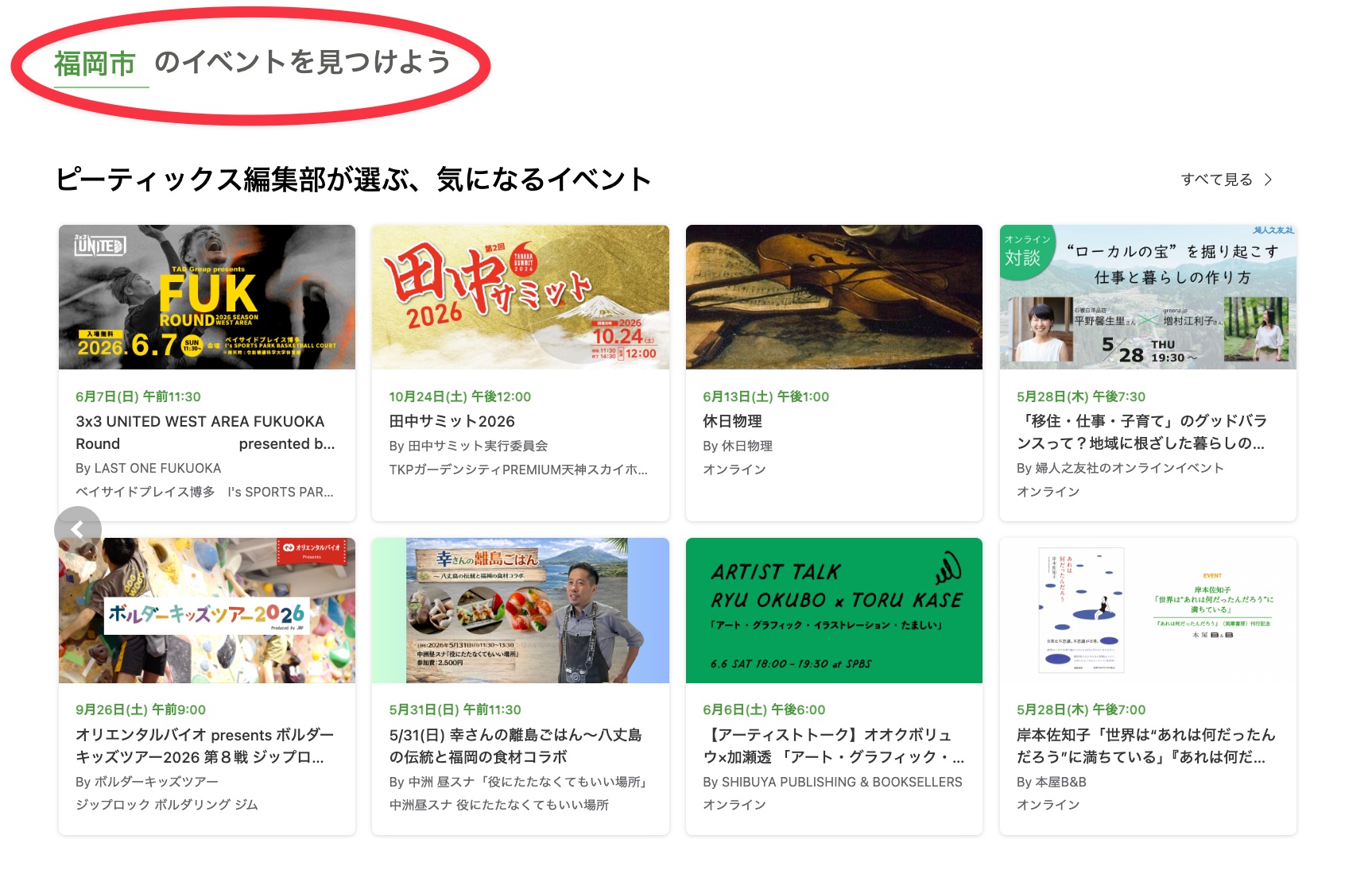
For its fifteenth anniversary in May 2026, Peatix refreshed its website and app. The company acknowledged a limitation: people often saw it as the place to register for an event an organizer had already recommended. Its response was roughly 80 editorial discovery angles. The business wants browsing to become a reason to visit.
Give them a second date

Fujita’s appointment as Peatix Japan’s representative director in 2025 made the community emphasis explicit. The company’s staff, nicknamed Peaps, publish career stories about the people doing that work. Software can preserve a group’s address; somebody still has to make the group worth joining.
For an organizer, the copyable move is straightforward: start with a gathering, make following easy, then offer another occasion worth attending. It depends on an active host and people who want to return. A ticketing page cannot supply either. Peatix can reduce the paperwork between them, which leaves the host with the pleasantly difficult business of giving people a good evening.