In the publicity business, success has a peculiar habit: it removes the fingerprints of the people who produced it. A television series appears on a morning show. Its star turns up on a magazine cover. A critic writes the essay that makes the program feel important. A red carpet glows. The show enters conversation, and the conversation begins to look spontaneous.
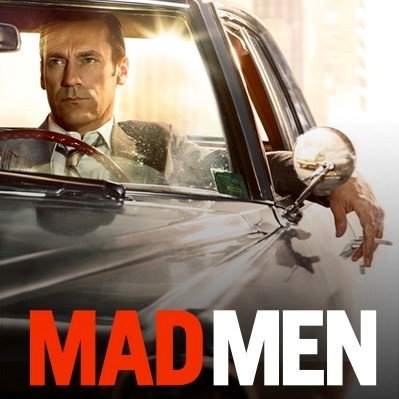
FerenComm has been arranging that spontaneity since 1994. The independent, female-owned New York firm is led by founder Sheila Feren-Thurston and employs a few dozen people, not a small army. Yet its past and present client list reads like a map of modern television: AMC Networks, Apple TV+, Prime Video, Disney, Hulu, STARZ, Netflix, Peacock, Audible and others. It helped launch Mad Men, Breaking Bad and The Walking Dead, then worked on newer titles including Ted Lasso, The Morning Show, Palm Royale and Slow Horses.
The day August lost to November
The most revealing FerenComm campaign does not involve a brooding antihero. It involves a yellow bird, a red monster and a date on the calendar. In 2009, Sesame Workshop wanted to celebrate the 40th anniversary of Sesame Street while introducing a new season, new segments and a new visual style. The nonprofit had a limited budget. Across Sesame Workshop and FerenComm, only eight people staffed the campaign.
The first important move was not a clever slogan or expensive event. Eighteen months out, the team changed the season premiere from its usual August slot to November 10 - exactly 40 years after the first episode aired. A routine launch acquired an occasion. Every pitch could now answer the journalist's most annoying and useful question: why today?
Then the team made one anniversary mean different things to different groups. Google ran Sesame-themed Doodles for a week. Michelle Obama appeared in the premiere to talk about gardens and healthy food. The Brooklyn Public Library created 30,000 Elmo cards and registered every one during the campaign. Washington hosted a photo exhibition and a Smithsonian panel. Mommy bloggers carried the nostalgia to parents. Five Muppets supplied the voices of a new Twitter account, because nobody wants a lesson in whimsy from a legal department.
“We see pressure as an opportunity to do our best work.”Sheila Feren-Thurston, founder and CEO
The cost has never been publicly itemized; the case study says only that the budget was limited. That constraint matters. It explains the shape of the work. Instead of buying one enormous megaphone, the team recruited institutions with their own audiences and their own legitimate connection to the story.
It worked. The Doodles helped send more than 1.4 million visits to SesameStreet.org in a week - three times the preceding period. Facebook attracted more than 43,000 fans and Twitter more than 102,000 followers. A satellite tour reached 19 domestic morning programs and eight Spanish-language stations. By February 2010, ratings were up almost 60 percent from the previous February.
Web traffic compares the Google Doodle week with the preceding period. The ratings figure compares February 2010 with February 2009.
The product is judgment
FerenComm does not sell a tidy piece of software. Its product changes with the problem. A production may need a publicist on set, arranging visits and translating the work of a crew into notes and biographies. An executive may need talking points, a speech or rehearsal before a difficult interview. A series may require critics, fans and awards voters to understand three distinct versions of why it matters. A premiere needs crowd flow, press lines, talent movement and all the unglamorous decisions that keep the glamorous photographs from looking frantic.
That breadth explains where the company sits in the market. A network can hire a large integrated agency, expand its in-house team or bring in a specialist. FerenComm's argument is for the specialist who can behave like an extension of the in-house group. Its website says unit publicity can be hourly or last for the duration of production; broader engagements appear to run as retained or project work. Public prices are not posted.
The competitive advantage is accumulated context. AMC Networks has reportedly worked with the firm for about two decades. That relationship spans the era when cable dramas had to persuade viewers that they deserved the seriousness reserved for cinema, through the era when there became too much prestigious television for anyone to track. Knowing a journalist is useful. Knowing what that journalist covered five seasons ago, what an executive promised and what the audience already believes is better.
The accident that became an institution
Feren-Thurston entered communications because she needed to pay the rent while pursuing acting. She worked at Rogers & Cowan and Stone/Hallinan, ran a solo practice in her late twenties, then joined Gene Nichols. Nichols/Feren opened in 1989. When Nichols retired in 1994, she kept going and renamed the company FerenComm.
That origin helps explain the firm's culture: founder-led, personal and unusually frank about the emotional work of service. Feren-Thurston describes its constants as passion, patience, positivity and persistence. During the pandemic, when productions stopped and the routines of entertainment publicity collapsed, she said leadership meant being the steady hand before she had every answer. The first thing to fail was predictability. The response was not a new product category so much as more adaptation - virtual press days, altered calendars and counsel for clients facing the same uncertainty.
The firm has also carried its entertainment habits outside television. For Project Healthy Minds, it has supported a New York gala, a World Mental Health Day festival and organizational announcements. This is a sensible adjacency. Entertainment publicity and public-interest work both ask culture-makers to turn an abstract issue into an invitation people will accept.
What to borrow on Monday morning
First, find the date, fact or tension that makes the story necessary now. Second, give each audience its own door: a library needs literacy, a wellness advocate needs health, a fan needs nostalgia. Third, choose partners whose participation makes sense without an explanation. Finally, let the brand speak in its natural voice. Five Muppets will beat one committee-approved corporate narrator almost every time.
There are limits. The method depends on a story with genuine cultural material, enough lead time to build partnerships and people empowered to coordinate many moving parts. It is poorly suited to an interchangeable product, a last-minute mandate or a client unwilling to adapt one central idea for different communities. Ubiquity without relevance is merely repetition.
FerenComm's own visibility remains modest beside the properties it represents. That seems appropriate. The company is not the program. It is the system of introductions around the program - the calendar change, the prepared executive, the critic with the right angle, the library card a child carries home. When it works, nobody sees a system. They simply notice that, for one week, the same story appears to be everywhere.