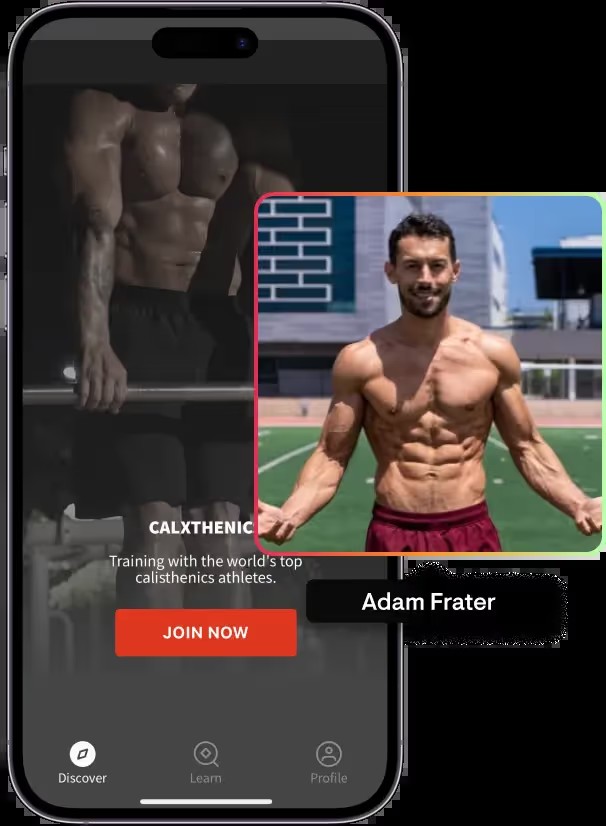
Adam Frater already knew how to sell a workout. He had sold eBooks, built an audience and learned digital marketing. The troublesome part was the container. Customers wanted an app, and the custom version he tried to build absorbed years, a development team and, in his telling, more than $1 million. Even after all that expense, he was not proud of it. A developer held the keys to changes. The iOS version came first; Android and web would have to wait. The thing intended to make his business more nimble had become an elaborate way to ask permission.
- Passion.io lets coaches and educators assemble branded course, community and membership apps without writing code.
- Its practical advantage is control over updates: lessons, prices and member journeys can change without a development queue.
- The trade-off is a recurring platform bill and plan gates. Native App Store listings sit on the $599-a-month Expand plan.
Frater’s partnership behind the custom build ended badly. He still had the scarce parts of a fitness business: programs people wanted, a recognizable name and an audience that would pay. So he rebuilt Calxthenics on Passion.io. The company’s case study says the new app went live on iOS, Android and the web in weeks, and reports more than 10,000 downloads and over $50,000 in monthly revenue in its early months. Those numbers are Frater’s reported results, not a promise to the next person with a camera and a set of dumbbells.

The edit button is a business model
Passion.io was founded in 2016 by Daniel Harvey and Matthias Bellmann. Harvey’s route to software was unusually musical: he had been a drummer with the British band Dog Is Dead. In Passion.io’s account, touring showed him that devotion to a craft did not necessarily pay the rent. His first business, a property management venture, supplied its own bruising lessons. The idea that emerged was to help people package what they know into something others could buy and use.
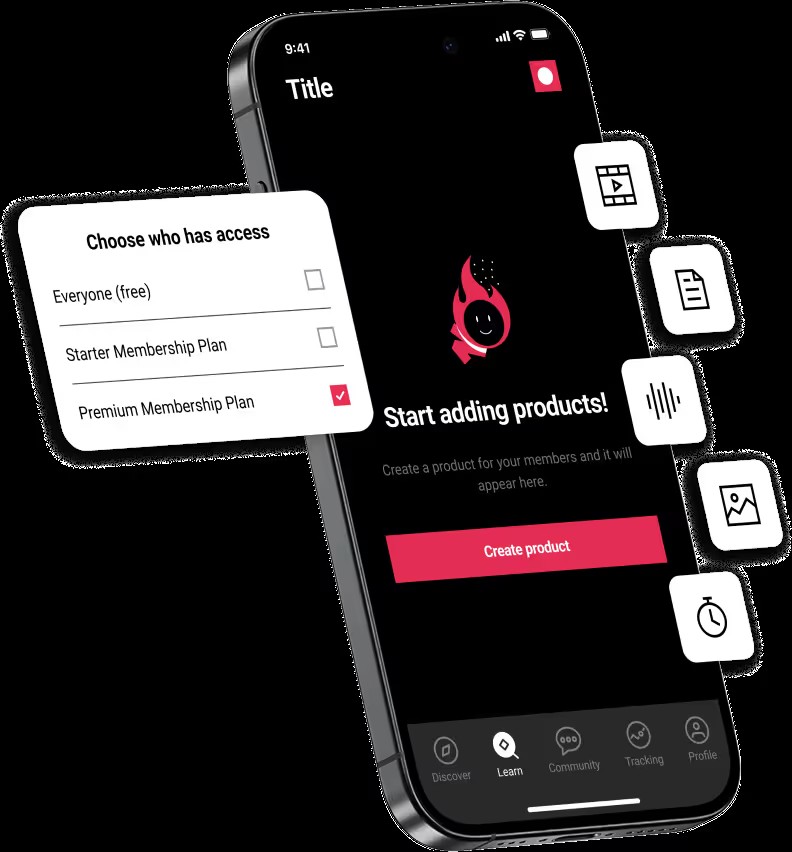
Early work with fitness professionals explains the product’s shape. A workout is not merely a video. It has steps, repetitions, a schedule and the awkward moment on Wednesday when enthusiasm deserts its owner. Passion.io’s builder includes courses, interactive exercises, goal trackers, quizzes, push notifications, community spaces and payments. A creator can sell a one-off program, a subscription or coaching access. The web version can launch first; eligible plans add a branded listing in Apple’s and Google’s stores.
The sequence matters. Frater did not ask software to invent demand for calisthenics. He used it to deliver a product whose demand his eBooks had already tested. That is the part other creators can copy: begin with a narrow paid result, put existing material into a sequence, watch where members stop, and improve the next step. If nobody wants the underlying result, a polished home-screen icon is a very expensive sticker.
“I don’t know anything about coding. I don’t know anything about building apps. But I can put together this fitness program exactly as I need to.”Adam Frater, Calxthenics creator
What the monthly bill buys
Passion.io sits in an awkward but useful space between a course website and a software agency. Kajabi and Thinkific organize teaching and commerce. Mighty Networks and Circle concentrate on community. Custom development offers more freedom, if one has the money, time and patience to manage it. Passion.io’s bet is narrower: the coach whose customers spend the day on a phone wants a branded app, interactive learning and a route to payment in one place.
The pricing makes the bet visible. As listed in September 2026, Launch costs $119 a month when billed annually. Scale, at $279, adds stronger branding and automations. Expand, at $599, includes native app-store listing, offline mode and broader limits. Passion Plus is custom priced. PassionPayment platform fees range from 3.9% on Launch to 1.9% on Passion Plus; payment and store charges can add to that. Frater’s case study cites a $297 monthly cost at the time of his rebuild. It is a historical detail, not today’s quote.
The cost ladder
Prices shown for annual billing on Passion.io’s current pricing page. Platform and payment fees vary by plan.
That is not a trivial bill for a beginner. It can look modest beside a custom team’s payroll, but a subscription lasts as long as the app does. And the app is built within Passion.io’s system; unusual features may still call for different tools. The sensible comparison is therefore not “free versus paid.” It is the cost of the product you actually need, including the time it takes to revise it.
The customer stays after the sale
Passion.io’s pitch has changed with the creator market. Selling a course is a transaction. Helping somebody finish one is a relationship. The platform’s features put reminders, progress markers, direct messages and communities beside the lessons. Its 2026 help center also describes Spark, an AI coach that answers questions using a creator’s published content. The current pricing page includes a context-aware AI coach across plans. A bot may answer at midnight; the expert still has to give it something accurate and useful to say.
The company reports more than 15,000 apps launched and more than two million paying app users. Those are aggregate company figures. Individual examples reveal more about fit. SmartWorkout used an app to accompany resistance bands and sell a €5 digital add-on through its existing store. Ellen Decker used short workouts, a six-week challenge and reminders when in-person training vanished. Frater used the platform to escape the queue of developers between an idea and its next version. Three businesses, three products, one common need: make the thing customers bought easier to use tomorrow than it was today.
Aggregate counts describe distribution, not the typical creator’s earnings.
This is why Frater’s story is more instructive than the familiar tale of instant app riches. He had an audience, content and proof that people paid for his teaching before the rebuild. The software reduced the cost of delivering and changing it. For a creator with no tested offer, the same builder may simply produce a better furnished empty room. For a business requiring unusual workflows or full control of its code, a purpose-built app can still be the right choice. Passion.io works best when the teaching is already worth returning to, and the next edit ought to belong to the teacher.