Sony is the rare company that can record a singer, publish the song, place it in a film, adapt the film into a game, sell the console and manufacture the television on which the whole production appears. This sounds like the pitch of an overcaffeinated investment banker. In Sony’s case, it is a fairly literal description of the asset map.
The map begins in a bomb-damaged Tokyo department store, where Masaru Ibuka and Akio Morita founded Tokyo Tsushin Kogyo in 1946. Their company made Japan’s first magnetic tape recorder, found an export-friendly name in Sony, then developed a habit of turning technical components into new consumer behavior. The pocket radio made listening mobile. The Walkman made it private. PlayStation made the television interactive.
Today Sony Group is neither a conventional electronics manufacturer nor a media conglomerate with a gadget drawer. It operates six broad segments: games and network services, music, pictures, entertainment technology and services, imaging and sensing solutions, and a collection of smaller businesses. Continuing operations produced ¥12.4796 trillion in sales in the year ended March 2026. The useful question is not how many businesses Sony owns. It is which businesses make the others harder to copy.
A machine for moving work from creators to fans
For consumers, Sony is PlayStation hardware and games, Alpha cameras, BRAVIA displays, headphones and speakers. For creators, it is cinema cameras, lenses, music publishing, record labels, film and television studios, game studios, virtual production systems and professional workflows. For other businesses, it is the less visible layer: CMOS image sensors inside premium smartphones, broadcast equipment and production technology.
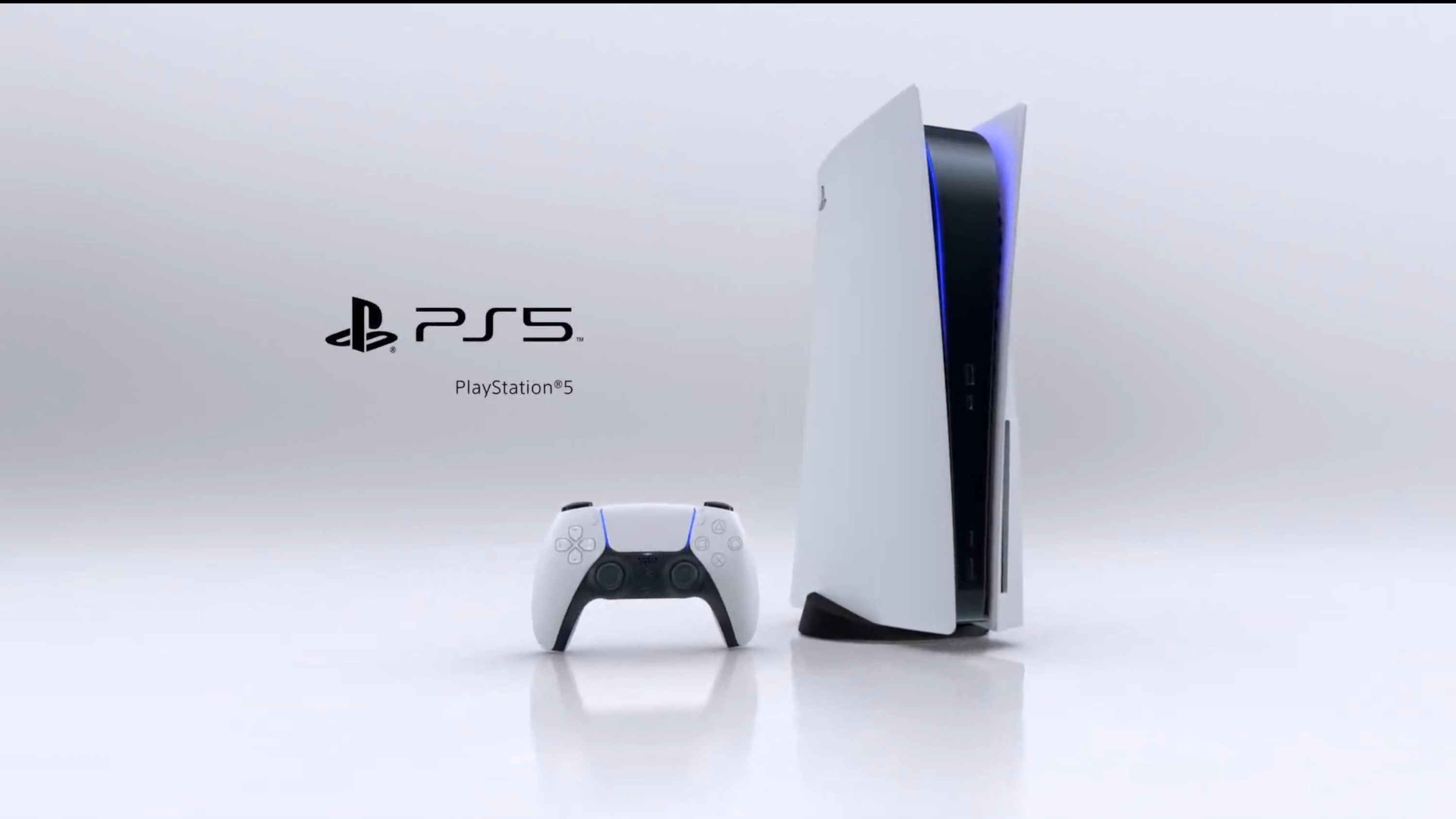
The customers are correspondingly broad. Players buy consoles, software, virtual goods and PlayStation Plus. Anime viewers subscribe to Crunchyroll, which had more than 17 million paid members by March 2025. Photographers and filmmakers buy Alpha and Cinema Line tools. Studios and broadcasters buy production systems. Smartphone manufacturers buy sensors. Artists and rights holders hire Sony’s labels, publishing and distribution operations to move work around the world.
Revenue arrives through several doors: device and component sales, game downloads and add-on content, network subscriptions, anime subscriptions, music and film licensing, theatrical and television distribution, advertising, merchandise and professional services. A hit can travel through more than one door. A game may become a series. A song may reappear in a game. An anime audience may be offered merchandise, theatrical releases and easier registration through PlayStation Network.
The creator-to-fan loop
An editorial map of the operating logic“A creative entertainment company with a solid foundation of technology.”Sony’s description of itself is unusually accurate02 / The expensive pivot
From selling formats to cultivating ecosystems
Sony did not arrive at this model by immaculate foresight. Betamax became the corporate case study everyone remembers: a respected format that lost the consumer videotape war to VHS. The lesson was not simply that a better specification can lose. Formats depend on licensing, content availability, manufacturing support, retail distribution and the patience of an entire ecosystem. A company can own the clever object and still lose the market around it.
PlayStation was the more productive reversal. Sony’s early CD-ROM project with Nintendo collapsed. Instead of remaining a component supplier, Sony backed Ken Kutaragi’s case for a standalone console and launched the original PlayStation in Japan in 1994. Its $299 American launch price became famous, but price was only the invitation. CDs were economical for developers, the software catalogue widened and the console became a platform rather than a one-off appliance.
The modern version of that shift has been costly. Sony agreed to pay $1.175 billion for Crunchyroll, bringing the anime service together with Funimation and Sony’s existing Aniplex capabilities. It agreed to $3.6 billion of consideration for game developer Bungie, with a meaningful portion structured around retaining employee shareholders and creative talent. It invested roughly ¥50 billion to deepen its relationship with KADOKAWA, then about ¥68 billion for a 2.5 percent stake and strategic alliance with Bandai Namco.
These are not bargain-bin content purchases. They are bets that intellectual property is more valuable when Sony can nurture its creators, reach fans directly and move a story across formats. Anime is the cleanest demonstration. Sony can participate in production, music, streaming, games, merchandise, theatrical distribution and fan accounts. Crunchyroll supplies a direct relationship instead of an anonymous licensing cheque.
Four inventions, one direction
Competitors meet a different Sony in every aisle
Nintendo and Microsoft face Sony in games. Canon and Nikon face it in cameras. Apple, Samsung and Bose see it in devices and audio. Disney, Netflix, Universal and Warner Bros. Discovery encounter it in entertainment. Semiconductor rivals meet it in imaging. Each specialist can be stronger in a particular lane. Sony’s distinction is the set of bridges between lanes.
One bridge is technical. Decades of analog design, pixel architecture, circuitry and stacked-sensor manufacturing are difficult to reproduce with a marketing budget. Another is creative: labels, studios and game teams understand the economics and temperament of talent. The third is distribution. PlayStation Network and Crunchyroll give Sony recurring identities and direct access to large fan communities.
The company has started removing pieces that blur that identity. In October 2025, Sony distributed slightly more than 80 percent of Sony Financial Group to its shareholders in a partial spin-off. The stated capital priority moved toward three entertainment businesses and image sensors. In 2026, Sony also advanced a joint venture with TSMC to develop and manufacture next-generation sensors. The deal combines Sony’s design expertise with TSMC’s process and manufacturing strength while reducing the amount Sony must carry alone.
04 / The failure worth studyingAFEELA found the edge of the synergy story
The portfolio logic has limits, and a car exposed them. Sony and Honda established a 50:50 venture in 2022 with ¥10 billion of capital. The premise was tidy on paper: Honda would contribute vehicle engineering, manufacturing and service; Sony would bring sensors, software, networks and entertainment. The venture planned a premium electric car called AFEELA.
What failed first was not the dashboard. It was a dependency in the business design. In March 2026, Honda reassessed its automobile electrification strategy. That changed key assumptions about technology and assets expected from Honda. Sony Honda Mobility cancelled development and launch of its first and second models. A month later, the partners said products and services were not feasible in the short to medium term under the existing framework and scaled the operation down.
This is what changed their minds: the input supplied by the partner was no longer dependable on the original terms, while the EV market itself had shifted. The right response was not to admire sunk cost. It was to stop. Sony and Honda did not disclose a total program cost, so the responsible number is the venture’s known initial capital, not a theatrical guess at the bill.
Keep the bet when...
- Customers or creators overlap.
- Distribution lowers acquisition cost.
- A scarce technical capability transfers.
- The product improves with shared identity or data.
Stop the bet when...
- A partner controls a critical premise.
- “Synergy” cannot name a user benefit.
- Coordination costs outrun the shared asset.
- The capital base cannot survive a long adoption curve.
Copy the filter, not the shopping spree
A founder should not read Sony’s history and buy a record label. The portable lesson is smaller. Start with a scarce capability, then expand one step upstream or downstream where the same customer, creator, identity or distribution channel creates an unfair advantage. PlayStation’s network can reduce friction for Crunchyroll. A Sony sensor can improve a Sony camera, and camera knowledge can sharpen sensor design. A film adaptation can introduce a game to people who never held the controller.
Put each adjacency on trial. Ask exactly what gets cheaper, faster or better because both products share an owner. Name the customer behavior that crosses the boundary. Set a kill condition for assumptions controlled by partners. Give acquired creative teams enough autonomy that the promised talent does not leave before the spreadsheet’s synergy arrives.
The model will not work under several common conditions. It fails when businesses share only a logo, when management cannot tolerate creative variance, when balance sheets are too thin for long hardware cycles, or when the combined company uses distribution to force a mediocre product on customers. It also fails when every division hoards its data, identity and relationships. A collection becomes a system only when the connections are real.
Sony’s culture is designed, at least in language, to hold this tension. Its people philosophy is “Special You, Diverse Sony.” The phrase gives individual talent a place inside a large group. Its purpose is to “fill the world with emotion, through the power of creativity and technology.” Corporate mottos are cheap. What makes these useful is that Sony can test them against capital allocation: entertainment and sensors stay near the center; most finance moves out; the car stops when its premise breaks.
The Sony lesson is not “diversify.” It is “make every adjacency prove the bridge.”
At 80, Sony still carries artifacts from several corporate lives. Some are category-defining. Some are cautionary. The interesting company is the one emerging between them: not a warehouse of products, but a set of tools, rights and routes that help creative work reach an audience. The next test is whether artificial intelligence strengthens that route without flattening the people who make the work. Sony’s 2026 strategy drew the line clearly: AI should expand creativity, not replace artists. For a business built on both silicon and taste, that is less a slogan than an operating constraint.
Keep exploring