Hollywood can imagine an alien suit that bonds with a teenager. Finding a wider circle of people to draw that suit has sometimes seemed a harder assignment. At 9B Collective, those two problems belong in the same conversation. The Black-owned concept art studio helped develop the visual world of Blue Beetle, the 2023 DC film. It also set out to change how artists of color find their way into the business of inventing screen worlds.
That ambition becomes more interesting when you look at an actual design choice. The hero’s face drew inspiration from lucha libre masks, co-founder Phillip Boutté Jr. explained in a 2023 interview. A superhero’s head is a small piece of real estate. It still has room for a cultural reference, a fan’s recognition, and an artist’s judgment about what belongs there.
A full bar, then a bigger idea
The company’s origin has the atmosphere of a good night out. Boutté helped sponsor an Afrofuturism-themed Drink and Draw organized by Nicole Hendrix Herman and Rachel Meinerding of the Concept Art Association. Artists arrived from live action, animation, and games. The venue filled, and a line formed outside. People who knew one another’s work finally occupied the same room.
The obvious next move was another gathering. Then the pandemic interrupted that plan. In his ArtStation interview, Boutté described the interruption as the moment he, Mike Uwandi, and Aldis Hodge recognized that their ambition could be larger. They wanted artists to work together on substantial projects. The studio was founded in 2020.
The sequence matters. The founders had evidence that a community existed before they organized a business around it. The first obstacle was to the event plan; the response changed the objective. Getting people into a room became getting them onto an assignment. For anyone trying to copy the idea, that is the useful distinction: a network needs somewhere to put its talent to work.
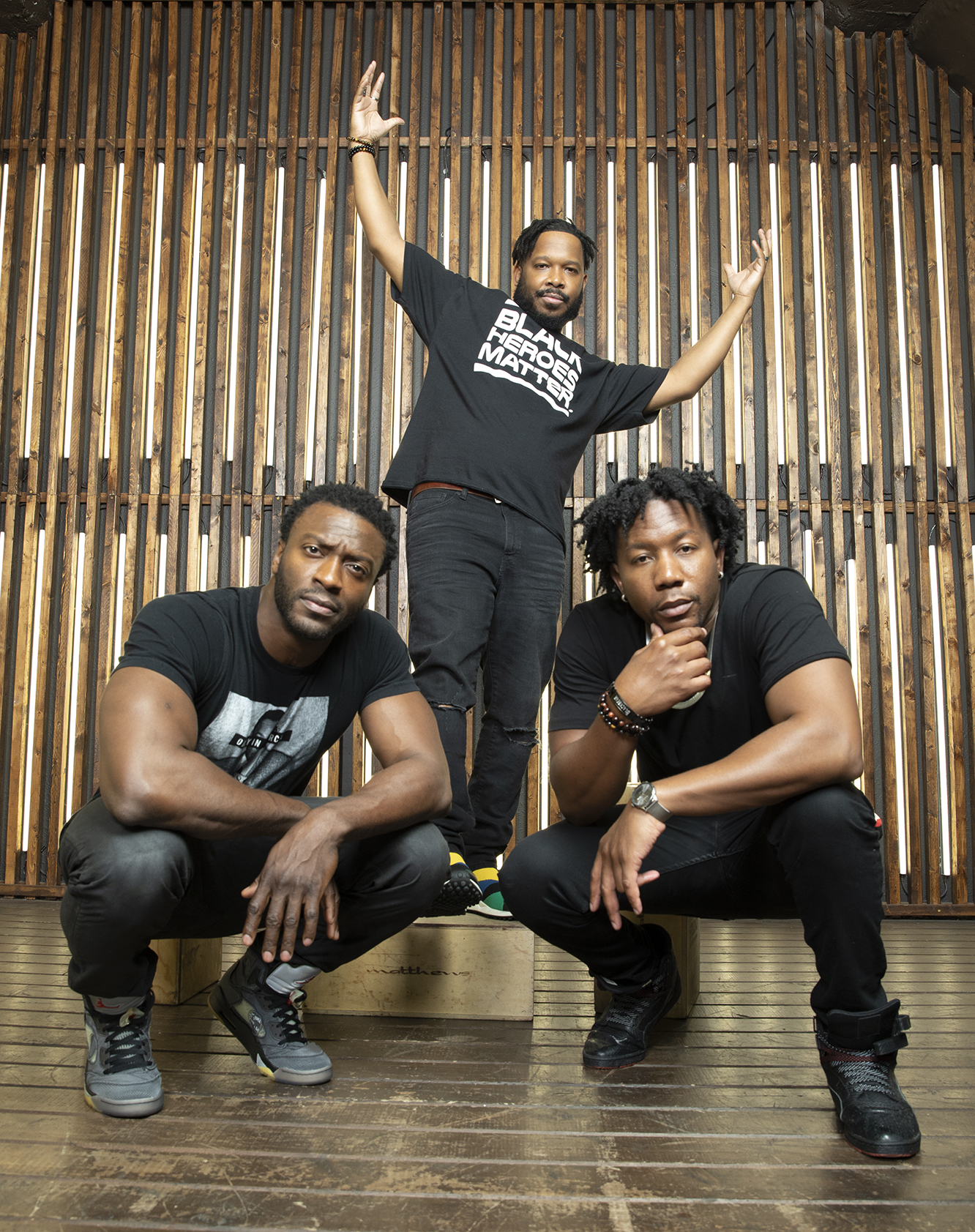
The costume artist, the art director, the watch designer
The three founders brought different kinds of experience. Boutté’s career includes costume concept illustration and production design, with credits spanning Black Panther, Once Upon a Time in Hollywood, and music videos. Uwandi specializes in character and costume concepts, with work on productions including The Mandalorian and Moon Knight. Those are individual career credits, useful evidence of the expertise behind the company.
Hodge adds a less predictable combination. Alongside acting, he paints and designs watches. He told ArtCenter that an industrial drawing class helped spark his interest in watchmaking. His route into design involved the same questions that recur in entertainment art: how an object works, what it expresses, and how to turn an imagined form into something specific.
By November 2021, ArtCenter reported that the studio had gone from a few artists to more than 70. It named Netflix, Sony Pictures Animation, Warner Bros., and DC among the clients. The studio’s About page now displays 125 artists and counting. That figure describes the creative network; it should not be read as 125 salaried employees. The distinction helps explain how a small central operation can draw on a broad range of specialists.
The network figure displayed on 9B’s About page, viewed September 2026. A measure of creative reach, not payroll.
What the client is buying
9B describes itself as a consultancy and outsourced conceptual design studio. Its place in the market is the development work that helps a production decide what its world should look like. Film and television teams, animation studios, and game makers can bring it a creative problem that needs to become visible. The commercial proposition is specialist design labor and judgment.
The portfolio makes that offer easy to understand. Its categories include characters, stylized characters, creatures, environments, illustrations, key frames, product design, props, and vehicles. A key frame can picture a consequential scene; an environment image can establish the mood and physical logic of a location. A character concept gives collaborators something more precise to discuss than a string of adjectives.
That work sits upstream of many expensive decisions. Consider a hypothetical production choosing between three versions of a creature. Drawings let the team discuss silhouette, personality, and narrative fit before committing to a finished asset. This is an illustration of the service’s value, rather than a claim about a particular 9B contract. The useful output is a decision the production can act on.
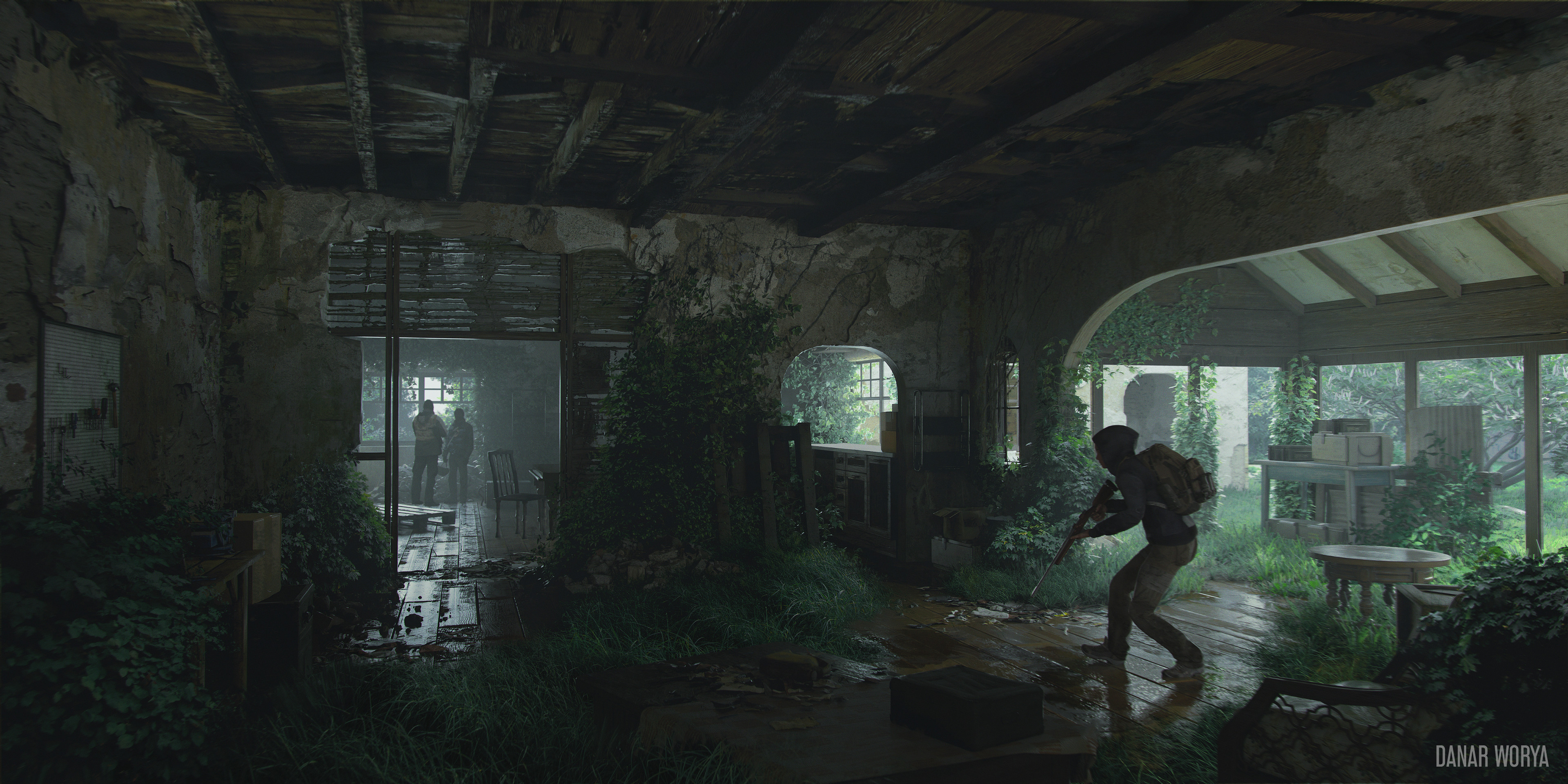
For a buyer, the practical starting point is a brief: medium, intended audience, visual references, deliverables, schedule, and who can approve revisions. Those are useful questions to bring to a design engagement, not a published 9B package. They help separate an exploratory assignment from a request for production-ready material, which can require different work.
A simplified view of concept development, informed by Boutté’s descriptions of his work.
Blue Beetle had to look like Blue Beetle
The DC film offered a clear test: carry a recognizable comic-book hero into live action while making his world particular. Uwandi described combining the existing material with director Ángel Manuel Soto’s interests, including anime and his cultural perspective. Boutté emphasized respect for the audience that had made the adaptation possible in the first place.
The resulting concept work belonged to a larger production collaboration. Costume designer Mayes C. Rubeo was responsible for the physical costume side; 9B contributed the visual development. A February 2023 announcement described the studio’s team on the film as primarily Latin artists. That detail connects the company’s hiring mission to a specific assignment.
Some designs were cut. Uwandi acknowledged as much when discussing the film, while expressing satisfaction with the selections. There is a practical lesson in that ordinary admission. Concept work produces alternatives. Paying for exploration means allowing some of it to remain exploration; demanding that every sketch survive would misunderstand the assignment.
Hiring is part of the design problem
The studio’s distinction rests on how it brings people into that work. In its coverage of LightBox Expo 2022, Wacom described 9B’s mentorship activity and work with studios on name-blind hiring. That is a specific intervention in the selection process, alongside the broader commitment to a primarily BIPOC community.
Wacom also partnered with 9B and the Concept Art Association on event programming. A session with Uwandi and producer Christina Diem Phan examined how producers and artists work together. The subject is revealing. A successful drawing still needs a functioning relationship around it: someone to interpret the assignment, communicate changes, and keep the production moving.
“I don’t have an ego when it comes to my professional work, only my personal work.”
Phillip Boutté Jr. · Shoutout SoCal, 2023
Boutté made that distinction while describing his approach to collaboration. He also credited the founders’ relationships with Hendrix Herman and Meinerding in getting 9B started. The culture he presents is rooted in service to the project and responsibility to younger artists. The Concept Art Association recognized the collective with its 2022 Community Impact Award.
A production can also hire an independent artist or maintain its own visual development team. The case for a collective is access to several kinds of expertise through an organized creative relationship. Its mission adds a reason to widen the search. The work must still answer the brief. Inclusion does not remove the need for deadlines, clear feedback, and suitable craft.
Watch the credits. There are jobs in there.
Education has become a visible extension of the founders’ work. In February 2024, Boutté and Uwandi appeared in the National Art Education Association’s Artist Connections series, presenting to students and answering questions facilitated by National Art Honor Society participants. The format let students ask working artists about a profession that can be hard to see from the audience.
At the 2025 Mosaic event, Boutté spoke to more than 400 students. His opening question concerned whether they watched film credits. Every name, he pointed out, represented a job. He showed how research, sketches, modeling, and repeated adjustments sit behind the polished images audiences recognize.
“Social media shows the result, not the work,” he said. It is a useful corrective for an aspiring artist judging a rough portfolio against a finished film. His examples included the research and scene illustrations behind his own work on Black Panther: Wakanda Forever. The invitation was to study the process and seek out peers, mentors, and community resources.
A working relationship is the product
The collective’s name also appears among the executive producers of Frank Abney’s 2025 Black Man, Black Man teaser. Produced by Hodge Brothers Productions, the project features narration by Yvette Nicole Brown and Aldis Hodge. The credit adds another dimension to a company best understood through concept art: participation in getting a story made.
For a potential client, the immediate use is more direct. Look through the work, identify the design problem, and discuss an assignment. For an artist, the lesson is to connect creative ability with an understanding of how productions operate. A beautiful portfolio and a useful professional relationship have different jobs to do; a career needs both.
9B’s founding decision remains the most persuasive part of its story. The artists had shown up. The founders decided to organize the work that could follow. Years later, a small detail on a superhero’s face offers one visible result of that choice. The next result may be less easy to spot: another name in the credits, attached to someone who got the call.
Inside the drawings
Explore the studio portfolio, visit 9B Collective, or connect on LinkedIn, Instagram, X, Facebook, and TikTok.
Read · The Blue Beetle design conversation ↗Read · Boutté on becoming a costume concept artist ↗Watch · Phillip Boutté Jr. at Mosaic ↗Watch · Phillip Boutté Jr.’s demo reel ↗Watch · Black Man, Black Man teaser ↗