An actor’s contact page can tell you more about Hollywood than a red carpet. On Cole Doman’s website, three jobs appear on one line: agent, manager, publicist. Viewpoint occupies the third position. That small piece of administrative prose contains the company’s entire reason for existing. Getting work, managing a career and helping the public understand the person doing that work are separate assignments.
The distinction matters because publicity is easy to confuse with fame. Someone can be familiar to millions of people and still need help communicating what they are doing next. An audience remembers a character. A magazine needs an angle. A television producer needs a guest who belongs in that particular show. The publicist works among those expectations.
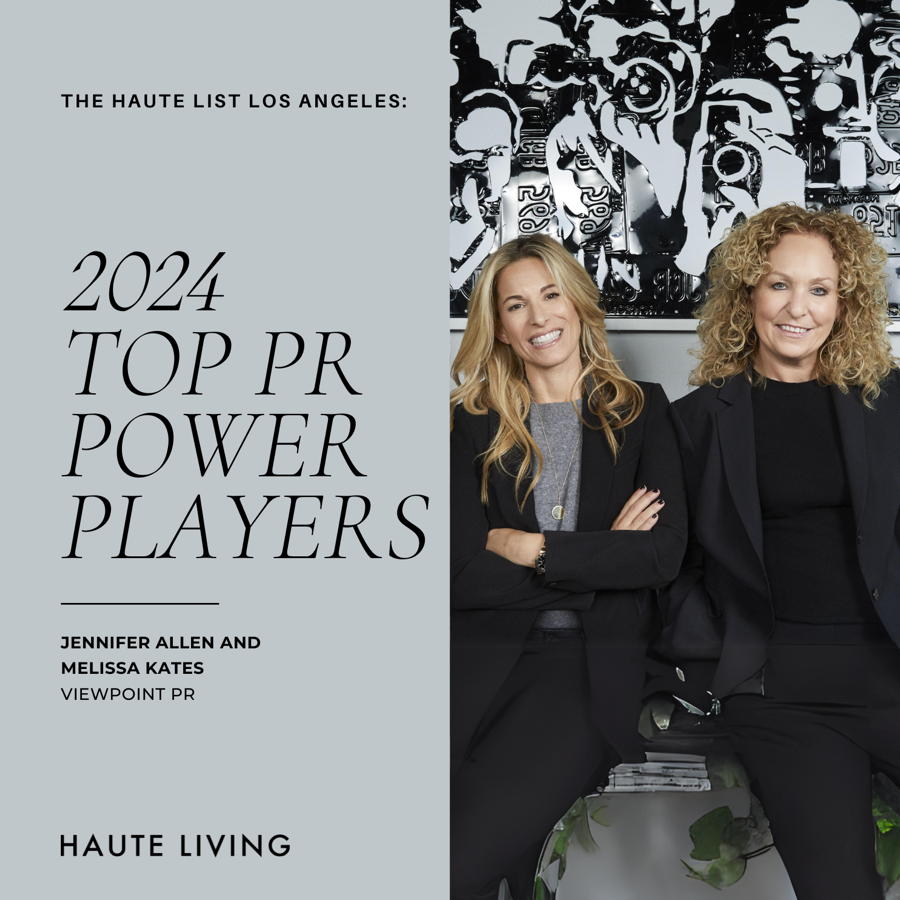
Viewpoint, founded by Jennifer Allen and Melissa Kates, specializes in that personal assignment. Its history is useful because the business began with a rather awkward question for any service company: when an experienced employee walks out, how much of the business can walk out with her?
When the company changed, the relationships moved
In December 2009, PMK/HBH’s planned merger with BNC set off a series of departures. Allen and Kates were among the publicists who left. Other departing colleagues established Slate PR. By early 2010, Allen and Kates had launched Viewpoint, with offices on both coasts.
This was a new firm staffed at the top by people who already knew the trade. Allen had worked her way from assistant to managing partner at PMK. Kates had been a senior vice president and led its talent department. Launch coverage named clients including Matt Damon, Jodie Foster, Chris Pine and Christian Bale. The founders were opening a business around experience and relationships accumulated elsewhere.
The merger is the documented turning point. The more interesting business implication is an inference: a corporate name can change faster than a client’s confidence in the person answering the phone. In a service built around individual representation, that confidence has somewhere else to go.
A relationship can move in either direction
The appealing version of this origin story would end with the clients following and everybody staying. An early report makes the story less tidy. In April 2010, Showbiz411 reported that Katherine Heigl had left Kates and returned to PMK-BNC, having initially accompanied her publicist to the new firm.
That is a reported change of representation, not a verdict on a campaign. It also makes the economics of a personal-service business visible. The same freedom that lets a client follow a publicist into a new company lets that client leave again. A boutique cannot make its size do all the persuading.
For a prospective customer, the practical question is therefore specific: does this team understand the work, the audience and the next stage of the career? The answer has to survive beyond the introduction. A familiar name on a client list is evidence of experience; it is not an agreement about what another client will receive.
The work hides in the acknowledgments
Viewpoint’s offering is personal publicity and public-image strategy. Its stated media range includes television, magazines, print, online outlets, radio and social channels. A client is buying professional attention to how those appearances fit together.
One unusually concrete glimpse sits at the end of a February 2022 Visual Tales feature about actor David Rysdahl. The acknowledgments thank Sara Planco and Alexis Corradino at Viewpoint alongside the people involved in photography, styling and other parts of the collaboration. Publicity appears there as a contribution to an editorial production, among several contributions needed to make the feature happen.
Television provides another view. In April 2025, the Philadelphia Public Relations Association advertised a conversation between Allen and Patrick Friend, a longtime producer of Jimmy Kimmel Live. The association described them as frequent collaborators and framed the discussion around placing talent and telling stories for a national audience.
Neither example says that a publicist controls the finished piece. Together they suggest a useful way to understand the job: translating between a client’s priorities and a publication or program’s requirements. The final interview may look relaxed. The arrangement behind it has more participants.
The publicist needs a reputation, too
There is another audience in this business: the people on the other end of the pitch. Viewpoint publicist Lindsey Ludwig appears in Central Talent Booking’s testimonials, describing more than ten years of working with its team. That is evidence of a sustained working connection, rather than a claim that every booking runs through one company.
The founders also have recognition from their own profession. The ICG Publicists’ records list Allen as the 2011 recipient of the Les Mason Award and Kates as its 2015 recipient. These are individual career honors. They help explain the experience behind the firm without pretending to measure a client’s eventual ticket sales or audience response.
Professional judgment also involves deciding when a story is ready. Allen joined a 2018 PRSA-LA panel with journalists and an academic to discuss entertainment media ethics. Its published account addressed misinformation, sensitive reporting and the need to gather facts before distributing them. The subject is a reminder that being quick and being useful are not always the same thing.
Decades are an interesting unit of measurement
Asked about defining successes in a 2024 interview, the founders emphasized acclaim and the length of their client relationships. Their published client selection spanned performers such as Kelly Clarkson and Jenna Ortega, the writer Rupi Kaur and the SCAD Savannah Film Festival. It was a snapshot of representation at that time, not a permanent roster.
“Each of us continues to represent clients we have had for decades.”
Jennifer Allen and Melissa Kates
Joint interview, Haute Living, 2024
That emphasis makes Viewpoint’s positioning legible. It belongs in entertainment publicity, alongside alternatives such as Slate PR and ID, with personal representation at the center of its public description. Its business is a professional service. The useful comparison is the proposed team, scope and working relationship.
The founders’ account also credits senior staff with the company’s development. There is a practical tension here for any founder-led service firm: clients want continuity, while a business needs capable colleagues who can carry responsibility. Viewpoint’s public team page gives those colleagues names. The service necessarily extends beyond two founders.
What to borrow before hiring anyone
A reader outside entertainment can take a modest lesson from this history. Write down what you want someone to understand about your work before choosing where to promote it. Then ask which audience matters, which format can carry the idea and who will remain responsible as the plan develops. Those are editorial lessons drawn from the company’s positioning, not a disclosed Viewpoint operating manual.
A publicity brief also needs limits. An interview cannot perform the function of a casting agent. A media relationship cannot supply a worthwhile story where there is none. Someone seeking a specified quantity of paid impressions has a different purchasing decision from someone seeking personal representation.
Return to that actor’s contact line: agent, manager, publicist. Three names, three kinds of work. Viewpoint occupies a narrow space with plenty happening inside it: helping the next audience encounter the person behind the performance with a little more context.