personal-branding
(45)
AMW turns attention into a business
A remix contest, a Vienna hotel opening, and an AI sales assistant have something in common: AMW. The agency is turning its experience winning attention into tools for managing what happens next.

The Tuxedo Problem That Explains Mario Mirabella Jr.
A formalwear website needed a different point of view. For MSM Digital founder Mario Mirabella Jr., the answer came from outside the business - a habit that runs through his career.

Your experience needs a passport.
Storani Careers helps professionals make their experience understood across borders. Its founder learned the problem from both sides of the hiring desk.

Alexis Rose Quintal and the art of becoming known
She trained to teach, learned to sell, and built Rosarium Collective around people working for themselves. Alexis Rose Quintal’s approach to personal branding begins with a question she has spent years answering for herself: what do you want to be known for?
Ashley Stahl and the job hiding inside the job hunt
Ashley Stahl worked her way into counterterrorism, then found herself drawn to the conversations happening on the sidelines. The founder of Wise Whisper Agency has been turning those detours into a career ever since.
Claire Bahn and the audition before the audition
Before she advised executives on being seen, Claire Bahn used her marketing skills to get cast. Her career has followed a persistent question: what makes a stranger decide you are worth a closer look?

Vikrant Shaurya and the Book That Changed His Job Description
A library book sent Vikrant Shaurya out of engineering college. A publishing business followed - and, eventually, a bigger question about how expertise earns an audience.

The Book Was Only the Beginning
Authority On Demand began by turning experts into authors. Then it made a sharper bet: the real product was never the book - it was the trust the book could start.

The Business of Making Google Forget
NetReputation built a business around an awkward truth: the internet rarely forgets on command. So it removes what it can, outranks what it cannot, and sells the patient work in between.
The Executive Who Never Posts Is Still Saying Something
Qnary built a business around a small corporate absurdity: companies spend fortunes making their brands speak, while the people audiences actually trust are too busy to post. Its fix is part writers' room, part workflow software, and part reputation insurance.

Badassery and the Art of Changing Everything but the Mission
It began by finding overlooked people a stage. When the stages vanished, Badassery kept the problem and discarded the product - twice. Its latest answer is a small agency built around one unfashionable idea: before you chase attention, decide what you actually have to say.

Prestidge Group Bet the CEO Would Become the Product
Briar Prestidge saw influencers building audiences while executives stayed behind corporate logos. Her agency turned that gap into a coordinated business of press, posts, stages, search results and cameras.

Bant Breen Built a Career on a Simple Bet: People Trust People
Long before executive visibility became a boardroom concern, Breen was building the machinery behind digital reputation. His second act with Qnary began with a pointed question from his father: after early recognition, what would he do next?
Arcbound Learned That a Personal Brand Is Not a Posting Schedule
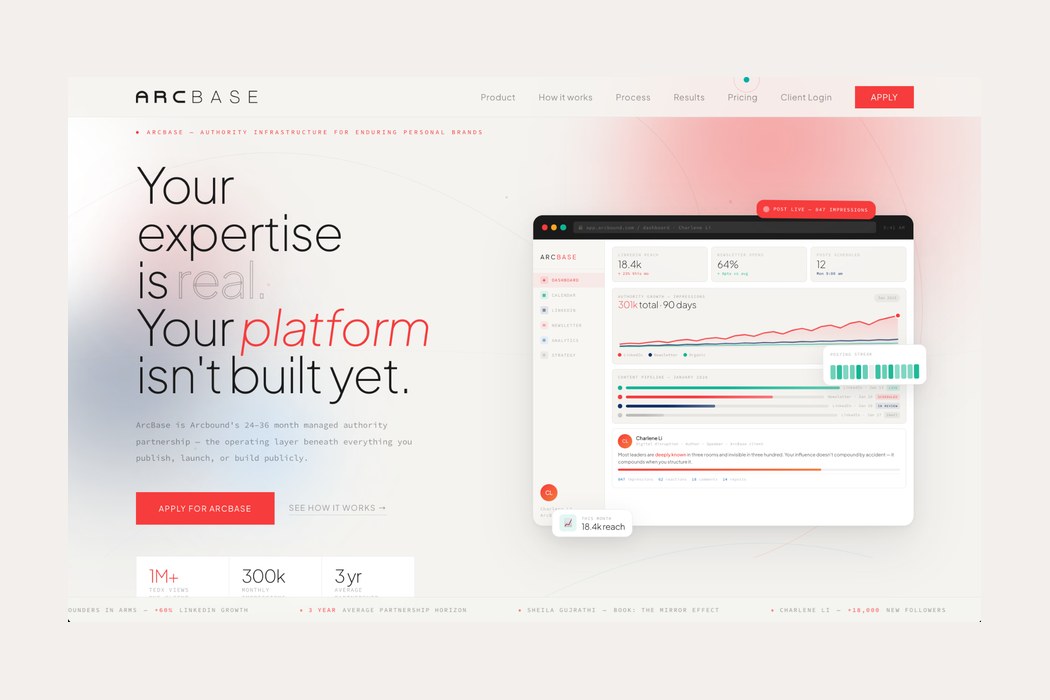
It began with $20,000 of debt and an $800-a-month writing offer. Eight years later, Arcbound is betting that serious reputations need infrastructure, not an endless appetite for posting.

The Fine Print Is the Product
Level Up PR sells visibility, credibility and a promise with conditions. The interesting part is not the press hit - it is the operating system built around making attention repeatable.
The Lions Bet That a Model Could Be More Than a Measurement
The New York agency started with an unfashionable idea: a model's opinions, oddities, and ambitions might be worth more than perfect measurements. A decade later, that idea has turned representation into a small creative system of its own.
The Talent Manager Who Stopped Chasing the Algorithm
Outshine Talent made an early bet on TikTok. Seven years later, its more interesting wager is that a creator's career should survive the platform that made it possible.

The Agency That Hired Nobody
Alexis Quintal built Rosarium around a peculiar bet: the people best equipped to advise entrepreneurs are entrepreneurs themselves. The result is a PR collective that treats reputation as a business system, not a pile of press clips.

The Agency That Wants to Make the Middleman Useful Again
Majors Management Group sells something the creator economy routinely misplaces: the disciplined middle between a good personality and a useful partnership.

Zilker Media Is Building the Internet's Memory of You
The Austin agency treats reputation less like a spotlight and more like a trail of evidence - one built slowly enough for people, search engines, and now AI systems to believe it.

The Strange Business of Being Seen
Women Entrepreneurs Inc began with 25 founders trading what they knew. Its current wager is more expensive and more interesting: make the business as visible as the woman who built it.
The Ghostwriters Who Would Rather You Never Mention Them
Executive Presence has built a multimillion-dollar business by making its own work disappear. One interview a month goes in; a CEO's public voice, a stream of market signals, and sometimes a very large deal come out.

ARA Quietly Repairs the Internet's Memory
The web never forgets, but it often remembers badly. Ashley Rust built ARA to make a person's scattered search results, profiles and press tell one coherent story.
The Beauty Queen Who Turned Presence Into a Practical Business
Mafae Yunon-Belasco learned that an image opens the door, but a system keeps it open. Her Stockton consultancy now sells the machinery behind a public presence - from a $45 first step to full-service brand and content support.
The Quiet Executive’s Full-Service Publicity Machine
Claire Bahn Group sells a provocative idea to accomplished people who would rather stay busy than visible: your work cannot speak for itself if nobody can find the microphone. So the agency builds the stage, writes the lines and measures who listened.

Wise Whisper’s $30,000 bet on a talk that outlives the room
Ashley Stahl built Wise Whisper Agency around the long afterlife of a good speech. Its offer combines writing, coaching and stage-booking support, with a much less predictable clock for getting heard.

She knew the TV producers. Her pitch still went nowhere.
Magnify Your Message® grew out of Cheryl Hunter’s discovery that access alone does not make an expert newsworthy. Her business combines publicity and coaching to help people give the media a story worth telling.

Luna Entertainment knows fame needs a destination
A celebrity publicist, a doll startup, and the gap between being seen and getting somewhere. Inside Luna’s business of giving attention a purpose.
Impact24 PR wants you to remember the names in the credits
The Los Angeles agency turns the work of composers, editors and designers into stories people can repeat. Its business begins where the spotlight usually stops.
Viewpoint and the business of being understood
Jennifer Allen and Melissa Kates built a publicity firm around the individual. Its history shows why, in Hollywood, the relationship can be more portable than the company.