There is a comforting myth in small business: do excellent work and the world will eventually notice. The myth is flattering because it makes obscurity sound noble. It is also how a talented architect, consultant, coach, or shop owner can spend five years becoming indispensable to twenty clients and remain invisible to the twenty thousand people who might hire her next.
Women Entrepreneurs Inc exists because Melissa Barker stopped believing the myth. Not immediately. First she left corporate marketing, opened a firm, and discovered that knowing how to tell a brand story was quite different from knowing how to run the company telling it. Her contracts were weak. Clients took advantage. A freelance-heavy team made sense financially but made operations harder. She read the books, watched the webinars, and arrived at a diagnosis that was both irritating and useful: she was not a failed marketer. She had not yet learned to behave like a CEO.
So she went looking for people who had. She did not want another mixer, and she has been memorably blunt about not wanting the entrepreneurship equivalent of holding hands and singing “Kumbaya.” She wanted the curtain pulled back. In Charleston in 2017, twenty-five women agreed. The first version of WE Inc was a community where founders traded expertise - a lawyer might help with contracts, a marketer might return the favor with positioning, and both would save money they did not yet have.
Charleston, 2017
01 / The useful failureThe company that outgrew its coffee dates
The barter system solved an early problem: access. A founder could learn from another founder before she could afford a bench of specialists. The first price, however, was a problem of its own. Founding membership cost $100. In a 2021 interview, Barker said her COO called that the company's funniest mistake: WE Inc was urging women to know their value while undercutting its own so badly that it barely survived. The price was later doubled.
By 2021, a Forbes profile described an ecosystem of more than 5,000 people across 44 industries and 25 cities. In a 2023 interview, Barker put membership at just under 400 and described an international reach. Those numbers belong to different measures and different moments, but together they show the direction of travel. The coffee circle had become a platform.
Then the platform changed shape. The company’s current home page does not lead with membership. It calls WE Inc a “business transformation company for women leaders” and sells a six-month Visibility Accelerator. This is more than a fresh coat of brand paint. The old product helped women find useful people. The new one gives a smaller number of clients a team that does the work with them: clarify the customer, sharpen the offer, rebuild the brand, improve the website and content, tighten systems, and pursue press, speaking, awards, partnerships, and referrals.
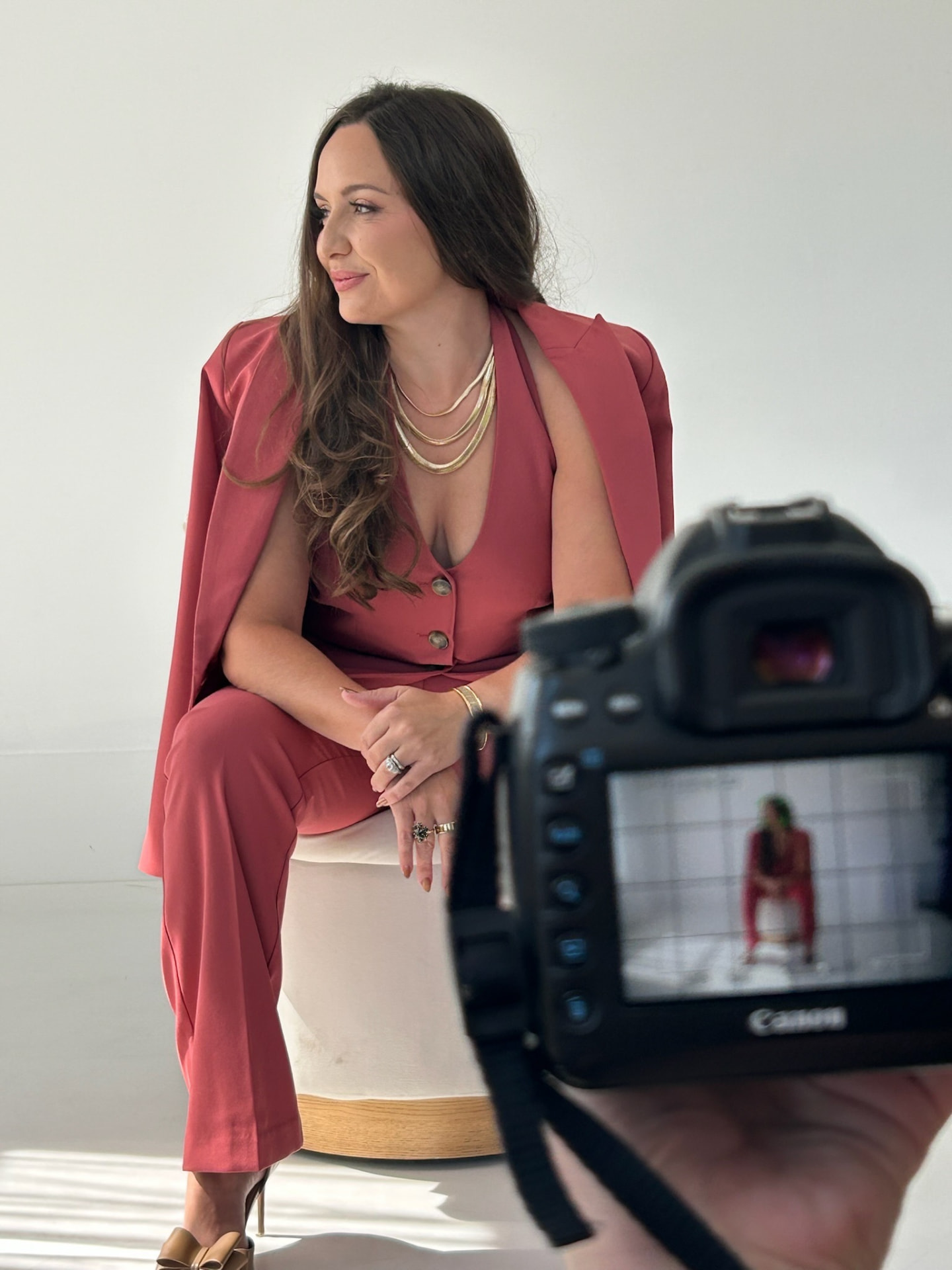
That distinction matters. A coach advises. An agency executes. A membership introduces. WE Inc has arranged pieces of all three around a single bottleneck: the accomplished founder whose business presentation has not caught up with her ability. Its customer is not simply a woman with an idea. The public pitch is aimed at established service-business owners and executives, especially mothers and women with full lives, who have become too senior to keep fixing their own Canva files at midnight.
“The world can’t buy from you if they don’t know who you are.”Melissa Barker
02 / The attention portfolioFive doors are better than one feed
Barker’s tidy acronym is GAPPS: grants, awards, press, partnerships, and speaking. Notice what is absent. There is no P for posting every morning, no T for trending audio, no requirement to dance near a ring light. The five channels work because each can provide a form of third-party validation. A publication, conference organizer, award committee, grant maker, or partner has decided that the founder is worth someone else’s attention.
This came from a change in Barker’s own behavior. For four years, she has said, a visitor would scarcely find her face on the company’s Instagram account. She hid behind the WE Inc brand. Then the company pursued a Forbes story. Barker described the effect as a reversal: instead of chasing attention, messages and speaker applications began arriving. The lesson was not that Forbes sprinkles permanent authority dust. It was that credible signals reduce the amount of explaining a seller must do.
The claim is sharper than “personal branding matters.” WE Inc argues for a portfolio of attention. If video feels false, do not make video the center of the plan. If a founder teaches brilliantly, pursue stages. If her category is poorly understood, pitch explanatory press. If the business creates a useful combination with another brand, build a partnership. The channel has to fit both the person and the customer. Authenticity here is not an excuse to stay comfortable. It is a filter for choosing which discomfort might pay.
03 / The price of helpA $16,500 bet on the front and back of house
The current accelerator costs $2,750 per month for six months. That is $16,500, and WE Inc does not bury the number behind an application. The engagement includes a fully art-directed photoshoot called Queen for the Day. The broader work is divided, in the company’s own framing, between the front of house - brand, messaging, website, content, online presence - and the back of house - offers, pricing, systems, workflows, and strategy. Visibility work then places the client in rooms she could not create alone.
Social Club is listed at $1,500 monthly with a six-month initial commitment. The accelerator is $2,750 monthly for six months. This compares price, not equivalent scope.
For founders who need content rather than a full rebuild, WE Social Club is listed at $1,500 a month with a six-month initial commitment, then month-to-month. A free 21-day challenge sits at the other end of the funnel. Together, the offers form a sensible ladder: practice being visible, outsource recurring content, or hire the team to rework the business and its presentation.
Competitors appear at every rung. A founder can assemble Canva, AI tools, a freelance designer, a PR consultant, a web shop, and a coach. She can join a national women’s network or hire a conventional agency. WE Inc’s difference is not a proprietary technology. It is integration, a specific client, and a willingness to work on the offer and the operations as well as the outward brand. That makes the service harder to compare by hourly rate, which is commercially useful, but it also makes outcomes dependent on unusually close collaboration.
04 / The transferable bitThe copyable part costs less
Most readers will not spend $16,500 on this particular problem. They can still borrow the diagnostic. First, stop asking whether you are visible in the abstract. Ask whether the right buyer can understand, trust, and purchase what you do. Second, choose one or two GAPPS channels that suit the way you communicate. Third, create proof before creating more volume. A good case study or specific award submission can carry more commercial weight than thirty vague posts about “showing up.”
Can a stranger say who you help, what you sell, and why it matters after one minute?
Choose the award, stage, story, grant, or partner that a perfect-fit client already respects.
Attention leaks when pricing, onboarding, offers, or follow-up cannot carry the interest forward.
Track qualified conversations and easier sales, not applause, impressions, or the thrill of being mentioned.
The approach has conditions. Visibility magnifies what is already there. It cannot rescue an offer nobody wants, substitute for competent delivery, or guarantee that a pitch wins coverage. The accelerator also asks for money, six months, and enough founder participation for a team to capture a real voice. A very early company still searching for a customer may need product discovery before polish. A founder unwilling to be interviewed, photographed, edited, or challenged is buying the wrong kind of help. And anyone expecting an award or press hit on command has confused a strategy with a vending machine.
Still, the WE Inc story contains a pleasing loop. Barker built the community because she did not know how to run a business. The community taught women to trade what they knew. The company then learned that expertise itself could be packaged, positioned, and made easier to buy. What began as a way around the cost of specialists became a specialist firm with a clearly marked price.
That is the strange business of being seen. The founder must step forward, but the business must be ready to meet the attention when it comes. One without the other is either obscurity or theater. Women Entrepreneurs Inc sells the attempt to make them arrive together.