Ashley Stahl went to Washington to work in national security. Along the way, she discovered that the city offered an excellent meal plan for an unemployed graduate: networking events. There were cheese cubes, free wine and peculiar sandwiches. She remembers making the rounds so thoroughly that the receptions kept her fed for a month. The refreshments were incidental to the mission, although perhaps the sandwiches deserved a small place on the résumé.
She had returned from graduate school in London with ambitions in counterterrorism and landed in an administrative job in Los Angeles instead. Her interests were serious; her responsibilities were considerably less geopolitical. She had studied government, history and French at the University of Redlands, then international relations at King’s College London. None of this had persuaded the job market to make room.
So she called her university and asked for alumni who had moved to Washington. The list ran to roughly 2,000 names. On lunch breaks, she worked through it. Some people hung up. Others offered help, introductions and enough encouragement for her to leave Los Angeles. In her account, six weeks of searching in Washington produced three offers and a salary several times what she had earned before.
The obvious story ends there: ambitious graduate gets the job. Stahl’s story becomes interesting because she kept paying attention after the apparent ending. She liked the conversations. She liked finding the right words. And she liked helping someone else get an offer almost as much as getting one herself.
A Pentagon badge, and a Sunday coffee group
The work was real. A defense contractor hired her to run operations for a Pentagon training program preparing senior Department of Defense officials for deployments to Afghanistan. They would serve as advisers to Afghan government counterparts. She had arrived in the field she had spent years trying to enter, with responsibilities that gave her education an immediate practical use.
Later, at the political-risk consultancy Control Risks, she managed intelligence analysts advising a large corporate client on threats to people and assets around the world. In 2013, Diplomatic Courier and Young Professionals in Foreign Policy included her among their young foreign-policy leaders. There were plenty of respectable reasons to continue. A career can collect evidence in its own defense.
Meanwhile, friends wanted to know how she had managed the job search. She helped with résumés, networking and salary negotiations. Sunday coffee groups grew through friends of friends. Stahl recalls being asked to leave Starbucks when the informal gatherings became too large. The café had apparently supplied a business incubator without agreeing to the tenancy.
The work on the sidelines was giving her information the official job description could not. She enjoyed rewriting a résumé so it presented someone honestly and persuasively. She enjoyed explaining how to introduce yourself. Other people could see the makings of a career coach before she had much idea what the title meant.
Her later account of the mismatch is unusually specific. She had assumed a facility with words would translate neatly into intelligence analysis. In practice, she came to distinguish writing from analysis as different strengths. The distinction became central to her coaching: an interesting subject and a satisfying daily activity can lead to quite different jobs.
“Clarity comes from engagement, not thought.”
Ashley Stahl
The invitation arrived before the confidence
In October 2013, an invitation to speak at TEDxBerkeley gave the emerging coach another problem to solve. She had experience briefing military officials. Giving a public talk about career direction required a different sort of preparation. She accepted before she felt fully equipped for it, a decision she later used to illustrate the value of starting before every qualification has been collected.
At the February 2014 event, her subject was “Three Questions to Unlock Your Authentic Career.” The questions were plain enough to fit on a piece of paper: What am I good at? What do people tell me I’m good at? What is holding me back? They placed everyday evidence beside personal ambition. Someone might learn something useful from the requests that kept arriving in their inbox.
That first Berkeley appearance mattered commercially as well as personally. Stahl says the recording brought a surge of enquiries to her coaching practice. A story about changing direction was helping finance the direction she had chosen. She had discovered that a talk could keep introducing her long after she had left the room.
Three career questions
What you really want
The book arrives
A book with room for a change of mind
By January 2021, that thinking had become You Turn: Get Unstuck, Discover Your Direction, and Design Your Dream Career, published by BenBella Books. Its eleven-step framework asks readers to examine skills, interests, values and their assumptions about money. The book later became a National Indie Excellence Awards finalist in the career category.
The premise has a useful impatience with the instruction to follow your passion. Enjoying a product does little to establish whether you would enjoy making it. Stahl argues that people should look closely at the abilities they can contribute and the work those abilities actually involve. Choosing a starting point leaves room for new information; declaring a permanent destination can make ordinary discovery feel like failure.
There is an agreeable irony in a career adviser who questions the five-year plan. Her own work had already expanded into online courses, a Forbes career column and the You Turn Podcast. At publication, her publisher described courses reaching job seekers in 31 countries. The subject remained recognizable even as the formats changed: how people decide where their effort belongs.
Her writing habits are less ceremonial than the word “author” might suggest. When the words stop coming, she has described going to see friends, dancing to hip-hop or putting her feet in the ocean. A blank page does not always yield to another hour of glaring at it. Sometimes the writer leaves the chair.
The talk that kept finding an audience
Her 2019 TEDxLeidenUniversity talk, “How to Figure Out What You Really Want,” begins with a frightening misunderstanding: her father received a ransom call and believed she had been kidnapped. The story leads into an examination of the choices people make about their own lives. A career talk can begin a long way from the office.
By 2026, the talk had passed ten million views, in Stahl’s account. Stahl credits the audience it accumulated with bringing book offers, consulting work and a higher speaking fee. Those are her reported outcomes, and they help explain her next decision. She had spent money and time building a public presence through several channels; speaking gave her a particularly tangible return.
There was another discovery inside the success. She enjoyed writing a talk more than delivering it. Once again, the most useful information concerned the activity within the visible achievement. Helping friends shape speeches became a way to spend more time on that activity. Wise Whisper Agency grew around the work of finding a speaker’s ideas, arranging them and helping the speaker pursue a stage.
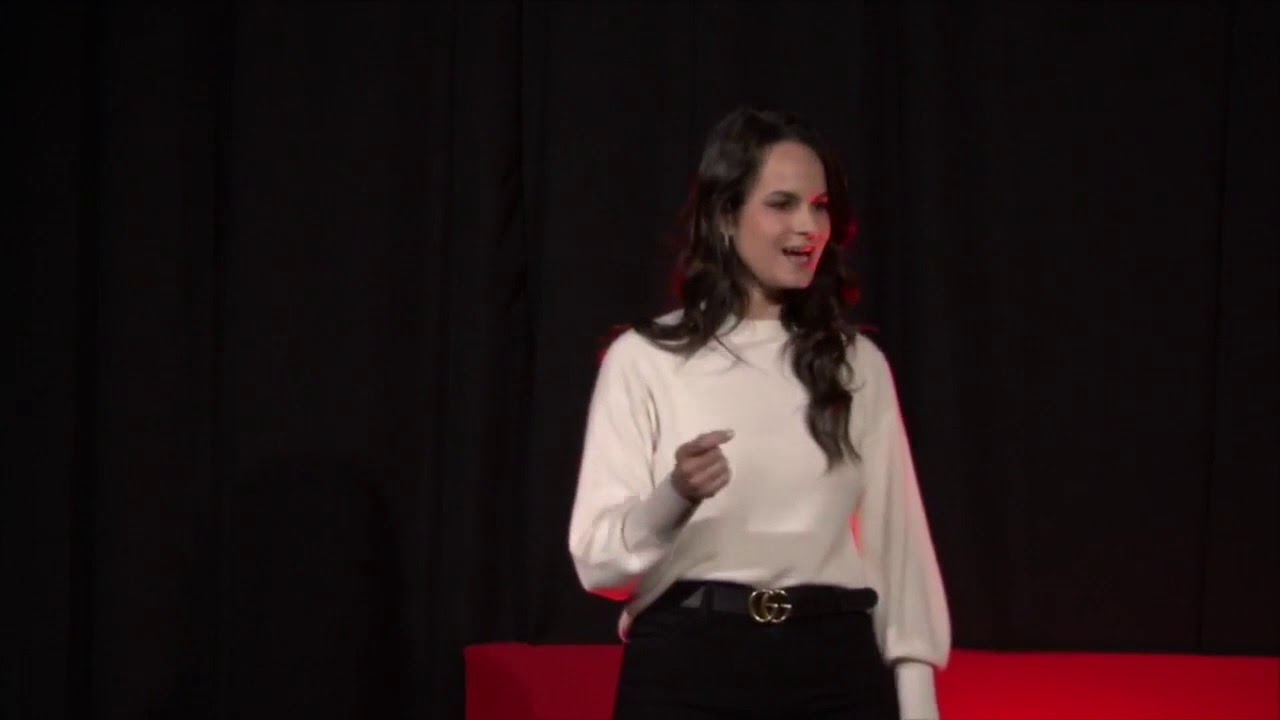
The writer behind the person at the microphone
Stahl now leads Wise Whisper as founder and CEO. Its team helps clients develop signature talks, prepare their delivery and seek speaking opportunities. The work reaches authors, executives, nonprofit leaders and others with experience to explain. A strong biography supplies raw material. Someone still has to decide what an audience can absorb in one sitting.
Her method begins with the speaker’s original thinking. She asks people to notice which things they have said changed how someone else thought or acted. Familiar subjects can become distinctive through a person’s experience and expression. In a May 2026 masterclass, she described a speech in terms of bones, soul and heartbeat: structure, underlying themes and the message that eventually emerges.
The order matters. The speaker develops the topic and the argument before forcing a slogan onto them. An opening story earns attention; a few clear points give that attention somewhere to go. The deeper theme helps people outside the speaker’s profession understand why the subject matters. A room full of strangers needs an invitation before it needs another specialist vocabulary.
She can be briskly practical about distribution, too. For video, she advises straightforward titles built around what the intended viewer is searching for. “How to Figure Out What You Really Want” demonstrates the principle. A title can do its job without arriving dressed for an awards ceremony. The performance has room for surprise after somebody clicks.
Her own agency is independent of TED and TEDx. The service combines creative work and help pursuing opportunities; the founder’s history explains the appeal of that combination. She knows what happened when a recorded talk introduced her to people she would never have met through another reception in Washington.
Another turn, this time toward the team
By July 2026, the practical demands had changed again. Discussing Wise Whisper’s growth, Stahl described a business that had expanded from four people to around 25, with a substantial sales team. She reported $700,000 in first-year revenue and discussed an expected $4 million to $5 million year. The latter was a projection, with all the unfinished work that word entails.
The interesting change was in how she described responsibility. She spoke about helping team members grow, improve their compensation and do their best work. Running the agency now required attention to hiring and sales as well as writing. A founder who built a career around her strengths was learning what it takes to make room for other people’s strengths.
In September 2026, she was still discussing original thinking and the craft of a shareable speech, this time with speaking coach Jane Atkinson. The subjects connect neatly to the early Sunday gatherings. Someone has something useful to offer. Someone else helps them find a way to express it. Then comes the less controllable part: whether another person listens.
Stahl’s stated ambition is to help people bring their ideas onto stages and create opportunities from their work. Her career offers a smaller, more intimate observation along the way. She did get the job she had pursued. Then the requests for help kept arriving, and she listened to those too. The next job was already there, pulling up a chair at the coffee table.

Follow the words
Watch the talks, explore the book, or keep up with Stahl’s work.