The first thing Qnary had to sell was not a post, an app, or a content calendar. It was permission. In 2012, the corporate voice was still largely a logo with a legal department. An executive who posted under a personal name looked, to some employers, less like an asset than a flight risk. Make the leader more visible, early prospects told the young company, and a recruiter might notice. Why invest in a person who could leave?
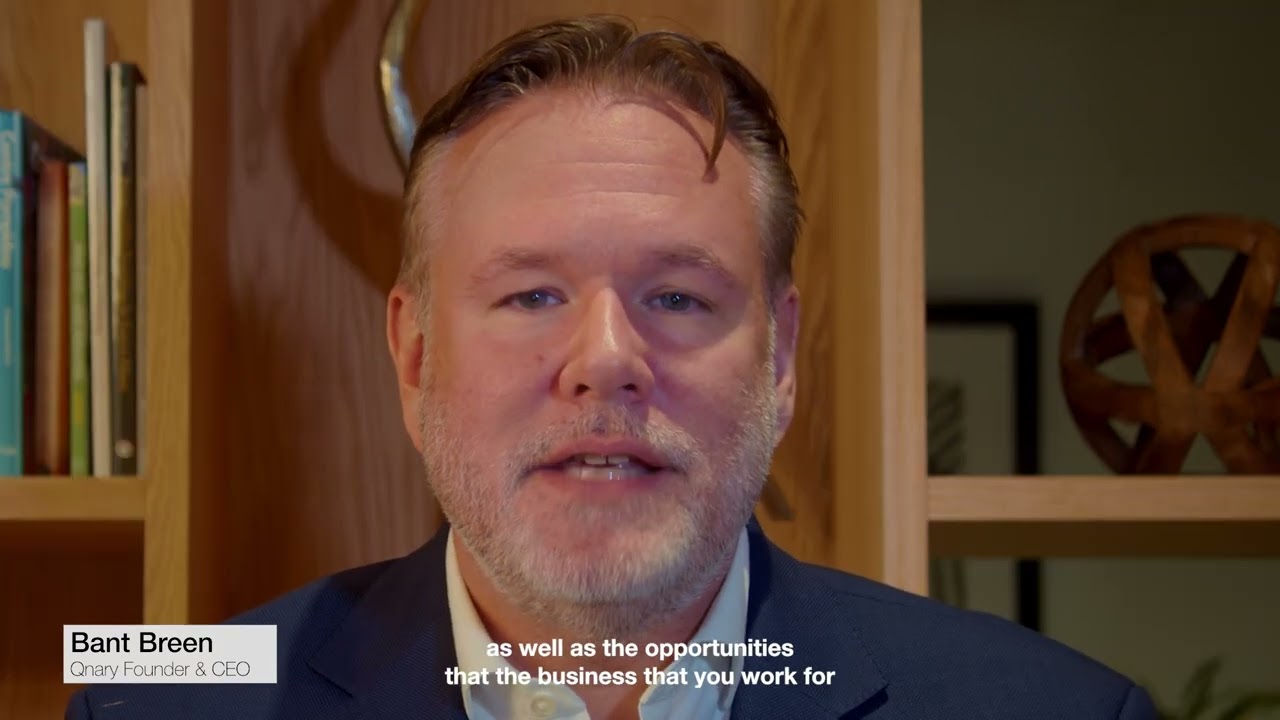
This was an impressively tidy objection. It was also the business opportunity. Founder Bant Breen had spent years in advertising and communications, where brands were treated as personalities and actual personalities were trained to stay on message. Qnary reversed the lens: the executive was already a public artifact. Search results, conference clips, LinkedIn profiles, old bios, and prolonged silence were telling a story whether anyone managed it or not.
The company began helping executives shape that story. It refreshed profiles, identified two or three subjects a leader could credibly own, wrote weekly posts, grew audiences, watched replies, and measured what landed. Today it packages those chores as a recurring service with a software spine. A writer and customer-success manager do the production. The executive reviews. The platform handles approvals, credentials, scheduling, channels, and analytics.
“People don't want to talk to companies. They want to talk to people.”Bant Breen, founder and CEO
The product is the handoff
Ghostwriting is the conspicuous part, but it is not the clever part. Busy people have always found other people to write for them. Qnary's real product is a controlled handoff: enough help to remove the weekly burden, enough participation to keep the result attached to a human being.
That distinction matters because the obvious failure mode is ventriloquism. A leader cannot outsource the raw material - judgment, experience, taste, a useful disagreement - and expect an authentic voice to emerge. Qnary can research, draft, and distribute. The client still has to react. Its own customer terms make timely information and feedback part of the bargain.
Four years of being early
Former Qnary executive Ray Carbonell described the first three or four years as a battle. The initial enterprise responses now read like dispatches from a vanished internet: if we improve an executive's personal brand, will that person leave? If the company brand already speaks, why should the executive?
The first notable customer was Bonin Bough, then a media and e-commerce executive at Mondelez and exactly the kind of digitally curious buyer an unproven category needed. The lesson is plain enough to steal: when the broad market does not yet understand a product, find the odd customer who already behaves as if the future has arrived. A good early case study can translate an unfamiliar idea better than another hundred slides.
Around 2016, Carbonell said, the market began to catch up. But belief alone did not fix the company. Qnary had started with a freemium service. Growth accelerated only after it pivoted to SaaS and launched its mobile app. About five years into the journey, 96% of customers were reportedly opening the app every three to four days. A revised sales strategy then increased leads by 500% almost overnight.
What failed first, then, was not the thesis that executives needed a digital presence. It was the packaging. Freemium did not make the behavior essential. A mobile workflow did. The app gave a recurring human service a visible rhythm: drafts arrive, comments return, approvals move, posts ship. Software made the promise legible and the habit measurable.
How much does a public voice cost?
Qnary publishes two individual subscription prices. With annual billing, One Channel is listed at $638 a month and includes up to four original posts a week on LinkedIn, X, or Threads. Pro is listed at $785 a month and adds a dedicated writer and customer-success manager, up to 40 original pieces a month, broader channel support, strategy, analytics, and team tools. Enterprise and online reputation management are quoted privately.
The comparison is not really with a free social account. It is with the hours of an executive, the salary of an internal communications team, or a patchwork of strategist, writer, designer, scheduler, and listening tool. Qnary sits in an awkward but useful middle ground: more human than a publishing dashboard, more repeatable than a freelance ghostwriter, and narrower than a full public-relations agency.
Customers before paper
Breen's funding philosophy fits the product's lack of theatricality. He has said that for roughly the first six years he paid himself last and at the minimum, reinvesting spare dollars into development. Public funding data records $1.8 million across three early seed rounds. Later, when Qnary needed runway for hiring and international growth, it used $2.05 million across three rounds of non-dilutive financing from Lighter Capital.
The money expanded sales and marketing, hired developers, refinanced older debt, and helped the company enter Europe and Asia. Qnary doubled annual recurring revenue in 2022. Breen's summary for founders is sharper than most investor decks: celebrate customers, revenue, usage, and engagement - not a paper valuation that can disappear in the next round.
From offense to defense
For most of its life, Qnary sold the offense of reputation: show up consistently, become known for a few useful ideas, and build the search results before trouble arrives. In 2025 it added the defense. Qnary ORM handles acute reputation problems with customized work to improve an online narrative and track progress over time. Breen said the company had previously turned away hundreds of such inquiries each year because the available fixes did not meet its standards for technology, value, and effectiveness.
The same year brought Amplify, an enterprise feature for coordinating announcements across groups of leaders. This is where the business moves beyond personal branding. A chief executive, product lead, people officer, and regional president can each explain one corporate event from a credible angle. The system coordinates the moment without insisting that every mouth use the same sentence.
The part worth copying
- Choose two or three subjects where the person has earned an opinion.
- Turn production into a weekly system, not a burst of inspiration.
- Keep approval close to the person whose name appears on the post.
- Reply to real people; distribution is a conversation, not a loading dock.
- Judge the program by useful relationships and opportunities, not one viral spike.
The approach works best when a leader has actual expertise, gives candid feedback, and accepts that reputation compounds slowly. It gets weaker when approval takes weeks, when compliance removes every specific thought, when a company wants applause rather than conversation, or when the executive expects a vendor to invent convictions on demand. Consistency can amplify a voice. It cannot supply one.
A workflow can make publishing efficient. It cannot make a cautious committee interesting. The executive still has to risk saying something recognizable.
That is the quiet joke inside Qnary's business. The company sells time, but its best customers must still spend a little of their own. A few minutes of judgment keeps the writers' room from becoming a content factory. A quick approval keeps the calendar alive. A genuine reply reminds everyone that there is a person behind the polished account.
Silence once looked like the safe corporate setting. Now it creates its own message: absent, guarded, perhaps unfindable. Qnary's wager is that an executive does not need to become a full-time creator to change that message. The person only needs a point of view and a reliable machine that knows what to do with it.