The most useful thing Bryan Wish's girlfriend did for his young company was ask an impolite question. He had gone roughly $20,000 into debt to create a personal website, complete with a handsome identity and proof that he had done interesting work. She looked at it and asked, in effect: what can anybody buy? Wish had built the display window before deciding what went on the shelf.
Her experience was in wedding planning, a business that has no patience for abstract nouns. Couples do not buy “logistics” or “floral coordination.” They buy a day, a package and some confidence that the cake will arrive. Wish and his girlfriend mapped the same logic onto his skills. He offered LinkedIn writing for $800 a month, called nearly everyone he knew and signed eight clients in the first few months. The thing was small, recurring and legible. It could be purchased.
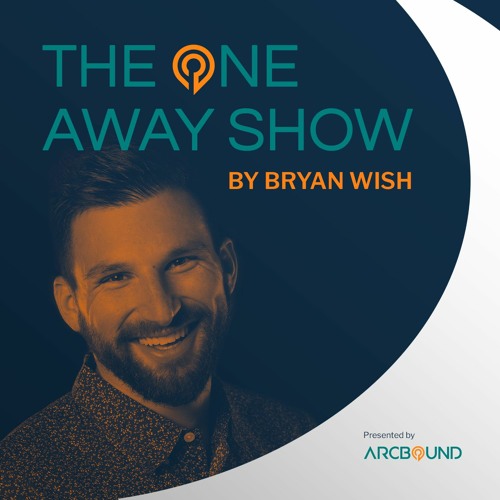
The offer was writing. The problem was fragmentation.
Arcbound today sells something much wider than ghostwritten posts. It works with established founders, executives, authors and investors whose expertise is obvious in a meeting but strangely faint online. Their public lives tend to arrive in pieces: a writer who does not speak to the web designer, a podcast editor who has never seen the brand strategy, a PR firm chasing placements and a founder who approves everything at 11:47 p.m. Each vendor can be competent. The whole can still sound like a committee.
Arcbound's flagship answer is ArcBase, a managed authority partnership lasting 24 to 36 months. A senior team handles positioning, visual identity, websites, LinkedIn, newsletters, podcasts, short video, distribution and measurement. A shorter ArcLaunch engagement takes two to four months and moves through nine phases, from discovery to a live “digital estate.” ArcBase Essentials serves clients who want strategy and content but prefer to publish themselves. Podcast production and ongoing site work can be added.
That long term is not a footnote. It reveals the business model. Arcbound is not charging for a moment of publicity; it is charging for accumulated context. An editor who has heard the founder explain the same hard-won idea six different ways can recognize the seventh version. A designer who knows the argument can make a chart that clarifies it. The agency becomes more useful as it learns what the client means before the client finishes the sentence.
“Most leaders are deeply known in three rooms and invisible in three hundred.”Arcbound's diagnosis of its market
The Ferrari had a capacity problem
For years, Arcbound built what Wish later called the Ferrari model: precise, bespoke work for a small group. Publicly named clients and advocates include Charlene Li, Deb Liu, Raj Suri, Case Kenny and Tim Springer. The company says it has helped hundreds of leaders and shipped more than 120 brand arcs. Its site credits the work with adding more than 9,000 newsletter subscribers for Li, helping a biotech CEO's TEDx talk pass one million views, and taking Immad Akhund to roughly 300,000 monthly impressions.
But a Ferrari is expensive partly because it resists being copied. In a 2024 finance meeting with operating partner Pramod Dabir, Wish began asking whether Arcbound was content with steady service-business growth or could build something more scalable. The company began productizing its method for professional-services firms, where the rainmaker's reputation often brings in the work. Wish described the desired result as the Honda version: still personal, far less costly per participant.
Decide the message, audience and position before making noise.
Build the identity, site, workflow and editorial engine.
Publish, distribute, connect and measure what comes back.
The enterprise pilot lowers the reported cost per person by standardizing the process while keeping room for individual voice. First Heritage Mortgage has been cited as an early pilot for loan-officer sites and vertical content. A related software effort, Graviten, is designed to add automation, compliance and attribution. Arcbound remains the concierge services layer. Meanwhile, an announced Arc OS self-serve product aims to package the internal discovery and content tools for operators who have time and instinct but not an embedded creative team.
This is the interesting strategic risk. A personal-brand firm is selling judgment, intimacy and taste, then trying to encode enough of those qualities to reach more people. Templates make work cheaper. They can also sand away the person. Arcbound's proposed defense is to standardize the sequence, prompts and workflow while letting the inputs remain stubbornly human: recorded conversations, personal history, aesthetic preferences and actual expertise.
The first system to fail was sales
Arcbound's reinvention was not presented as a smooth climb. Wish has written that 2024 forced him to stabilize the company's operating infrastructure and ask for help. He has also described a simpler failure: sending a proposal after the first sales call. A friend asked why. Wish realized he was rushing past the uncomfortable middle, before he knew whether the prospect's pain was real or whether the fit made sense.
The process changed to three conversations. The first is mostly listening. The second demonstrates the method and relevant cases. Thoughtful follow-up makes the approach personal. The third asks for a decision. Arcbound also replaced a dense agreement with a clean order form linked to a master services agreement. Wish reported that signatures which once took 72 hours or more could sometimes arrive in under 24. The contract had not become less serious. The customer's job had become easier.
The proposal had been asked to create conviction that the conversation had not yet earned.
That correction explains more about Arcbound than its service menu. The company's stated difference is not that it can manufacture more content. Plenty of agencies can. It is that positioning comes before production, and production lives inside one system. Traditional PR firms optimize for coverage. ghostwriters optimize for posts. designers optimize for identity. Arcbound wants the message, the machinery and the relationships to reinforce one another.
What another founder can borrow
- Make the first offer easy to name, price and renew.
- Listen for handoffs where customers are doing the coordination.
- Turn repeated judgment into a sequence before turning it into software.
- Sell the outcome over enough time for the work to compound.
- Remove friction from the decision without removing rigor from the agreement.
Who should buy patience?
The ideal Arcbound customer is already credible. They may have taken companies public, built a fund, written a book or become the person colleagues call when the difficult problem appears. What they lack is a coherent public platform. They are “known in rooms, not owned in markets,” as Arcbound puts it. Often they are allergic to the performance of personal branding. One reluctant client supplied the company's sharpest description: personal branding for people who do not think they want personal branding.
That audience distinguishes Arcbound from creator-growth shops and quick-turn LinkedIn agencies. The promise is not fame. It is to make a person's real work visible to people capable of valuing it, then build owned assets that survive a job, company or fund. The three-year average partnership claimed on Arcbound's site makes sense only for leaders playing that long game.
Where the economics stop making sense
The model is a poor fit for someone still discovering their expertise, testing a short campaign, seeking instant follower growth or unwilling to spend time in discovery and review. It also depends on having enough original experience to sustain years of publishing. Infrastructure cannot compound material that is not there.
Public pricing is not listed, so buyers must judge the offer against the cost of assembling strategists, writers, designers, developers and producers separately. Arcbound frames return across three horizons: concrete assets in the first six months, consistent distribution and inbound opportunity over six to eighteen months, then a durable audience and body of intellectual property beyond that. It is a sensible framework, though attribution remains the old nuisance. A speaking invitation may begin with a post, mature through a podcast and close because of a mutual introduction.
The company's latest public work suggests it understands that distribution is relational, not merely algorithmic. Two 2026 launch campaigns for Arcbound and Graviten generated more than 70,000 combined impressions, but Wish emphasized the 80-plus sales meetings and demos that followed. The engine was not a clever hashtag. It was a spreadsheet of people, individual asks and years of accumulated goodwill.
The girlfriend's original question still hangs over all of this. What can someone buy? Arcbound's answer has grown from a monthly batch of LinkedIn posts into a multi-year institution for one person's ideas. That is more complicated to explain and much harder to deliver. But the logic remains pleasingly practical: define the thing, package the thing, and make it easier for the right people to recognize why it matters.