There is a particular temptation in the agency business. A client asks whether you can design a logo. Yes. A website? Yes. A policy manual, podcast, webinar, media plan, trademark, video, event, research report? Of course. Every yes sounds like service. Stack enough of them together and the agency begins to resemble a diner menu: impressive from a distance, mildly alarming up close.
Christine Lobas knew this because she built that menu. She founded Studiothink in Cleveland in 2004, during what she later described as the most difficult period of her life - an ovarian-cancer diagnosis. The firm grew anyway. By its tenth anniversary it had 17 full-time employees. It could do a great many things, and Lobas eventually realized that this was the problem.
In a candid 2015 essay, she wrote that trying to be all things to all people had blurred the vision and produced a customer experience that was “good, but not great” - perhaps average. The repair was not a new slogan. Studiothink narrowed its focus and reduced the team in areas it would no longer lead. The decision was painful. The result, she said, was renewed energy and more work in the disciplines that remained.
“Better and more are not a direct correlation. Better is better.”Christine Lobas, founder and CEO
From a list of services to a sequence of decisions
The modern Studiothink still looks broad. It handles brand strategy, content, illustration, websites, social media, digital advertising, public relations, sales tools, and the systems that keep all of those pieces usable. The distinction is that breadth now sits behind a method. The company calls it “Listen. Think. Do.” This is marketing language, certainly, but it is also an order of operations.
Listening is formalized in BigThink, the agency’s discovery product: stakeholder interviews, data and digital audits, competitor and SWOT analysis, and a search for the difference a company has neglected to articulate. Thinking turns those findings into positioning, voice, architecture, and a plan. Doing produces the site, campaign, pitch, template, billboard, packaging, press conference, or internal tool. The artifact arrives last.
The work before the work
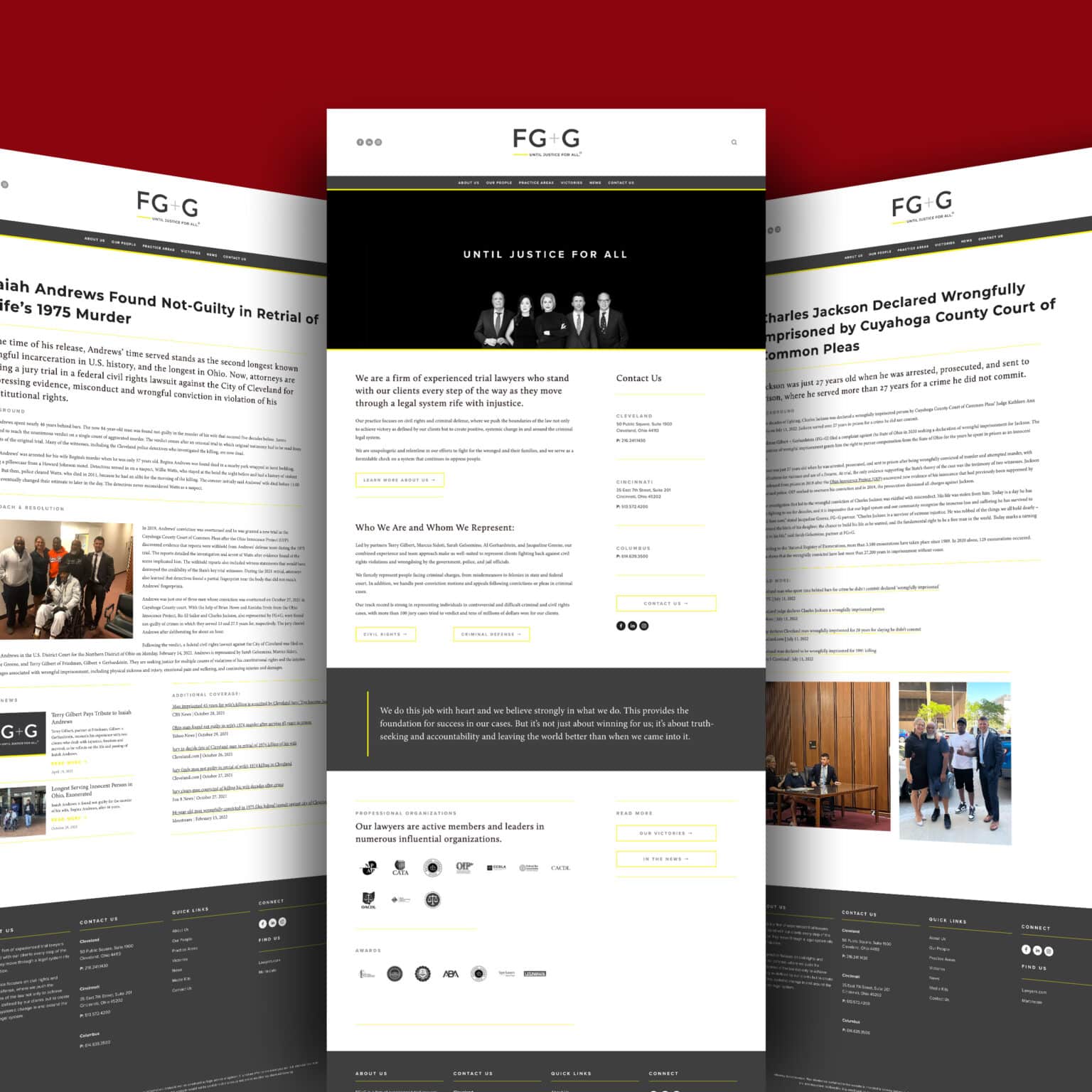
This matters because Studiothink’s customers rarely suffer from a shortage of attractive objects. Their trouble is misalignment. A healthcare group has more than a dozen sub-brands and dozens of programs, each talking to patients, families, physicians, employees, referral sources, and regulators. A butcher sells to walk-in shoppers, restaurants, and online buyers around the country. A civil-rights firm needs one website to serve prospective clients, reporters, and the historical record. The brief is not “make it pretty.” It is “make the pieces agree.”
The logo is the small part. The memory is the product.
Consider CommuniCare Family of Companies. For more than a decade, Studiothink has acted as its agency of record for branding and creative. It rebranded the parent, built standards and templates across more than 14 sub-brands, and expanded into photography, environmental graphics, email, advertising, web management, video, media relations, crisis work, and employee engagement. The obvious output is consistency. The less obvious output is memory: a team that understands why a template exists, who approves it, which audience reads it, and what regulatory curveball changed it last time.
For Southwest General Health Center, the first thing that failed was not the care. It was recognition. The independent community hospital was competing for attention beside enormous regional systems. Studiothink began with a baseline awareness survey and the observation that local pride already existed. The campaign did not invent affection; it named it: “That’s My Hospital.” Real patients and providers replaced stock photography. More than 20 of their stories fed television, print, billboards, social posts, paid search, public relations, and a dedicated landing page. As the campaign matured, the media strategy moved from broad awareness toward individual service lines and new-patient inquiries.
NaKyrsie Meats offers the more compact version. The company had a genuinely distinctive nitrate-free line and had been running social ads itself, but wanted better returns. The mental switch came when one audience became two: local retail shoppers and nationwide e-commerce buyers. Studiothink sharpened the voice, made proprietor Nate Fagnilli’s caricature the visual anchor, created packaging and a content library, and built recurring email, social, paid-media, promotion, and trade-show work around it. The character was memorable. The two-track distribution logic made it useful.
Before buying another channel, write down each audience, the decision it must make, the evidence it needs, and the one system that keeps the message consistent. Studiothink’s repeatable move is not a visual style. It is turning one brand idea into tools that different people can actually operate.
Small enough to remember, broad enough to execute
Studiothink sits between a specialist studio and a large network agency. LinkedIn places it in the 11-to-50 employee range; the company describes a strong core team backed by specialist partners. Its customers range from regional law firms and local food makers to a multi-state healthcare organization. Work appears to be sold as custom projects and continuing agency relationships rather than fixed-price packages. No public rate card defines the cost. The economic proposition is cumulative: a long relationship reduces the number of times the client must teach a new vendor the business.
That model has conditions. It is best suited to an organization willing to expose its messy internal context, involve stakeholders early, and let strategy precede production. A buyer seeking a commodity logo by Friday, the lowest media rate, or a narrow technical specialty may be better served elsewhere. Embedded agencies also require trust; without access to leaders, data, and candid disagreement, “full service” slips back into order taking - the very habit Studiothink once had to correct.
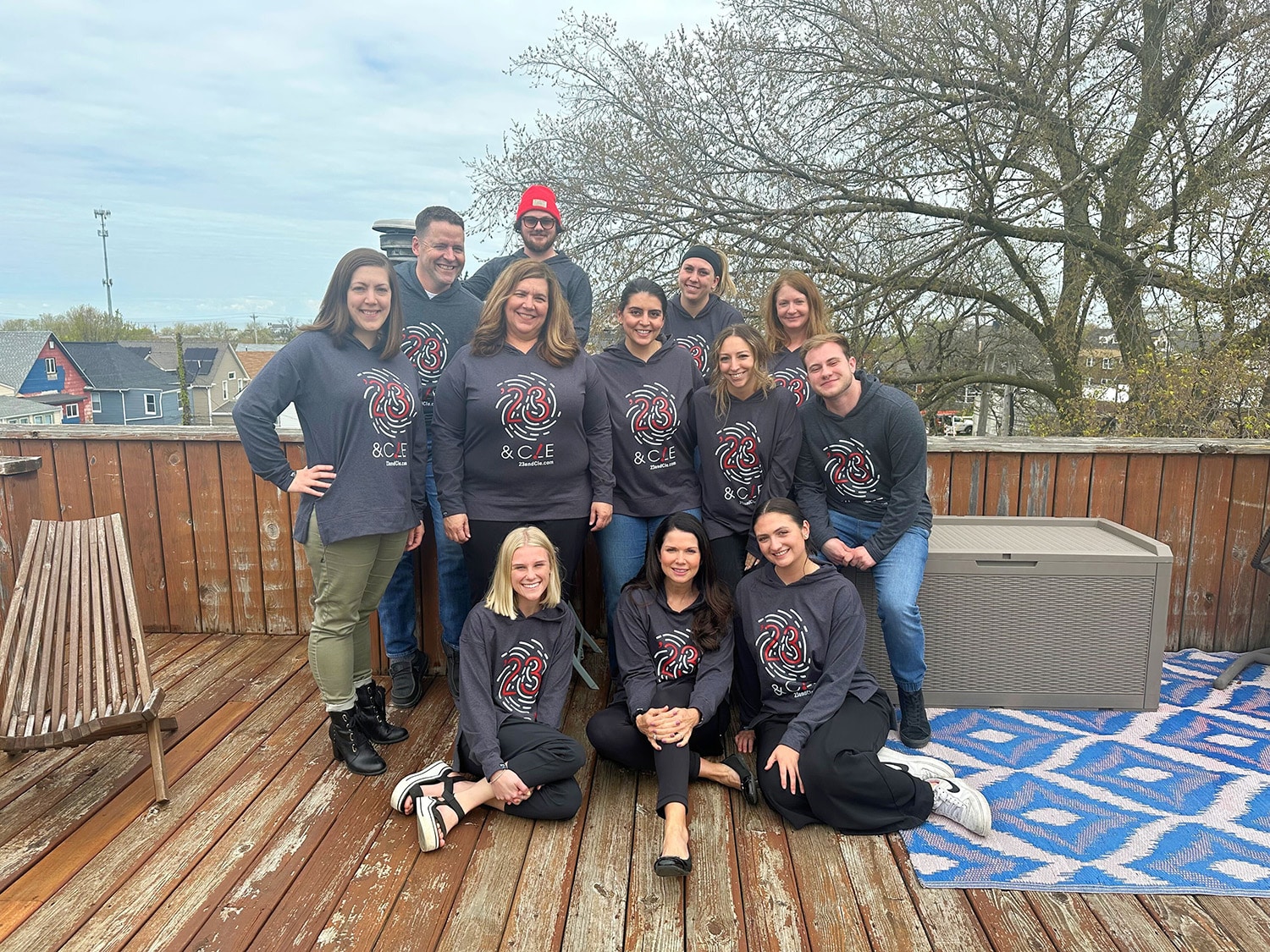
The company is unapologetically Cleveland. Its current work includes public relations for the Mobley Family Foundation, the Southwest Health Foundation’s Tiara Gala, and an opening event that turned a 41,000-square-foot warehouse into a polished headquarters celebration for AMF-Bruns of America. Earlier community work includes helping name Food for Thought, a program for women attorneys. Lobas has served on local nonprofit and healthcare boards. Place is not decoration here; it is a supply of relationships and an instinct for what local audiences will recognize as true.
And yet the most portable Studiothink idea is not regional. It is that integration begins with subtraction. A company cannot make every message equally important, serve every audience in the same way, or bolt every new channel onto a brand without eventually creating noise. The agency that once said yes to everything now earns its keep by deciding what connects - and what can be left out.