In 1997, Heather Capps joined a new Dallas advertising shop called Michael & Partners. There was one other person. This made Capps the agency's first employee, a modest distinction that turned out to be the entire plot. She learned the clients, became creative director, rose to vice president and president, and in 2004 bought the assets when founder George Michael retired. The apprentice had acquired the workshop.
She was also a single mother with two elementary-school daughters. The new name carried all three of them: H for Heather, C for Capps, and K2 for Kaileigh and Kamryn. Corporate naming is usually an exercise in abstraction. Here it was closer to a family monogram.

The founder's first product was permission
The standard agency story is about taste: the founder has an eye, clients notice, the shop grows. Capps tells a less flattering and more useful version. At two people, her willingness to touch everything was survival. As the company expanded, the same reflex made her the point through which too many decisions had to pass. Her hardest lesson, she later said, was delegation. “When you're not the bottleneck, it helps you grow so much faster.”
“When you're not the bottleneck, it helps you grow so much faster.”Heather Capps, on the lesson that changed HCK2
This is the small-company paradox: competence centralizes work, then centralized work caps competence. Capps changed her mind because scale made the old method visibly expensive. Surrounding herself with specialists, and then allowing those specialists to decide, was not managerial generosity. It was throughput.
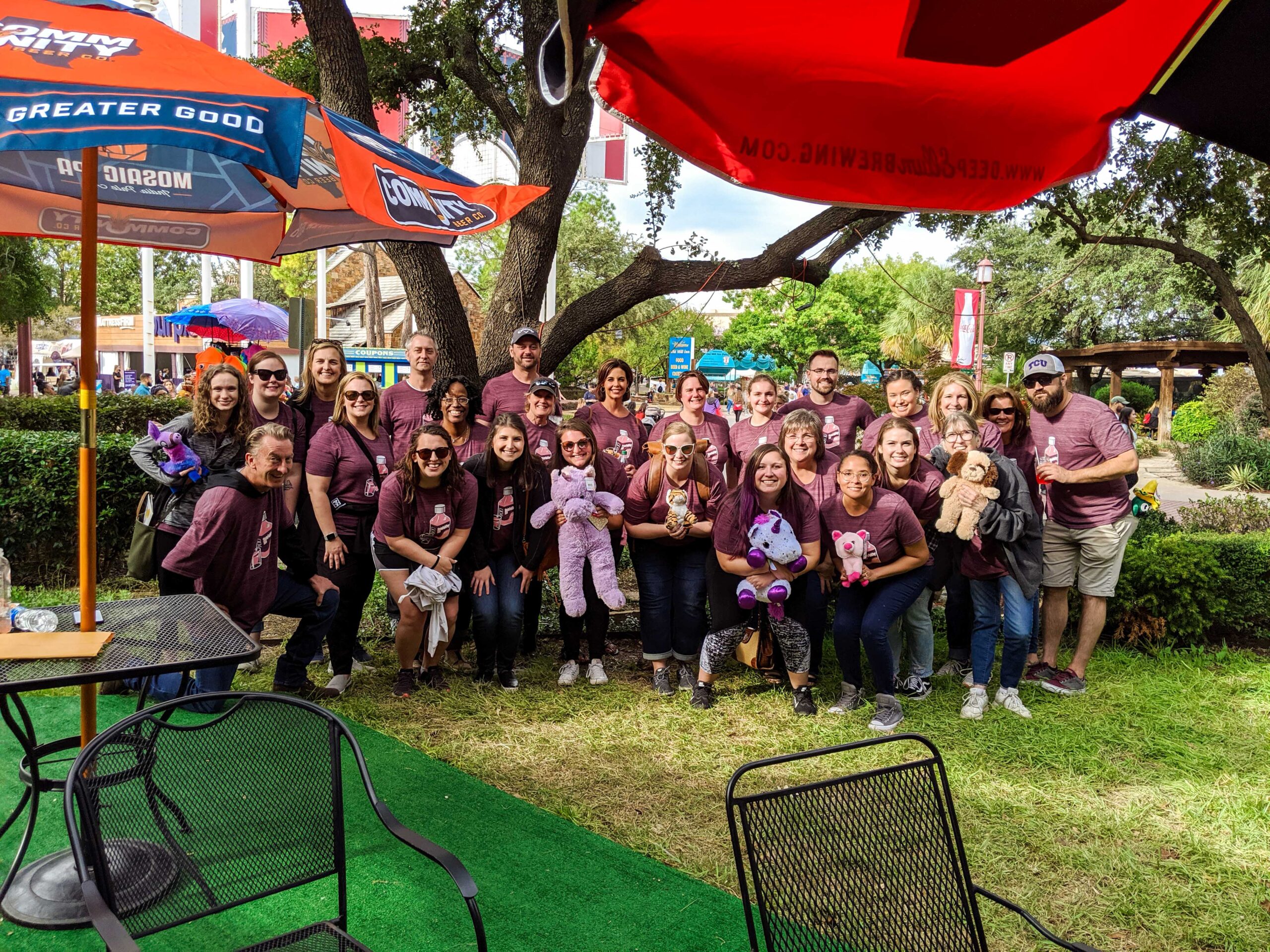
That logic reached the employee calendar too. Capps remembered the school moments she had missed while working her way up. So HCK2 adopted flex time, remote work and a frank rule of thumb: let the parent make pickup. Dogs came to the office. Continuing education became HCK2 University, where an employee sent to a conference returns as the teacher. Volunteer work became a hiring signal. The four official values - Balanced Life, Knowledge Seekers, Charitable Hearts and Raving Fans - have programs and habits attached to them, not merely capital letters.
The work is a relay race with fewer handoffs
HCK2 calls itself full service. That phrase can mean a long menu and little else. Here it describes an operating bet: research, positioning, identity, advertising, public relations, influencer work, social content, paid media and website development can be planned by one team. The customer is often a marketing leader facing a trigger - a launch, rebrand, acquisition, anniversary, recruitment push or crisis - with too many moving parts and not enough internal hands.
The appeal is not that HCK2 employs the only people who can do these jobs. Dallas has excellent PR specialists, design studios, performance shops and web firms. The advantage is the absence of translation. Every handoff is a chance for the strategy to mutate: a brand promise becomes ad copy, which becomes a press angle, which becomes a landing page, each slightly detached from the last. HCK2 competes by keeping the sentence intact.
Its client history is unusually broad: 7-Eleven, NTT Data, Greyhound, Dallas Capital Bank, Fort Worth Symphony Orchestra, Denton County Transportation Authority, cities, schools, health companies, manufacturers and dozens of nonprofits. The industries have little in common. The assignments do. Someone needs attention, but attention has to produce a business result.
The whiskey bottle explains the business
Consider Belfour Spirits, a whiskey company led by Hockey Hall of Famer Ed Belfour. In a crowded premium spirits aisle, the hockey name helped but did not finish the job. HCK2 created the identity, a black-and-gold bottle system, packaging, sales cards, retail displays and event material. It built a responsive website that the client could update as retailers and press mentions arrived. Then the PR team framed Belfour's move from hockey to whiskey as “Ed's Second Act,” pitched sports and beverage outlets, and helped run the VIP launch.

The result HCK2 reports is striking: more than 15 media placements, more than 300 launch guests, and placement in over 130 stores rather than the 30 originally proposed. The bottle and packaging also won gold in the 2020 International Review of Spirits Packaging Competition. No single tactic owns that outcome. The packaging gave the press something handsome to photograph; the founder story gave them something to say; the event concentrated attention; the site absorbed it; retail distribution converted it into availability.
A local shop for problems with national edges
HCK2 sits in an interesting middle of the agency market. It is not a global network with hundreds of offices, nor a solo specialist selling one channel. The company lists roughly 11 to 50 employees and works locally, regionally and nationally. That makes it plausible as an extension of an in-house team: senior enough to connect disciplines, compact enough for the owner to remain close to the work.
Its public campaign numbers show the range. A college-rider campaign for Denton County transportation produced 129,583 Twitter impressions, 2,743 clicks and 1,786 engagements. Fort Worth Symphony Orchestra ads averaged more than 20,000 impressions, 300 clicks and 800 total engagements. Austin College credited its recruitment campaign with helping produce the largest incoming classes in the college's history in fall 2018 and fall 2019. These are different measures because they are different jobs. The useful habit is choosing the outcome before choosing the channel.
That is the part another company can copy without hiring HCK2. Begin with the organizational trigger, not the deliverable. Name the number that would prove progress. Put every discipline in the first planning meeting. Give one person responsibility for coherence. Then let specialists own their decisions. The model works best when several channels truly need to move together and the client can share candid goals, constraints and data. For a lone logo cleanup or a single paid-search sprint, an integrated team may be unnecessary weight; a focused specialist or capable in-house operator can be the cleaner answer.
What failed first
In 2020, the pandemic disrupted HCK2's business and caused significant client and revenue loss. The agency later called it the biggest challenge in its history. There is no polished trick hidden in the recovery. HCK2 leaned on the things it had already been building: broad capabilities, long client relationships, strong operations and a team trusted to act. In 2023, it marked 25 years in business. Capps described endurance, timing, happy clients and happy staff as the ingredients.
The explanation is almost suspiciously ordinary, which is why it travels. HCK2 was born when an employee took ownership. It grew when the owner gave ownership away in smaller pieces. The same word describes both moves, and the agency lives in the productive tension between them.
Continue exploring