There is a kind of marketing problem that looks almost comically small on a spreadsheet. In 2021, UGI Utilities wanted to talk to 80 fleet managers about compressed natural gas. Eighty. A careless agency might have bought a broad digital audience and congratulated itself on the impressions. Anderson Group sent coffee.
More precisely, the Sinking Spring, Pennsylvania firm built a four-part direct-mail campaign: two custom boxes with a tumbler and coffee, then two postcards carrying CNG success stories. The objects created an excuse for a salesperson to follow up. UGI reported more appointments than expected. No public budget or conversion count accompanies the case study, so the cleverness is not a claim of miraculous ROI. It is the scale of the decision. Anderson understood that the job was not to reach everybody. It was to make 80 people curious enough to take a call.
That is a useful way into this otherwise hard-to-categorize company. Anderson is an agency, yes, but “agency” can mean a thousand things. Its menu runs from research and brand architecture through copy, design, websites, SEO, public relations, social media, video and trade-show graphics. The connective tissue is behavioral marketing: start with what an audience believes, fears, expects and habitually does; choose the medium afterward.
The brief before the brief
Linda and Mike Anderson founded Anderson Advertising in 1987. By the early 2000s it had become The Anderson Group, a name broad enough for work that no longer fit inside an ad. Its customers now span financial services, manufacturing, healthcare, consumer goods, nonprofits and government. The public portfolio is wonderfully unruly: Bank of America Merchant Services, East Penn Manufacturing, Armstrong Flooring, Knoebels amusement park, a wound-closure company and a fluorescent fish brand.
The assignment that best exposes its operating system came from Cubic's DTech Labs. DTech was preparing a secure networking platform for the Special Operations Forces Industry Conference. Anderson had less than three weeks. It had no product name, no photography, no logo and no copy. The first thing that had failed was not a campaign; it was translation. A sophisticated modular product had not yet become a story a buyer could carry away.
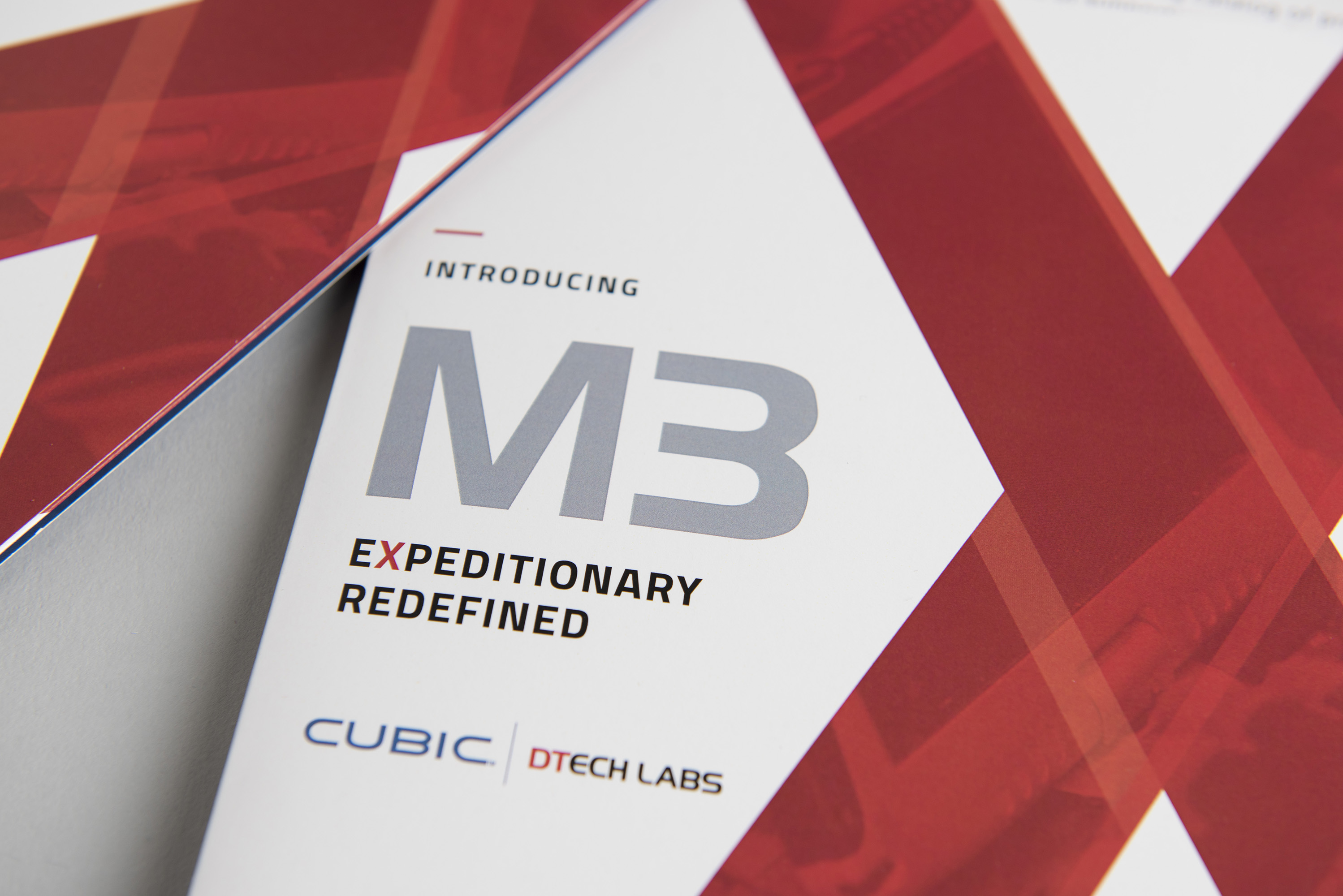
The team ran a creative sprint, learned the acronyms, named the M3X, built the identity and produced a brochure, sales sheet and presentation. Staff then interviewed conference attendees and audited competitor communications. Strong interest at the show led to a landing page, social content, press releases and a full product catalog. What can another company copy? Put the researchers in the room where the selling happens. A launch is not finished when the files go to print; the event itself can become the next round of research.
“The Anderson Group delivered great options in short order, giving us a lot to work with.”Paul Fuegner · Bank of America Merchant Services
Why comes before what
Anderson's distinction is modest but consequential. Plenty of firms can observe a click. Anderson says the more valuable question is why it happened: which attitude, belief or expectation made the action feel sensible? The firm mixes those answers with data and change-management principles, then moves across channels as the problem requires. It is less “we make websites” than “we will use a website if the behavior demands one.”
Consider Adhezion Biomedical. Its medical products were recognizable; the corporate brand was not, and the website buried both users and search engines. Anderson rebuilt the structure, clarified navigation, modernized the visual system and addressed on-site SEO. According to the agency's case study, major brand terms climbed from page five or lower to page one, while a national product-category term reached number two. The visible design changed, but the first repair was structural: help humans find the thing, then help machines understand it.
This approach works when an agency can talk to customers, see useful data and collaborate with the people who know the product. It works less well when “behavioral” becomes decoration for a decision already made. No insight framework can rescue a weak offer, absent distribution or a client unwilling to change the work. Anderson's strongest cases share a condition: access. The agency got close to the product, the sales team or the audience.
At the point of sale
Stable enough to trust. Project-driven enough to stay sharp.
The thing a buyer cannot download
By 2024, Anderson had a succession problem of the good kind. The company was durable; the owners wanted to step away from daily operations. It needed more resources and broader capabilities to keep growing, but independent expansion was not the only answer. Leadership began looking for a buyer that would preserve the service standards, relationships and collaborative culture rather than flatten them.
The number that mattered was six. When transaction adviser Merge prepared the company for sale, every employee had been at Anderson for at least six years. In an industry famous for revolving doors, the inventory was not only accounts and equipment. It was memory: who inside a client organization needs persuading, why an old campaign was retired, which promise cannot be broken.
Honestly, a North Carolina consultancy spanning strategy, marketing and technology, acquired Anderson in early 2025. The exact cost remains private; Merge categorizes the full sale as under $5 million. Anderson brought a seasoned team, a B2B client base and creative execution. Honestly brought infrastructure, consulting depth and technology capacity. That complementary shape changed the owners' minds about remaining independent: selling could be a continuity plan, not simply an exit.
Anderson Advertising opens
Linda and Mike Anderson start the company.
Jazz enters the business plan
The team helps create Berks Jazz Fest; Mike's logo remains in use decades later.
An impact-agency reset
A rebrand introduces the “Think big. Deliver bigger.” position and madebyanderson handles.
The careful handoff
Honestly acquires Anderson Group and adds it to a wider consulting platform.
A fish, a bank and a jazz solo walk into a portfolio
The range is funny until you notice what it proves. Anderson helped introduce GloFish and built a character called Gloria. It supported Bank of America Merchant Services for 15 years through Clover, EMV, Apple Pay and fraud-protection changes. It helped create Berks Jazz Fest in 1990, designed the identity and kept supplying marketing, stage production and even musicianship. A three-day local idea grew into a ten-day festival drawing visitors from across the United States and abroad.
These are not the same category of assignment. They are the same category of relationship. Anderson's business model has been part outsourced marketing department, part specialist crew: ongoing context on one side, bursts of execution on the other. At sale, recurring work made up roughly 40% of income and projects 60%. That is not software-like predictability. It is a balanced agency business whose stability comes partly from clients returning with new problems.
The portable parts
The tempting lesson is to copy the fluorescent fish or put coffee in a box. Those are artifacts. The reusable moves sit one layer underneath.
Name the real audience
Eighty qualified fleet managers can be worth more than eighty thousand anonymous impressions.
Fix comprehension first
Before buying media, make the product legible to a person who does not live inside it.
Use delivery as research
Attend the show, hear objections and let the first launch improve the second one.
Price the memory
In a sale, staff tenure and client context can matter as much as a service list.
Anderson Group's story is not really about the romance of a small agency or the inevitability of consolidation. It is about sequence. Diagnose before decorating. Earn intimacy before prescribing. Build a company someone can acquire, then choose a buyer who understands what the spreadsheet leaves out. The company sold. The useful parts stayed put.