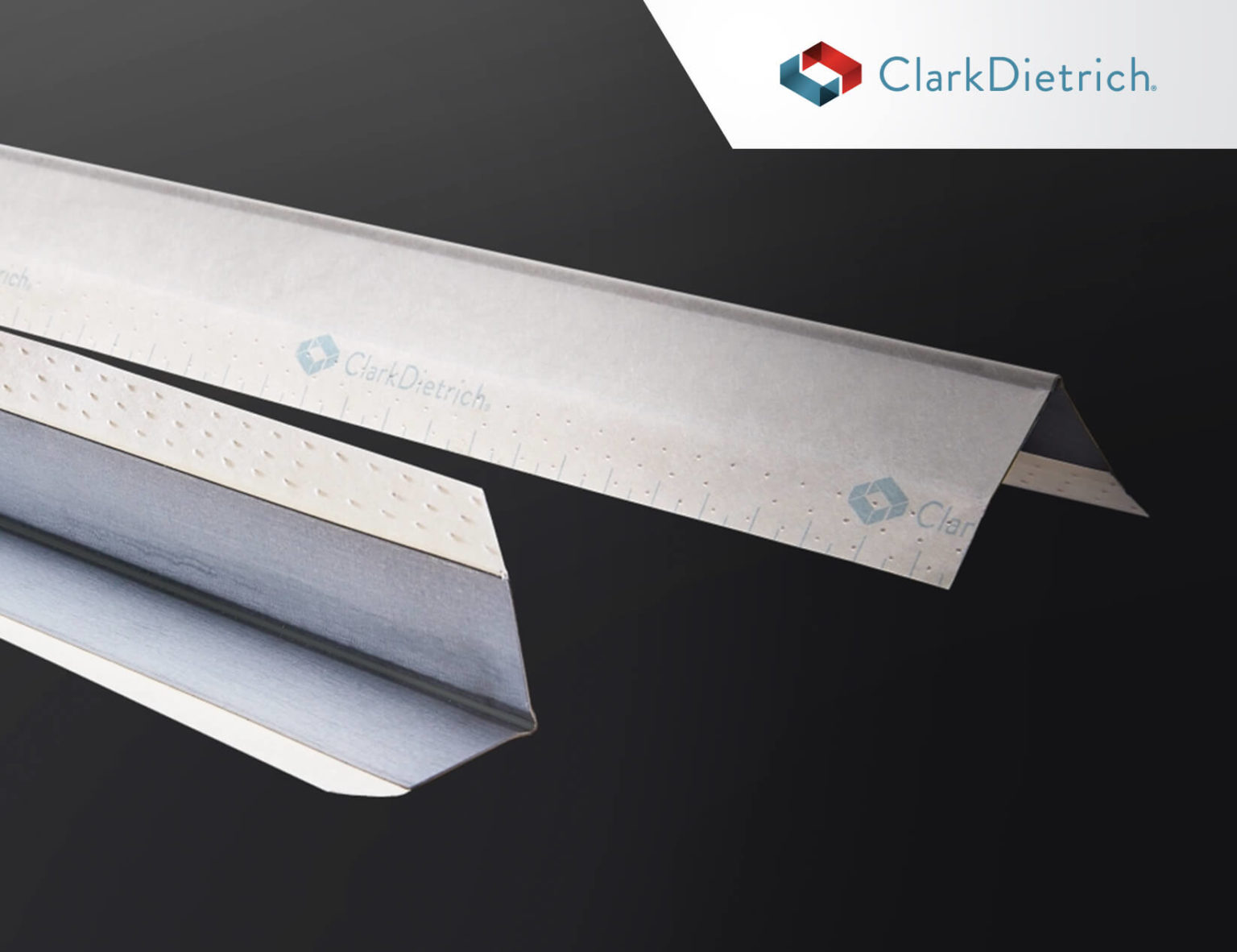
There is a small piece of building material whose job is to sit quietly at the corner of a wall. It is called paper-faced corner bead. Unless you finish drywall for a living, you have probably never admired it. Miller Brooks decided this was not a problem with the product. It was a problem with the admirer.
The Indianapolis agency was working for ClarkDietrich, which wanted more attention for a higher-performing version of this deeply uncelebrated object. The obvious campaign would have listed tolerances, materials and installation advantages. The agency chose the less obvious comparison: the immaculate line of a luxury sedan. A finisher looks at a 90-degree wall transition with something like the attention a car designer gives a body panel. The audience was not buying trim. It was buying the satisfaction of a perfect line.
That turn - away from what an object is and toward what mastery of it feels like - explains much of Miller Brooks. Founded in 1984, the privately held firm employs a few dozen people and offers the familiar full-service inventory: research, brand strategy, creative, advertising, media, public relations, digital, social and experiential work. The inventory is ordinary. The appetite is not. Its portfolio keeps returning to products with manuals, channels, specifiers, installers and purchasing committees.
The first thing to fail is the feature list
Technical companies know too much. This is not an insult. Engineers, product managers and sales teams have earned their knowledge one tolerance and field complaint at a time. But expertise produces a peculiar temptation: put all of it in the ad. The result is accurate, dense and forgettable.
Miller Brooks starts by mapping who gets a vote. A building product may need to appeal to an architect who specifies it, a distributor who stocks it, a contractor who installs it and a homeowner who sees it. A life-sciences instrument may pass through researchers, lab managers, procurement and executives. Each wants different proof. A single product message does not become integrated marketing merely because it appears in five sizes.
For Rinnai, timing was the tension. Homeowners do not lovingly research tankless water heaters every Sunday. They care when the old tank begins to misbehave and a quick decision arrives with the cold shower. Miller Brooks personified the failing tank as an unwanted freeloader, then used household data to aim the “Yank the Tank” campaign at people most likely to buy. The work beat industry click-through benchmarks in every market the agency reported.
For ClarkDietrich’s broader “Time for What Matters” campaign, the shared benefit was not any one product. It was minutes returned to contractors, installers and architects. Less wasted labor meant more family, hobbies or whatever waited beyond the jobsite. A portfolio of dissimilar tools could now tell one story.
The agency’s recurring move is simple to describe and hard to fake: find the emotional consequence hiding inside the operational advantage.
A sanitation cart gets a personality
Consider HyGo, a mobile station made from hygienic, food-safe surfaces for keeping sanitation tools organized in food and beverage plants. Miller Brooks first gave it a compact, friendly name. Then the agency treated the cart like a companion: beside its user at work, on a mountaintop, even at an ice rink. The absurdity is controlled. You remember the cart, but you also understand its promise - it stays close, keeps order and goes where the work goes.
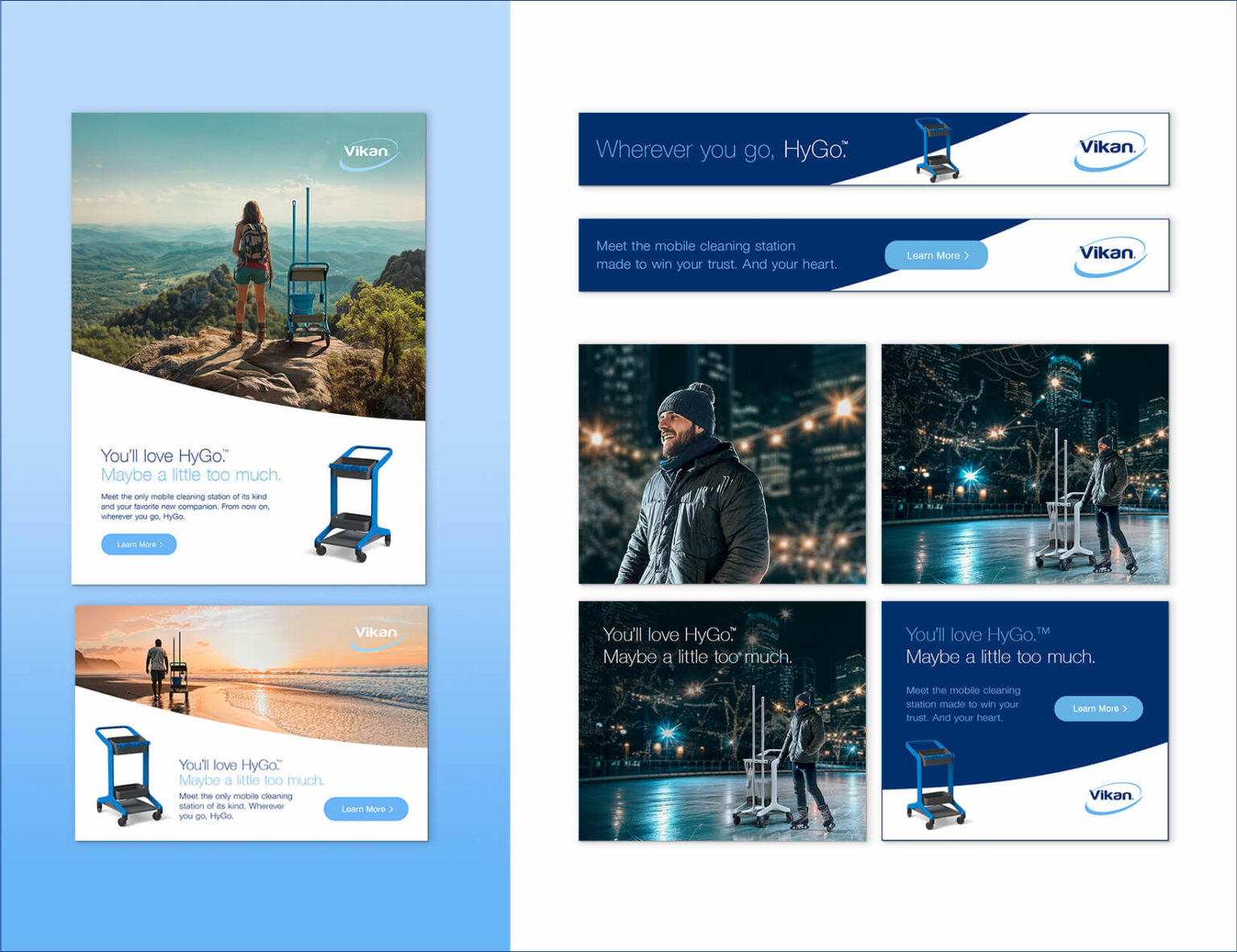
The reported results are useful because they reveal the business model beneath the wit. Miller Brooks is not selling a naming workshop in isolation. It sells the chain: research, positioning, the idea, production, targeted media, measurement and optimization. Clients can buy projects or a continuing agency relationship. Public work shows the firm crossing from a launch into websites, video, sales tools, public relations and events as the problem requires.
This is also where clients change their minds. Latham Pools initially used a fiberglass-versus-concrete campaign in Texas. When leads and landing-page traffic followed, the company expanded it to Florida, and builders elsewhere asked for the materials. Delta Faucet tried media formats it had not used for a designer-focused campaign; after the first collaboration worked, a second round became live room vignettes at the Kitchen and Bath Industry Show. The persuasive moment was not a presentation in the conference room. It was evidence in the market.
When the room itself disappears
In the early 2020s, Beckman Coulter Life Sciences had a particularly literal version of the access problem. It was launching the Biomek NGeniuS liquid handler while human contact was limited. Prospects could not easily wander through a demonstration lab, look over the workflow and inspect the machine. Miller Brooks partnered with a software developer and built the visit online: enter with a key swipe, explore preparation and handling processes, arrive at the instrument.

The lesson to copy is not “build a virtual lab.” It is to preserve the job of the missing experience. A trade show lets a buyer orient herself, ask questions and turn curiosity into confidence. The digital replacement worked because it was designed around those actions rather than around the novelty of 3D space.
Small agency, long reach
Miller Brooks sits in Broad Ripple, an Indianapolis neighborhood chosen, according to CEO Barbie Wentworth, for an energy and culture that matched the agency. Its market, however, is not local. The client list includes Rinnai, Fiberon, Loctite, Delta Faucet, Festool, Whirlpool, Cabela’s, Ivy Tech and Beckman Coulter. Membership in ICOM, a network of independent agencies, supplies local expertise and execution in dozens of countries without turning Miller Brooks into a branch of a holding company.
That arrangement suits its position. A 41-person agency cannot win by promising every capability at unlimited scale. It can win when senior attention, category fluency and a connected set of services matter more than the size of the org chart. The fit is strongest when a client has a valuable, complicated product; several audiences with conflicting priorities; enough media and production ambition to need integration; and leaders willing to let research challenge the product-first story they arrived with.
In 2026, Miller Brooks gave this old instinct a new label: B2G, or business to group. The argument is that purchases have always been social. The committee may be formal, as in enterprise procurement, or invisible, made of installers, reviews, peers and online communities. Marketing to one fictional decision-maker means arriving after half the room has already voted.
Four decades of advertising technology have passed through Miller Brooks: print, broadcast, websites, social targeting, virtual experiences and now AI search. The most durable tool is embarrassingly analog. It is the ability to look at a piece of drywall trim and ask who, exactly, could love this - and why. Somewhere, a finisher is checking a corner against the light. That person was interesting all along.