The first remarkable thing about “Go Spurs Go” is that nobody found it remarkable. It was 1999. Creative Civilization was only months old, and the San Antonio Spurs needed a playoff campaign that could sell tickets and catch fire. Al Aguilar offered three words. The room did not ignite. Spurs executives had another candidate, “Ready to Go,” and the phrase Aguilar preferred looked almost embarrassingly plain. Really? That was it?
Aguilar did not add adjectives. He and co-founder Gisela Girard made the idea visible. Their young agency printed placards, found people around town and filmed them saying the line. A UPS driver joined in. So did Father David Garcia at San Fernando Cathedral. The River Walk and Alamo Plaza served as the set. Girard coached the participants to repeat the words with the rhythm of a chant. Music and animation finished the spot.
Then the room changed. The Spurs wanted the line on shirts and banners. Fans wrote it on car windows, planted it in front yards and pushed Styrofoam cups through chain-link fences to spell it out. The team won its first championship. A campaign became local vocabulary.
“It has got to be simple, meaningful, memorable, marketable, ownable and sustainable.”Al Aguilar's six “gotta haves”
The pitch failed before the prototype worked
This is the useful part of Creative Civilization's origin story. The breakthrough was not a dazzling presentation. It was the decision to take an underwhelming idea out of the conference room and put it in the mouths of actual San Antonians. The prototype supplied the missing evidence: sound, repetition, familiar faces and familiar places. Once the client could see the phrase behaving like a chant, simplicity stopped looking empty and started looking portable.
Those six tests explain why the line traveled. It named the team, told the crowd what to do and fit nearly any surface. It also depended on exquisite timing. The Spurs' 1999 title run gave the words a championship memory that no media budget could manufacture. Creative Civilization's skill was creating a container simple enough for the city to fill.
A “total market” agency before the phrase became fashionable
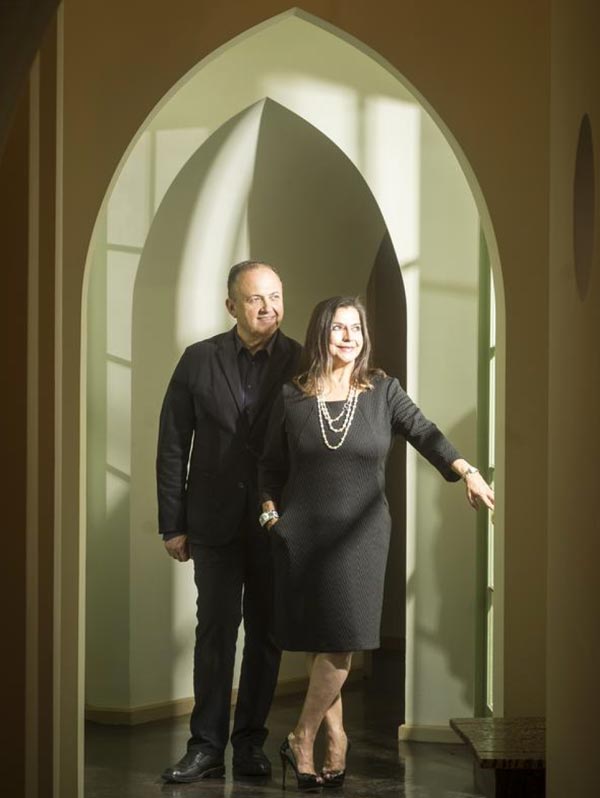
Aguilar and Girard founded the firm after careers inside the rise of Hispanic advertising. Aguilar had worked on Coca-Cola's national Hispanic marketing and helped build Sosa, Bromley, Aguilar & Associates into a major shop. In 1999, the couple made a broader bet: cultural fluency should inform the full assignment, not live in a separate ethnic-marketing annex. Their description was “total market” - general market, Hispanic market and business-to-business thinking in one agency.
That distinction matters because their client list is unusually civic. Alongside Coca-Cola, Sam's Club and Quest Diagnostics sit the San Antonio Spurs, VIA Metropolitan Transit, healthcare systems, museums, housing organizations, economic-development groups and municipalities. These clients are not merely selling objects. They are asking residents to trust a service, recognize themselves in an institution or believe that a place is moving somewhere.
The word that failed was “Authority”
Two decades after the Spurs pitch, the agency faced a more delicate language problem. The San Antonio Housing Authority had served the city for roughly 80 years, but its name carried the emotional residue of an institution speaking down to the people it housed. New leadership wanted a modern identity that could reach some 65,000 residents as well as community leaders and the broader public.
Creative Civilization began with focus groups. Participants reacted to words, not finished logos. “Authority” landed as heavy-handed. “Housing” described a structure but little sense of belonging. “Home” evoked family, warmth and safety; “opportunity” suggested progress. The paired name, Opportunity Home, emerged as the clear preference in testing.
Notice the order. The agency did not decorate the old label and call it transformation. It found the piece of language that was failing, tested alternatives, then built the identity. Production covered the logo, palette and tagline. A pre-launch phase coordinated press, advertising, social and media buying. A 60-day emphasis period drove recognition, followed by op-eds, presentations and continued outreach. The reveal was one phase in a six-phase system, not the finish line.
The reusable sequence
The rare agency that leaves a price tag in public
Agency economics usually hide behind “contact us.” A 2024 Castle Hills city-council packet offers a clean look at this firm's model. Creative Civilization proposed discovery, design, stakeholder testing, guidelines, launch and momentum work over six months. The labor rate was $115 an hour for 50 hours a month, or $5,750 monthly. Total agency fees: $34,500.
The scope is as revealing as the number. It names a business model based on professional time, phased deliverables and paid execution rather than software subscriptions or proprietary media. Castle Hills moved from discovery sessions with residents, businesses and city staff to a new logo, narrative and the tagline “LOVE IT...HERE.” The work appeared on Loop 410 billboards, city channels and community materials.
What another team can borrow
First, prototype the behavior of an idea, not just its appearance. If it is meant to be chanted, film people chanting it. If it is meant to orient residents, put it on the sign. Second, let the affected people diagnose the vocabulary. “Authority” did not become cold because a strategist declared it so; residents supplied that reading. Third, separate strategy fees from production costs. It keeps the price legible and prevents a promising plan from quietly consuming its media budget.
There are limits. The method is poorly suited to leaders seeking a cosmetic reset while the service itself remains broken. It also weakens when focus groups exclude the people who live with the institution, when a phrase cannot belong naturally to the place, or when launch day consumes every dollar and leaves no momentum phase. “Go Spurs Go” had a championship season behind it. A slogan without a credible experience is only three words.
In one sense, the agency's career is a study in controlled simplicity. It was named after a moment at the Alhambra in Granada, where Aguilar and Girard looked up and thought, “Now that was a Creative Civilization.” Its best-known work reduced a playoff campaign to three monosyllables. Its housing rebrand replaced bureaucracy with two ordinary nouns. Neither move was simplistic. Both required knowing which complexity to keep backstage.
That may be the firm's actual product: not slogans, logos or press coverage, but permission for an organization to sound like the people around it. When it works, the public finishes the campaign.