There is a particular kind of sentence that grows in industrial companies. It begins with a polymer, acquires a few performance thresholds, picks up an acronym in the middle, and ends by promising lower total cost of ownership. Every word may be correct. The sentence may still be completely useless.
AGP & Associates exists in the gap between correctness and usefulness. The company is a privately held marketing and communications agency in Midland, Michigan, founded in 1992 by Dan Attenberger and Margaret Guzzardo. It does research, strategy, public relations, social media, web development, direct marketing, advertising, events, video, exhibits and sales materials. That list sounds like standard agency copy until you look at the work: industrial lubricants, automotive manufacturing capabilities, silicone science, biopharma components, credit-union campaigns, nonprofit annual reports and a regional competition that asks teenagers to solve technical problems.
The interesting part is not that AGP can make many things. Plenty of firms can. The interesting part is that the same small group is expected to understand the difficult thing first, then carry one argument through every format. The company calls this being within “collaborative shouting distance.” It is a funny phrase and a serious operating system.
The ampersand is the strategy
AGP’s logo gives the ampersand almost comic prominence. That turns out to be accurate. The firm is not selling public relations or design or a website in isolation. It is selling the “and” between them. For a client launching a technical product, the research must inform the message; the message must survive the sales kit; the sales kit must agree with the trade-show wall; the public-relations language must sound like the same company; and the website must still make sense when the booth is packed away.
This is AGP’s place in the market. It sits between a narrow specialist and a large network agency. A specialist may know one channel more deeply. A large agency may offer more scale. AGP’s pitch is coordination with senior attention: a compact group spanning leadership, copywriting, technical communications, editing, design and client support. Clients include both business-to-business and consumer-facing organizations, but the portfolio is especially fluent in companies whose products require explanation.
A brochure that had to carry a factory
In 2010, AGP and automotive supplier Inteva Products won a Gold ADDY for a corporate capabilities brochure aimed at new markets. The assignment was more demanding than “make us look good.” Inteva was a relatively new company carrying more than 90 years of manufacturing history. The brochure had to explain materials, processes and manufacturing capabilities to people who might not yet know the name.
AGP wrote it, designed it and produced it. The work was judged on audience, message, creative treatment and print execution, and it was selected from more than 115 candidates in the regional competition. Two years earlier, the partnership had earned a MarCom Platinum Award. A year later, AGP and Inteva won a Silver ADDY for a holiday communication. The sequence matters more than the trophies. It suggests a relationship broad enough to move between sober corporate explanation and a one-off seasonal piece without changing teams.
A complicated product rarely has a design problem first. It has a translation problem.The useful lesson in AGP’s portfolio
Make the expert understandable
AGP’s most charming documented project may be a 2009 Dow Corning video called Scientists in the House. It was shown in classrooms to promote science and mathematics careers. The film treated scientists as people propelled by imagination, mistakes and the stubborn pleasure of trying again. Margaret Guzzardo, AGP’s president, said the aim was to make science feel fun and cool to children. The piece won a Videographer Award of Excellence.
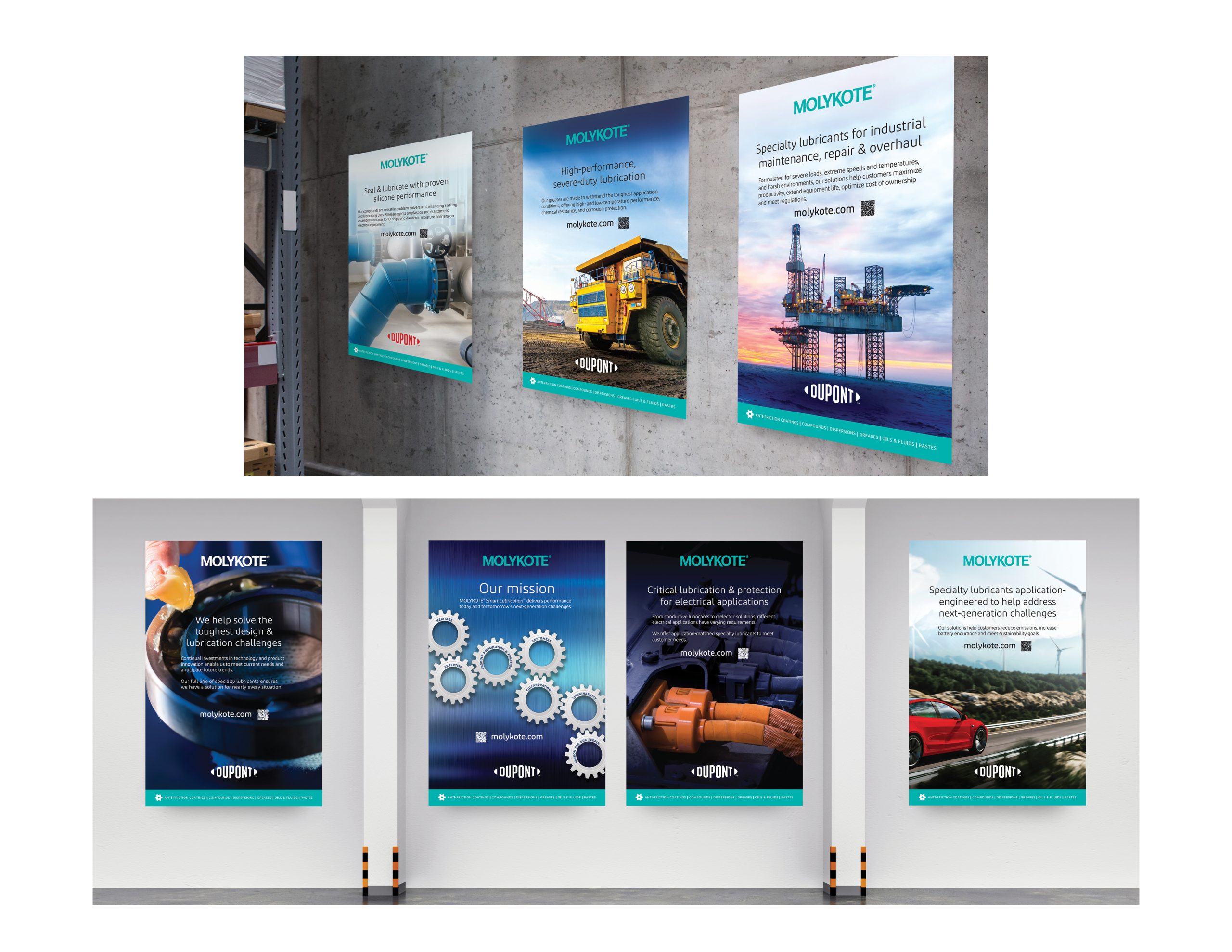
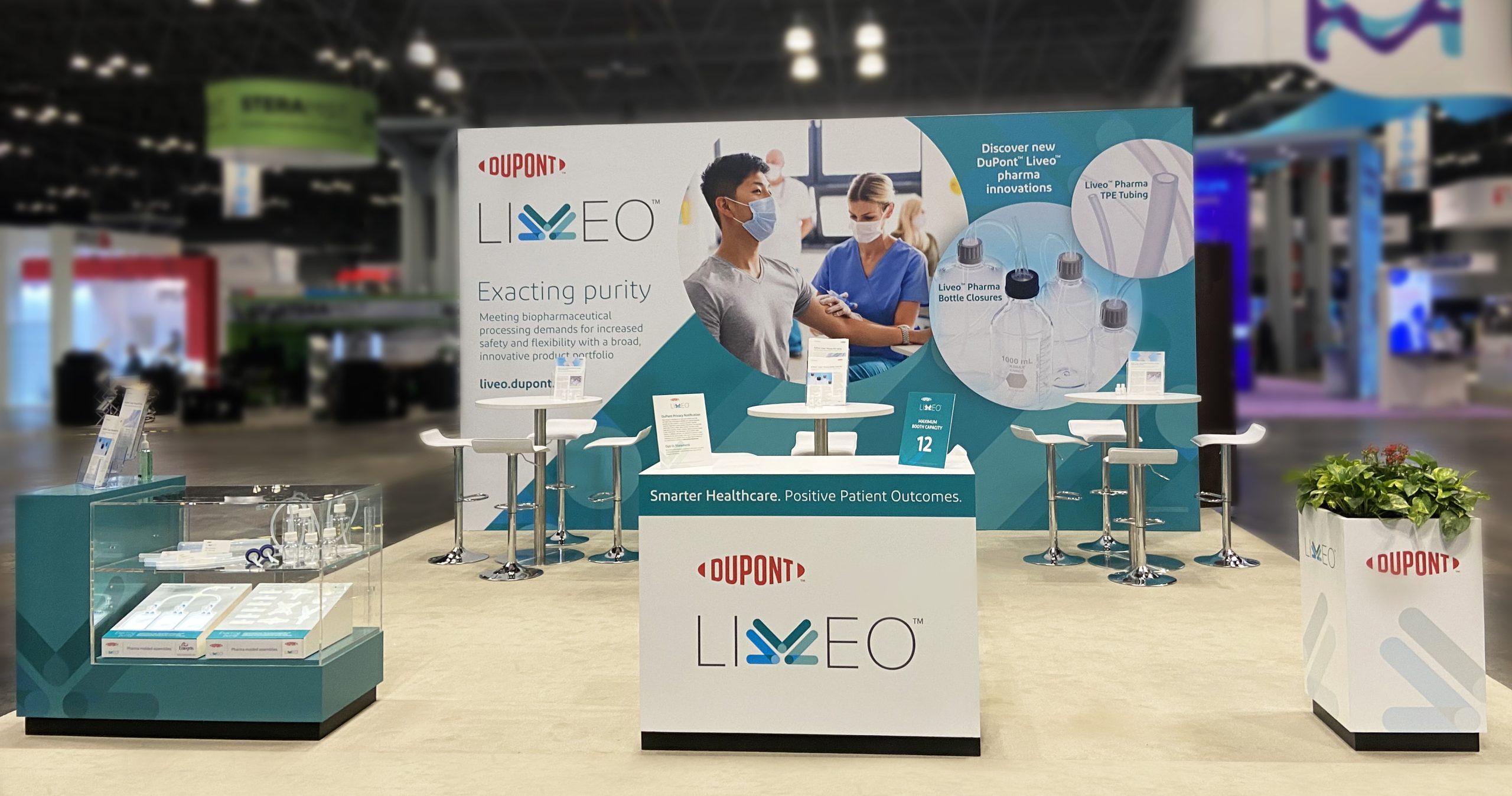
That project contains the company in miniature. The subject was technical. The audience was not. Accuracy alone would bore them; entertainment alone would betray the assignment. AGP had to find the bridge. The same bridge appears in its work for DuPont. MOLYKOTE posters pair terse claims with unmistakable industrial applications. A DuPont Liveo exhibit turns biopharma components into a room-size explanation visitors can read while walking.
The agency applies the same machinery to local institutions. Its public portfolio includes annual reports for CAN Council and the St. Lorenz Foundation, vehicle graphics and a campaign for Dow Chemical Employees’ Credit Union. AGP staff have also served as media contacts for the A.H. Nickless Innovation Award, a regional STEM competition for high-school students, from its early years through at least the 2023-24 cycle. This is not a glamorous business model. It is a service business built on repeat trust, broad production capability and the willingness to learn somebody else’s vocabulary.
The useful thing to copy
Another organization can borrow AGP’s method without hiring an agency or moving everyone to Midland. Start with a single audience and a plain-language proposition. Give every channel the same brief. Put the people who make the pieces in the same review, early enough to disagree. Then inspect the system: does the booth make the same promise as the brochure? Does the press release use the language a salesperson can defend? Does the website answer the question raised by the ad?
Copy this
Write one sentence the engineer, designer, salesperson and customer all accept. Build the channel plan only after that sentence survives.
This approach works best when the problem is coordination: a technical launch, a corporate story, a new-market push, an event surrounded by sales and media activity. It is less compelling when a company needs only one highly specialized intervention, enormous always-on media buying, or a cheap stream of interchangeable assets. Breadth has a price. Everyone must learn enough about the client to keep the parts aligned, and the client must be willing to make decisions across departments.
AGP does not publish a rate card or client fees, so its public record cannot settle the cost question. It does clarify what the buyer is purchasing: fewer handoffs, one accountable team and an idea that arrives intact in more than one place. The alternative can look cheaper line by line while becoming expensive in the seams.
Thirty-four years of joining things
Small agencies are usually described by what they lack: headcount, offices, departments, a famous holding-company parent. AGP is more interesting when described by what it has kept together. Its founders remain publicly identified with the company. Its Midland address anchors work that the firm says has traveled from mid-Michigan to Shanghai. Its team page still celebrates a no-barriers culture and the in-house joke that AGP stands for “All good people.”
The joke is sweet. The ampersand is sharper. It says the value is not copy, design, strategy, public relations or production. The value is the connection among them. In an industry forever inventing new lanes, AGP has spent more than three decades making a business out of the intersections.