The useful thing about a complicated organization is that it is never short of material. There are committee reports, founding stories, policy documents, product specifications and PowerPoints dense enough to alter the local gravity. The useless thing is almost exactly the same: there is so much material that nobody outside the building knows where to begin.
This is the territory occupied by 19 Ideas, a strategic marketing agency on Buffalo's West Side. It sells the familiar agency ingredients - research, brand strategy, creative, public relations, media, digital marketing, websites and applications. But the list disguises the more specific job. Again and again, its portfolio begins with an institution that knows a great deal and cannot yet explain it simply.
The customers tell the story. There is the Niagara Frontier Transportation Authority, a law firm with an intricate whistleblower practice, a university center defining a standard for universal design, health insurers, urgent-care operators, foundations, gardens and museums. These are not impulse-buy brands. They have many audiences, internal constituencies and consequences. Their marketing problems are usually translation problems.
The request is rarely the real brief
Consider Walsh Duffield, a family-led insurance agency whose history reaches back to 1860. The request was a new website. 19 Ideas treated that request as a clue rather than a conclusion. Conversations with executives, marketers and other leaders uncovered a broader set of goals: attract clients, recruit talent and tell the firm's story without the usual insurance fog.
The work expanded into audience personas, a brand promise called “Safe & Well,” simplified navigation, rewritten copy, custom photography and search strategy. Even the URL changed. A production shop could have delivered fresher pages. The strategic move was to ask why the pages existed.
That distinction appears elsewhere. The University at Buffalo's IDEA Center already had a website for isUD, its universal-design program. What it lacked was a common position, a set of marketing assets and a unified way to build adoption. 19 Ideas gathered architects, researchers, founders and its own cross-disciplinary staff in one discovery process. Research led to a three-part program: first the message, then an intricate educational infographic, then media relations.
One problem, four deliberate moves
This sequence is the agency's most copyable idea. Do not begin with the channel. Begin by bringing the people who understand the problem into one room. Interview customers. Look for the sentence that reduces the subject without flattening it. Only then decide whether the answer should be a landing page, a booklet, a film, an app or a press campaign.
A rail map with a human pulse
The NFTA once arrived with years of research about extending Buffalo's Metro Rail through the Amherst corridor. The facts mattered, as did the considerable cost of the proposed infrastructure. Yet another stack of facts was not going to win support from universities, municipalities and residents.
19 Ideas compressed the material into a 16-page booklet. It illustrated people whose ordinary days could change with the extension. It placed the future route on translucent vellum, so turning one page physically laid the proposal over the existing map. Supporting quotations and compact infographics did the rest. The booklet became the focal point in meetings and helped the proposal advance to its next phase.
The craft is charming. The lesson is harder-edged: when the stakes are abstract, make the consequence tangible. A map that changes under a reader's hand can do work that slide 47 cannot.
“Success lies in the alchemy of art, business, and spirit.”Katie Krawczyk, founder and CEO
The technologist was already in the room
Katie Krawczyk founded 19 Ideas in 2011. Her background crosses public relations in public and private sectors, from Buffalo to Washington, New York City and Seoul. Dan Gigante, her husband and the agency's chief technology officer and partner, made development part of the company rather than a handoff at the end.

That arrangement explains the range of the output. For the John R. Oishei Foundation, the team did not stop at messaging or environmental graphics. It made an interactive installation for the entrance of Oishei Children's Hospital: an 85-inch touchscreen running a custom Electron and Vue application on Ubuntu, with content pulled through WordPress. The result translated a philanthropic legacy into something a child waiting in a hospital could touch.
For Hodgson Russ, the medium was smaller and the emotional stakes different. The firm needed to explain its whistleblower practice to people who might be frightened, uncertain or professionally exposed. Research led to a landing page that balanced authority with empathy, supported by targeted paid media. The technical object changed. The translation job did not.
Integration is a business model, not a menu
19 Ideas is privately held and earns revenue from custom projects and ongoing client relationships. Its public materials do not turn strategy, code or media into boxed products. Clients buy combinations of expertise. That makes the agency an alternative to coordinating a branding studio, PR firm, media buyer and development shop separately.
The advantage is not simply convenience. When the developer hears the discovery interview, the proposed experience can change before a designer hands over a file. When PR participates in positioning, a campaign promise is less likely to collapse under a reporter's first question. The disciplines are useful because they can interrupt one another early.
There is a condition attached. This method needs access. It works when leaders, specialists and customers are available for honest interviews, and when the client is willing to let research change the assignment. If the deliverable, message and politics are fixed before discovery begins, an integrated team becomes an expensive production queue.
A practice worth borrowing
Write the communication problem before you name the deliverable.
“We need a website” closes the question too early. “Prospective customers cannot tell why we are different” leaves room for the right answer. 19 Ideas' strongest cases begin in that second sentence.
A workplace made visible
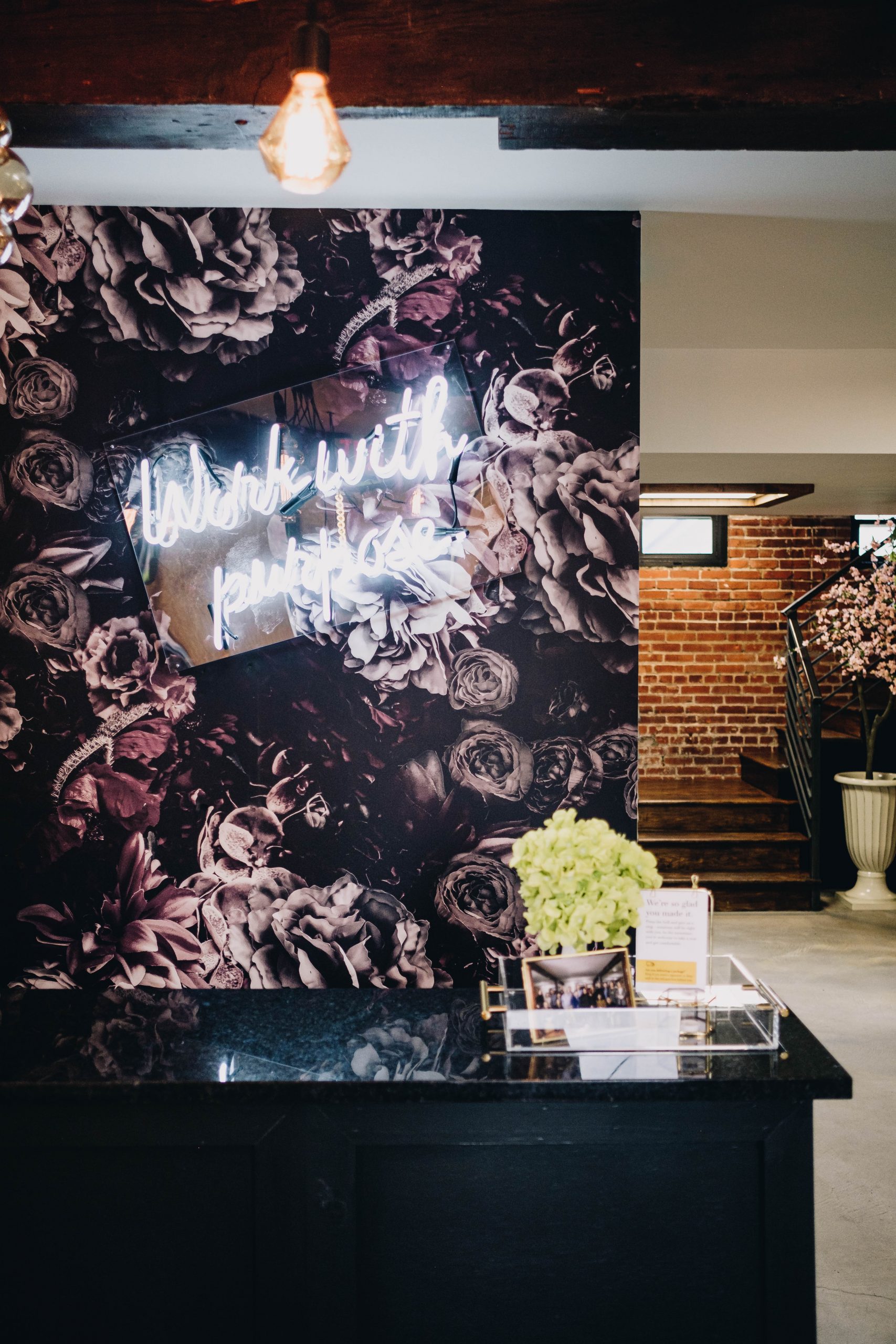
Krawczyk describes the ambition as doing good work in a good workplace. The phrase becomes concrete in small choices: a flexible office designed around comfort and psychological safety, Calm app access for staff, and a paid fellowship built with Say Yes Buffalo.
The fellowship lasts 12 months, not a photogenic summer. A college scholar rotates through strategic, creative and digital projects, joins client work and practices the less glamorous skills of workflows and relationship management. It began in 2021 after the pandemic and George Floyd's murder sharpened the agency's attention to racial inequity. That origin matters because it distinguishes a training pipeline from a recruiting slogan.
The company has also accumulated the conventional markers of agency success: three consecutive Fast Track growth honors, a New York State women-owned-business certification, a Gold ADDY for animation work on a Lexington Co-op documentary and recent local PR awards. Yet the best proof is more specific. It is the rail map, the humane legal page, the hospital touchscreen and the universal-design toolkit. Each one begins with complexity. Each one ends with a person who can finally see what to do next.