There is a certain photograph that has done heroic service for the wealth-management industry. It contains a lighthouse. Sometimes the lighthouse is replaced by a compass, a chess piece or a yacht cutting across water nobody on the compliance team has ever sailed. The message is supposed to be guidance, strategy or prosperity. The actual message is that somebody typed “trust” into a stock-photo search box.
April Rudin noticed the problem before it became a running joke. In 2008, as the financial system was having the sort of year that discourages new financial-services ventures, she started The Rudin Group. Her premise sat at the intersection of three changes: wealth was moving between generations, clients were going online, and technology firms were beginning to disturb an industry built on handshakes and inherited habits.
A bank executive offered her a neat bundle of reasons not to proceed. Banks would not hire outsiders. High-net-worth people would not use the internet. Social media was a fad. There was also the suggestion that she was too old to be an entrepreneur. This was useful advice in the accidental sense: it identified every assumption on which an interesting business might be built.
“Banks will never hire outside firms, high-net-worth individuals will never be on the internet, and social media is a fad.”The advice April Rudin received before starting the company
The product is translation
The Rudin Group is a New York-based consultancy for wealth managers, asset managers, private banks, family offices, RIAs, insurers, fintechs and wealthtech companies. Its menu looks broad: brand positioning, websites, content strategy, white papers, social campaigns, public relations, executive thought leadership, graphics and video. But those are formats. The product underneath them is translation.
The firm translates technical expertise into stories, institutional reputation into personal trust, and internal documents into a publishing program with an audience and a purpose. A general agency can write a handsome sentence. The Rudin Group's pitch is that its people also understand why an IRA is not an RIA, why a family office does not speak like a retail bank, and why compliance must be in the workflow before the deadline arrives.

The familiar shelf
- Canned copy
- Production by volume
- One audience called “wealthy”
- Metrics after launch
The Rudin shelf
- A specific point of view
- Content tied to a job
- Segments with motives
- Measurement in the plan
The content factory that forgot its customer
The firm's most revealing public case study concerns an unnamed global bank. Every day, internal teams produced fresh technical commentary. Each group could show that it had met its target because the target was the number of pieces created. Yet engagement was poor. The bank had achieved an impressive industrial feat: a content factory whose output gave readers little reason to return.
Rudin's team began with an inventory. It interviewed stakeholders, mapped distribution, documented future plans and made the separate silos visible to one another. The content creators and compliance team were aligned around a business objective. Existing technical material was assessed for what remained useful. Channels were chosen by purpose rather than habit. Calendars were joined. Metrics were agreed before publication.
The Rudin Spark / stripped to its mechanics
Turn a pile of content into a working system
The operating constraint was sharp: compliance needed to clear three pieces for external distribution each morning. The team repurposed institutional writing for end investors and added one call to action - sign up for the newsletter. Flipboard data helped show which topics held attention. The company reports higher newsletter subscriptions, more time spent and a substantial increase in advisor appointments. The significance is not a magic percentage. It is the change in what the machine was designed to optimize.
What failed first was not prose. It was the metric. Once output volume stopped masquerading as success, the bank could connect editorial work to engagement and leads. Staff reportedly felt better about the work too, because they could see how it touched the firm's bottom line.
Difference makes conservative people nervous
Here is the comic problem in differentiation work: a client asks to look unlike everyone else, then feels alarmed when the first concept does. Rudin has described clients wanting to stand out while keeping the result inside traditional boundaries. Her answer is not to shame them into fluorescent type. It is to calibrate the distance.
“Some brands can leap from A to G,” she has said, “while others need to progress step by step.” That sentence explains more about consultancy than any mood board. The task is not maximum novelty. It is the largest credible move an organization, its clients and its compliance culture can absorb. A brand that jumps farther than its own behavior can support merely swaps one kind of generic language for another.
This is where the firm's market position earns its keep. Large agencies bring scale. In-house teams bring proximity. Freelancers bring flexibility. The Rudin Group offers a compact network of senior operators who have worked inside recognizable financial institutions and editorial rooms. It can supplement a department or act as the outsourced department. The public site does not list fees; work is bespoke, which makes the fit strongest when the problem is consequential enough to need discovery, coordination and specialist judgment rather than a cheap stream of posts.
The brave part is not choosing a brighter color. It is deciding what you can truthfully say that the firm next door cannot.The strategic question underneath the design
A playbook worth stealing
Another company cannot copy The Rudin Group's financial network overnight. It can copy the shape of the work. Start by refusing to produce before you inspect. Give every asset a job. Put compliance in the room while the system is designed. Pick one observable next step for the audience. Measure behavior - reading, subscribing, replying, booking - rather than applause.
Find the non-copyable fact
Location, process, data or conviction can become positioning. “Trusted” cannot.
Audit before adding
The fastest useful content may already exist in a research note nobody can read.
Design the approval lane
A brilliant idea waiting six weeks for compliance is not a publishing system.
Count the next action
Attention matters when the reader knows what to do and the company can see it.
The catch is fit. This method needs access to executives, subject experts, existing content and approval owners. It needs a real difference to uncover, or the willingness to change the service until the story becomes true. It is poorly matched to organizations shopping only for inexpensive volume, leaders unwilling to hold a view, or teams that bring compliance in after every decision has hardened.
The firm became its own case study
In 2022, The Rudin Group won the Marketing/PR category at the inaugural WealthBriefing WealthTech Americas Awards. In 2024, its own website won Silver at the Financial Communications Society Portfolio Awards. The second prize is the more amusing one. An agency that tells clients to retire their stock-photo lighthouses eventually had its own anti-cliché argument judged as work.
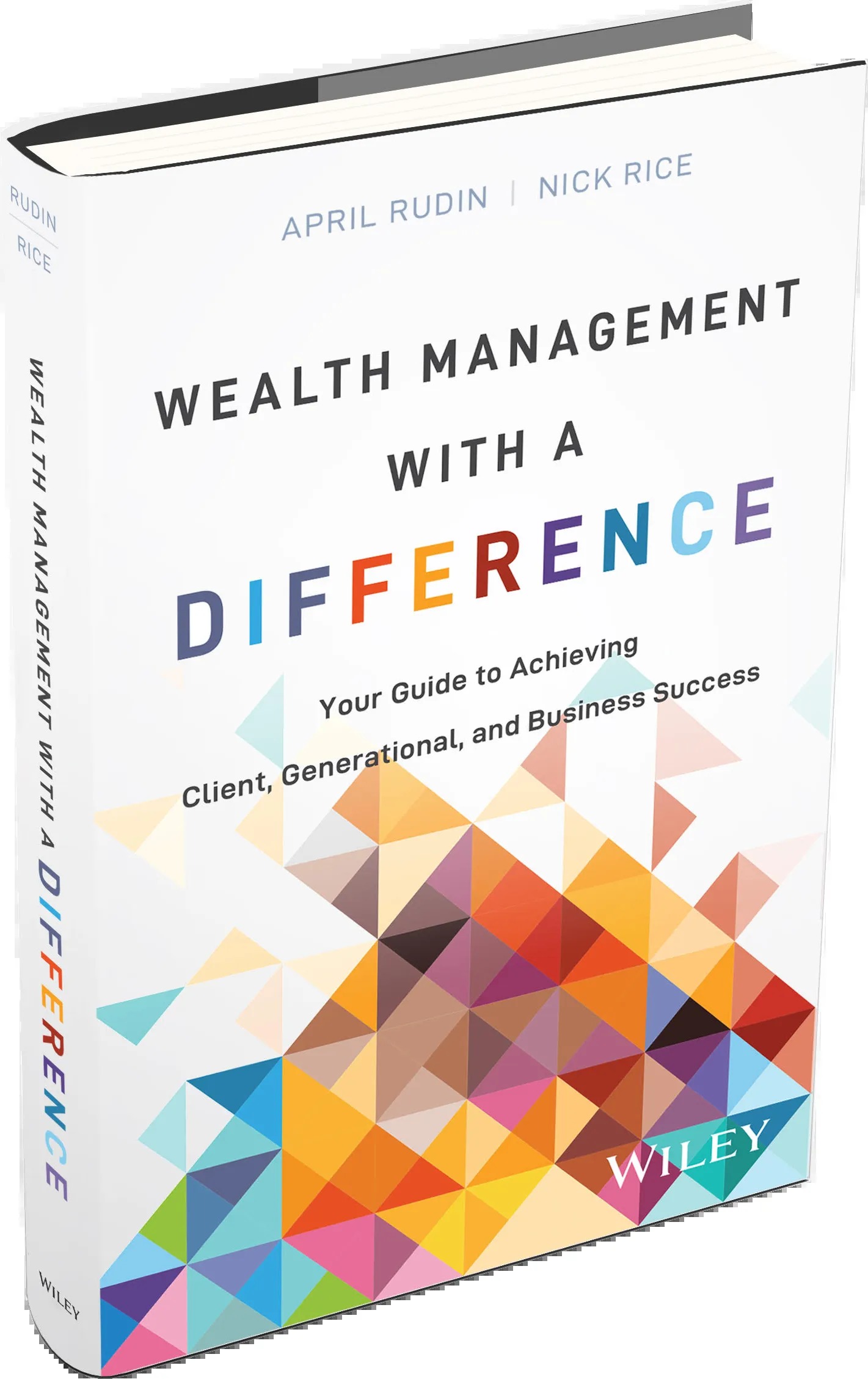
Then the argument expanded into a book. Wealth Management with a Difference, published by Wiley in 2025 and co-authored by Rudin and Nick Rice, is based on conversations with more than 80 leaders around the world. Its subjects include demographics, retirement, technology, digital service, alternatives, purpose, international clients, the ultra-wealthy and talent. The list makes the firm's founding bet look less like a campaign idea than a long observation: wealth changes hands, tools change, expectations change, and yesterday's symbols stay on the brochure until somebody removes them.
The Rudin Group is still small enough to sound like its founder and broad enough to work across continents. That combination will not suit every procurement department. It does, however, answer a problem that has survived every new platform: expertise is plentiful; memorable relevance is scarce. Somewhere, a lighthouse is looking for another line of work.