Carbon black is not a phrase that usually stops a dinner party. It is a powder used in tires, batteries, coatings and other products, which means it is enormously useful and narratively uncooperative. When Orion Engineered Carbons hired RooneyPartners, the company had another complication: it reported in euros, traded in New York and needed investors to see an innovation story inside a commodity-shaped business.
RooneyPartners did not attempt one grand reveal. It found several doors into the same room - corporate innovation, leadership, strategy and the investment thesis - then matched each angle to business media, search and social channels. Short campaigns were timed to quarterly earnings. The messages reached more than 900,000 people. Search performance improved. The bounce rate came down. The powder had acquired a plot.
This is the useful way to understand RooneyPartners. It is a New York communications firm founded in 2003, but “PR agency” undersells the job it has chosen. Again and again, it appears at the point when a difficult business must become legible to a consequential audience.
The event comes before the channel
Many communications firms organize themselves around what they make: releases, posts, ads, videos. RooneyPartners is more interesting when viewed through the event that forces the making. An IPO needs credibility before it needs confetti. A biotech milestone needs translation without distortion. A turnaround needs reporters to understand why the company now differs from the company they remember. A crisis needs decisions before it needs statements.
The firm's published work reads like a cabinet of these moments. Chicken Soup for the Soul Entertainment selected RooneyPartners ahead of a public offering. The agency supported what became a $30 million exchange-listed IPO - at the time, the largest exchange-listed offering completed under Regulation A+ and the first under that route to list directly on Nasdaq's higher tier. The work extended beyond press coverage to web design, search, social and a crowdfunding message: “Invest in a Brand You Love.”
A tactic is useful only after somebody can say what the business moment is.The operating idea visible across RooneyPartners' case work
For Trex, the moment was a resurgence. The composite-decking manufacturer wanted investors to see a financial turnaround and a defensible alternative to wood. RooneyPartners built a two-part campaign around the investment thesis and the authority of management. More than 60 results followed, including appearances or coverage across CNBC, Bloomberg, Barron's, Fortune, The Wall Street Journal and The New York Times.
The founder in the room
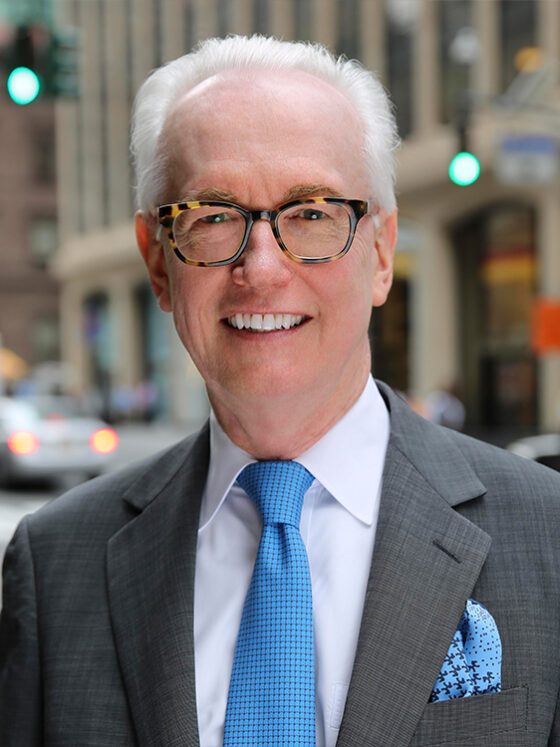
Terry Rooney spent nearly two decades at Morgen-Walke, the international corporate communications and investor-relations firm, where he built and managed an international PR and IR practice. Then he founded RooneyPartners around a proposition that large agencies routinely advertise and structurally struggle to deliver: senior people remaining close to the work.
The firm says its team averages more than 20 years of experience. LinkedIn places the company in the 11-to-50-employee range; the supplied company record counts 18. The point is not simply that RooneyPartners is small. It is that smallness is used as workflow. Principals do not sell an assignment and hand it down a long staircase. Media practitioners, content specialists, designers and digital strategists work across the same brief.
That model has an obvious tradeoff. It suits clients who value judgment, access and a customized team. It is less naturally suited to a global consumer brand that needs hundreds of localized assets produced every day across dozens of markets. A boutique earns its keep when the cost of a mediocre decision is higher than the cost of limited scale.
Translation without the baby talk
The strongest evidence comes from healthcare. Lysogene's science concerned gene therapies for devastating neurodegenerative diseases. Its founder, Karen Aiach, also had a reason no product sheet could hold: her daughter had Sanfilippo syndrome type A. RooneyPartners did not replace the science with the family story. It developed multiple angles so the entrepreneurial, clinical and personal narratives could each reach the right reporter. Lysogene later raised €22.6 million in a 2017 Euronext Paris IPO.
GenSight Biologics shows how a relationship widened. The company first hired RooneyPartners for media relations while preparing for an IPO. After a social-media audit and digital opportunity analysis, it added digital and social strategy. This is a more credible form of integration than the usual agency bundle: begin with the urgent need, demonstrate fluency, then add channels because the diagnosis calls for them.
The same logic shaped AACSB International's first global digital brand campaign. RooneyPartners mapped a four-stage awareness journey for educators, prospective students and business leaders, created campaign assets, and ran paid social, search, display, email, audio and video across 20 countries. A/B testing and a custom dashboard let the team adjust the work while it was running. AACSB exceeded its top-line goals for site traffic, social engagement and search performance.
What another company can copy
- Write the business objective first. “Get coverage” is not one. Support a raise, clarify a valuation story or change a specific audience's behavior.
- Build several honest entrances. A technical company can have a scientific story, a founder story and a market story without forcing them into one swollen pitch.
- Time distribution to real events. Earnings, congresses, filings and launches give attention a reason to exist.
- Add channels after the audit. GenSight expanded from media relations into digital because the opportunity was visible, not because a bundle needed filling.
- Put measurement near the work. Dashboards, A/B tests and search analytics allow a campaign to learn before it ends.
Where the boutique fits
RooneyPartners now spans media relations, content strategy, branding and design, digital and social marketing, employee engagement, crisis work, financial communications and healthcare. It operates nationally and internationally, with clients in Europe and Asia and a partnership with London consultancy Hudson Sandler. In healthcare, it also formalized a relationship with investor-relations firm LHA after the two had worked together for years across more than 20 U.S. and European clients.
This breadth could sound like every agency website until one notices the center of gravity: finance, healthcare, manufacturing and other sectors where the audience is skeptical and the material resists compression. RooneyPartners competes with specialist boutiques and large global networks, but its wager is different. Expertise and continuity can beat abundant headcount when the brief is consequential and precise.
The fees are private, as agency fees generally are. The more useful economic clue is the business model itself: customized retainers and projects, delivered by experienced practitioners, with specialist partnerships extending reach where necessary. Clients are buying counsel and execution together.
In 2025, RooneyPartners promoted Jay Max Kraidman to partner to lead content, digital and social. Kraidman is a strategist, a former Newsday copywriter and, improbably but pleasingly, a Billboard-charting songwriter with more than 40 children's television songs to his name. The appointment says something about the agency's direction. Media relationships remain central, but the modern corporate story must also be written, designed, filmed, searched, posted, measured and occasionally sung.
The firm will not be the right answer when a company has no substantive event, no access to decision-makers or no patience for careful positioning. Communications cannot rescue an incoherent strategy. It can, however, reveal a coherent one. RooneyPartners' work is most persuasive when the raw material is difficult, the audience matters and the moment cannot be repeated. That is when a small agency can occupy a very large room.