In the old grammar of modeling, a person could be reduced to a small row of numbers. Height. Bust. Waist. Hips. Shoe. The irony was hard to miss: an industry paid to manufacture desire had developed an extraordinarily dull way to describe the people doing the desiring. When The Lions opened in New York in 2014, its founding team took the opposite view. The bits that resisted measurement - a voice, an obsession, a point of view, a strange gap between the teeth - were not defects to manage. They were the beginning of the product.
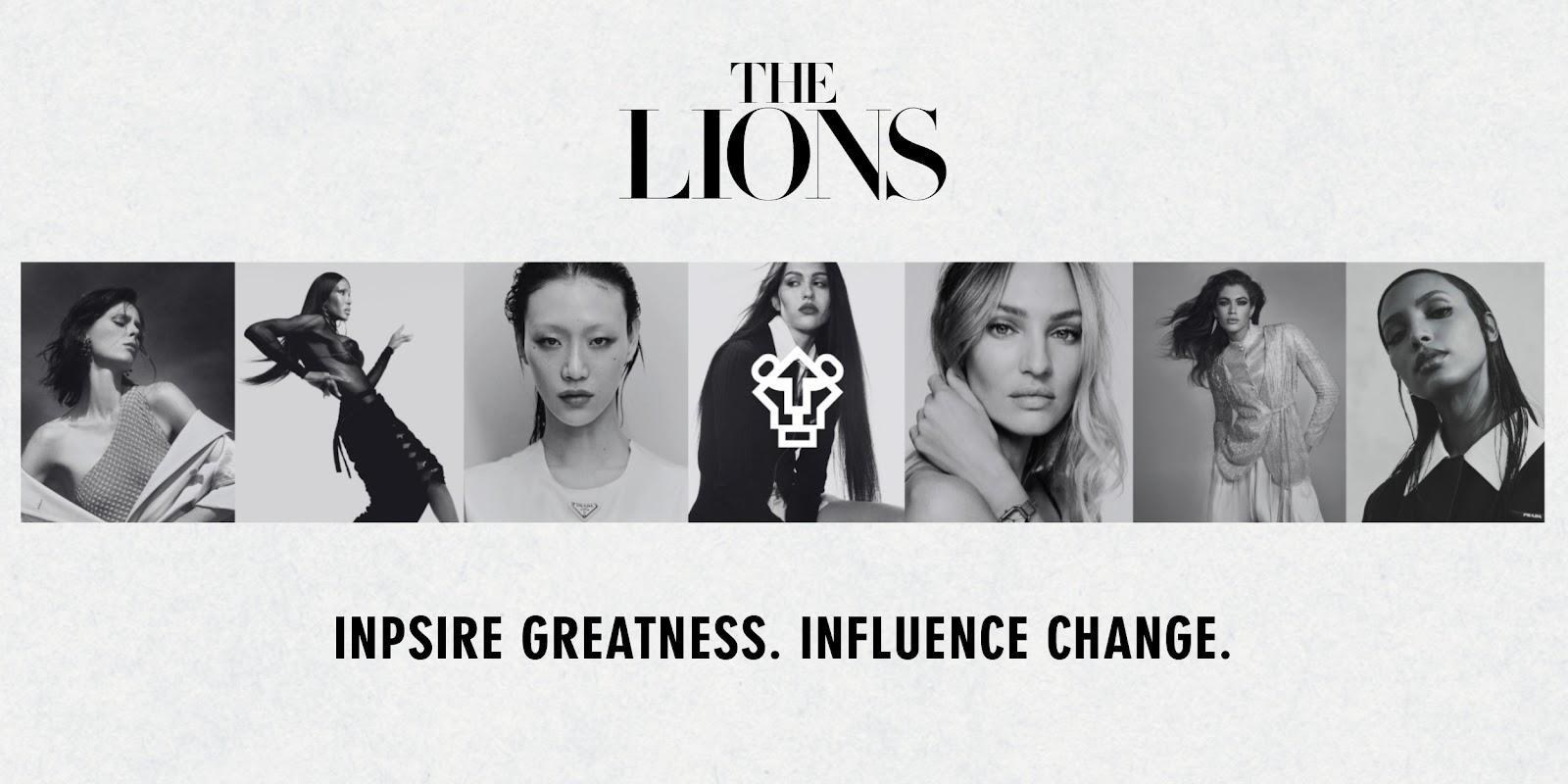
This sounds obvious now, in the era of followers, founders, and direct-to-audience careers. It was less obvious when an agency's practical job was to put a suitable body in a suitable sample. The Lions still does that work. Its current board spans new faces and fashion veterans, from Amelia Gray and Sora Choi to Jerry Hall and Kristen McMenamy. But it describes its purpose differently: build powerful personal brands from a client's talents, passions, and ideas.
The misfit is the inventory
One early example was Slick Woods. Bald, gap-toothed, tattooed, and uninterested in looking generically polished, she did not arrive as a tidy answer to the industry's existing question. The Lions helped persuade clients to ask a better one. Her career went on to include Marc Jacobs, Fendi, Yeezy, and Puma. The agency did not erase the thing that made her difficult to categorize. It sold the category problem.
That logic travels. Cameron Russell could take university classes and give a TED talk without those choices being treated as distractions from modeling. Valentina Sampaio's identity and advocacy became inseparable from a career that crossed Sports Illustrated, Victoria's Secret, and Armani Beauty. Honey Dijon is a DJ, producer, and fashion presence. Jimmy Butler is a basketball player whose cultural life does not stop at the sideline. The roster begins to look less like a set of interchangeable faces and more like a shelf of unusually specific media companies.
“A good manager has a sense of where a career should go. Where do you want to see this career 10 years from now?”Louie Chaban, founding managing partner
That ten-year question is the heart of the distinction. A booking agency optimizes a calendar. A manager optimizes a career. The two activities overlap until they do not. A large check from the wrong company may fill a week and narrow the next five years. CEO Julia Kisla Taylor has described turning down lucrative brand work after the agency and its talent judged the partner's reputation a long-term liability. The immediate cost is visible. The option value preserved by saying no is harder to count.
The agency quietly ate the creative brief
Once you know a person's history, taste, audience, boundaries, and comic timing, merely supplying that person to somebody else's campaign starts to look wasteful. The context sits inside the agency while the creative work happens outside it. The Lions responded by adding branding, public relations, creative strategy, social media, and production. It kept the boutique management layer and built adjacent services around the information that layer produced.
The DHL collaboration shows the loop in miniature. A package courier wanted relevance with Gen Z and fashion audiences. The Lions did not simply offer a recognizable model holding a box. It outlined stories, provided talent, directed and produced short films, and shaped the content strategy. In one, Valentina Sampaio receives a Pride package from her mother in Brazil. In another, Irina Shayk thanks the delivery worker keeping people connected during lockdown. The latter reportedly drew more than one million views in its first 24 hours.
The work is useful because the product and the person meet in a true detail. Distance from family makes a courier meaningful. Gratitude during lockdown makes delivery workers visible. The lesson is not “hire a celebrity.” It is almost the reverse: begin with a human fact that the celebrity already owns, then let the brand occupy a credible place inside it.
What the client buys
Representation, negotiation, creative judgment, production, PR, social strategy, and access to an audience through a fitting person.
What the talent keeps
A coherent story, fewer random endorsements, more bargaining power, and routes into ownership or work beyond modeling.
When the endorsement becomes equity
Kate Upton's relationship with Vosa Spirits offers the grown-up version of this idea. She did not stop at appearing beside a can. In 2023, she joined the ready-to-drink company as a co-owner, with a stated role in flavor development, packaging, marketing, and customer growth. The shift from endorser to owner changes both economics and behavior. An endorsement rents attention. Ownership asks the talent to apply judgment.
This is where The Lions fits in the market. IMG, Ford, Elite, Wilhelmina, Women, DNA, The Society, and NEXT all compete for talent and bookings. Creator managers and PR shops compete for the work around the booking. The Lions' pitch is that these should not be separate conversations. Its roughly 25-person scale, according to supplied company data, makes that integration plausible: the manager who understands a talent's limits can sit close to the strategist designing the campaign.
Taylor makes the metaphor literal. She has said she does not keep a CEO office. When she is in New York, she sits at a communal table with the agents, close enough to coach a contract negotiation and repeat the company's principles before either becomes a crisis. In a business of soft signals, proximity is operating infrastructure.
The business model is less mysterious than the images it helps create. Talent agencies generally take commission on represented work. The Lions also charges for brand strategy, publicity, campaigns, production, and related services. The company does not publish its rates, funding, or valuation. Its constraint is more interesting than any invented number: personalized judgment does not scale like software. Add too many people or too many projects and “bespoke” becomes a word on a pitch deck.
The office that disappeared
In 2017, The Lions opened a Los Angeles branch. It looked like the familiar agency path: prove the model in New York, plant a flag beside entertainment, repeat. The pandemic interrupted that plan, and the Los Angeles operation closed. The physical expansion failed first. The strategic expansion survived.
That sequence matters. Offices are one way to grow, but they are expensive proxies for reach. Services can travel. A New York manager can help a globally known client structure a partnership without maintaining a desk in every city where the campaign appears. The Lions changed its mind about footprint, not ambition.
There is a playbook here for companies far outside fashion. Find the useful detail your industry's standard form deletes. Keep the high-judgment core small. Add services where proprietary context gives you an advantage. Use each project to enlarge the customer's future choices, not merely today's invoice. And treat a “no” as a product decision when the wrong revenue would blur the position that makes you valuable.
It works only under demanding conditions. Talent must actually have a point of view. Managers must be patient enough to trade short-term fees for long-term trust. Brand work has to fit the person, not just the demographic. And the boutique promise requires enough senior attention to remain true. Without those ingredients, personal branding collapses into captions and mood boards.
The Lions' wager is not that everyone should become a brand. It is that a person already contains more strategic material than an industry usually bothers to notice. The agency's work is to notice first, package carefully, and avoid sanding away the reason anybody looked.