The first thing Async had to edit was its own name. In 2020, Artavazd “Arto” Yeritsyan made a Chrome extension that could turn an article into something resembling a podcast. The name Podcastle was charming and exact. Then the users arrived and began asking the product to do everything that happened before and after the podcast: record a remote guest, rescue a noisy track, clone a voice, cut video, add captions, make social clips, publish the result. Exactness became a trap.
- What it is: one AI workspace for recording, generating, editing, repurposing, and publishing audio and video, plus a Voice API for developers.
- Who pays: solo creators, production teams, businesses, and developers - through subscriptions, custom plans, credits, and API usage.
- The useful idea: compete on continuity. The product tries to remove the exports, uploads, and context switches between specialist tools.
- The honest limit: it suits repeatable production better than frame-perfect craft, and AI output still needs a person with taste to review it.

A category error, corrected
Companies usually rebrand after something embarrassing. Podcastle rebranded because something had gone right too many times. In 2021, when it raised $7 million, it reported roughly 150,000 creators and pitched a browser-based path from remote interview to finished episode. Video recording arrived in 2022. Revoice and the one-click Magic Dust audio cleaner arrived in 2023. A $13.5 million Series A followed in 2024. By the end of 2025, the company said 374,588 active creators had recorded, edited, enhanced, or exported something during the year.
The old word now described an output, not the system. In January 2026, Podcastle became Async. Existing accounts and billing stayed put. The strategic shift had already happened: one platform for creators and teams; another surface, the Voice API, for developers building assistants, chatbots, phone agents, and audio experiences.

“The next generation of creators don’t want to edit; they want to direct.”Arto Yeritsyan, founder and CEO
The product is the missing middle
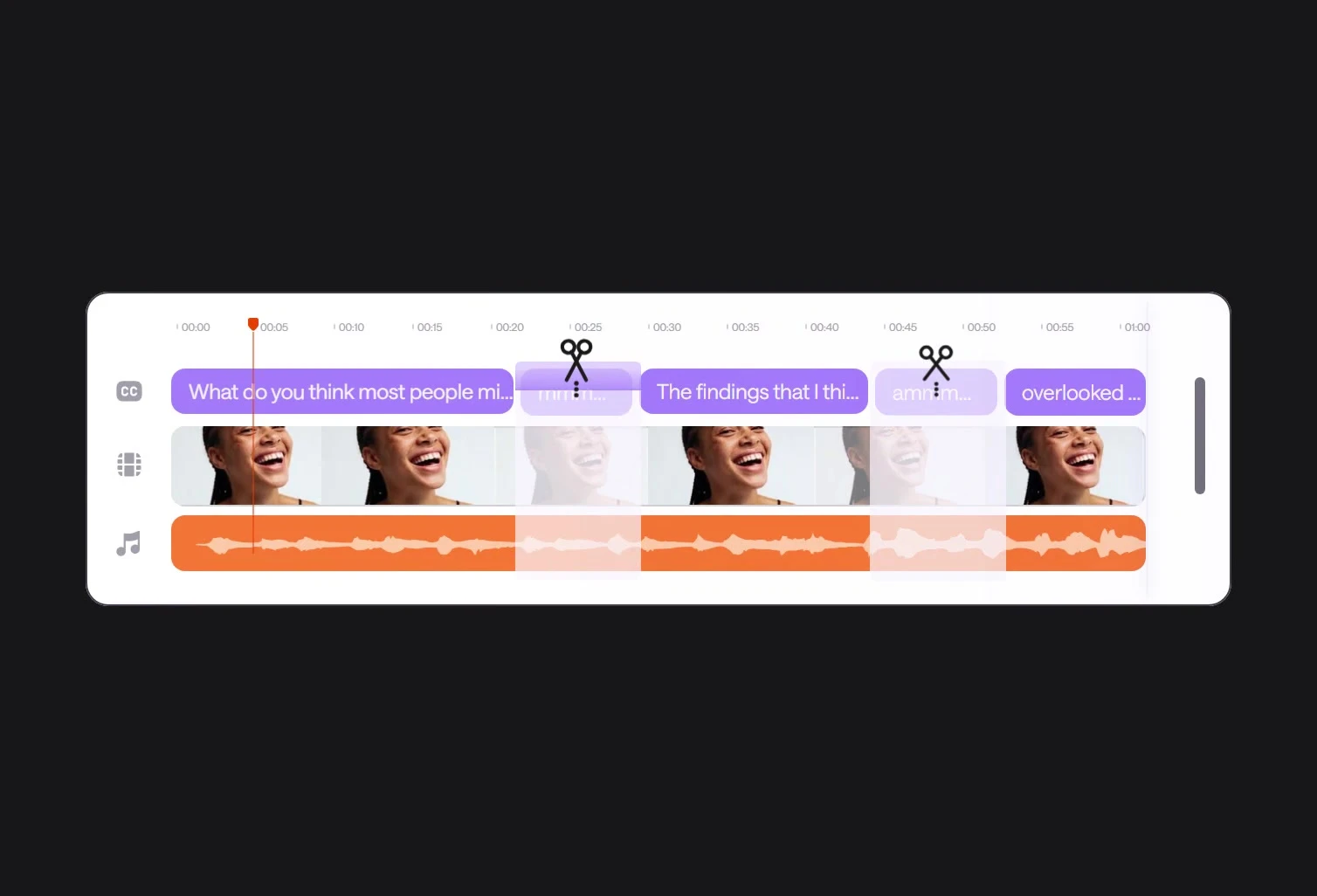
That sentence is a sales pitch, but it also describes the interface. Async’s Creator Platform still has the practical plumbing: local multitrack recording for as many as ten remote guests, separate audio and video tracks, transcription, noise removal, silence cutting, subtitles, dubbing, lip sync, stock media, hosting, and exports up to 4K on higher plans. The newer layer lets a creator ask for work in chat. Bumblebee, released in July 2026, separates conversation into Ask mode for thinking and Act mode for doing. It shows a plan before a larger edit, can run several generations at once, accepts negative prompts, and routes jobs to specialized “Skills.”
More than 100 image, video, avatar, music, and sound-effect models sit behind the workspace. That number makes a handsome billboard. The more consequential detail is where the outputs land: inside the editor, beside the footage that needs them. A generated cutaway is not valuable because it exists. It is valuable because it can be dropped into the awkward eight seconds where the speaker mentions a product nobody photographed.
The five-tab problem, compressed
Record locally
Clean the tracks
Generate what is missing
Cut, caption, reframe
Export and publish
Async’s wager: the boring handoffs between these steps cost more creative energy than any single tool can save.
Two businesses share one throat
The Creator Platform is familiar SaaS. At public monthly rates listed in 2026, Essentials cost $19.99, Pro $39.99, and Teams $84.99, with lower effective prices for annual billing; a free tier let newcomers test the machinery, and Business plans were quoted individually. Plans combined recording hours, cloud storage, exports, collaboration, and a monthly allowance of AI credits. The credit meter is the tell: generation costs vary by model, duration, complexity, and resolution, so the subscription has a usage economy hiding inside it.
The Developer Platform is plainer. Async listed Flash text-to-speech at $0.50 per generated hour and Pro at $1.00, with enterprise rates negotiated. Its documentation advertises streaming latency around 300 milliseconds, several delivery methods, word-level timestamps, multilingual support, and voice cloning from a three-second sample. In June 2026, Flash v1.5 landed in a leading position on Artificial Analysis’s quality-versus-price benchmark for lower-cost speech models. Benchmarks are not conversations, but price is a stubborn feature.
The competitors sell instruments. Async sells the session
Descript made text-based editing intelligible. Riverside built a strong remote recording room. CapCut owns the quick social edit. Runway made generation a destination. Adobe remains the deep toolbox for professionals. ElevenLabs and Cartesia sell speech infrastructure. Async’s differentiation is not that none of these products can do its tricks. It is that Async places many of the tricks in one sequence and serves both the person making a show and the developer making a voice application.
This is also the risk. An all-in-one product is judged at every seam. Remote recording has to be trustworthy before the clever editor matters. A model router has to pick well enough that “100+” feels like choice rather than a menu nobody requested. Credits must stay legible. And a chat interface has to preserve control when the user cares about the exact frame, syllable, brand color, or legal approval.
Where the fit gets awkward
Async is a poor bargain for an editor who enjoys granular timeline work, a team whose approval process forbids generative media, or anyone expecting a single prompt to produce a finished film. Remote recording still depends on disciplined setup - Async itself recommends Chrome, one open Async tab, and no private-browsing mode. The workflow saves the most time when output is frequent, formats repeat, and a human remains responsible for the final listen and watch.
What another builder can copy
The transferable part is not “add AI.” It is the way the company let an adjacent task reveal the next product. People came to turn text into audio, then needed to record, then edit, then add video, then make variants. Each expansion shortened a trip that users were already taking.
- Map the handoffs. Watch where customers export, download, rename, and upload. Friction often lives between features, not inside them.
- Follow completed work. Async moved from “make audio” toward “finish and publish media.” The larger job gave it room to expand without inventing a new customer.
- Share expensive infrastructure. The same speech expertise can improve a creator tool and become a metered API for developers.
- Rename after the evidence. Podcastle did not become Async on a mood board. It changed after video, teams, generative tools, and APIs had made the mismatch obvious.
The name “Async” comes from computing: work continues without forcing everything else to wait. It is an unusually honest aspiration for creative software. Inspiration is quick; production is queues. The company’s job is to keep those queues from becoming the story.