autonomous-vehicles
(43)
Lyft sells the next five minutes.
A pink mustache got strangers into cars. Keeping them coming back takes something harder: a ride they can plan a life around.

Forterra takes the driver out. Then the real work begins.
A self-driving vehicle is only the start. Forterra is building the software, communications and controls that turn an empty driving seat into a working mission.

Applied Intuition sells the road you can repeat
A late lane change reveals the business behind Applied Intuition: turn the messy physical world into tests engineers can run again. Now the company is moving from the simulator into the vehicle itself.

May Mobility bets the robotaxi on the ordinary trip
The autonomous driving company learned its trade connecting people to everyday destinations. Now it is taking that experience onto ride-hailing apps, with a proposed public listing and a very real cash bill.

Compound Eye teaches machines to see without giving themselves away
Ordinary cameras, some careful geometry, and an unusual customer: Compound Eye is turning passive 3D vision into a way for vehicles to navigate when GPS cannot be trusted.
Autonomous Solutions bets on the fleet you already own
A tractor, a haul truck and a mower have more in common than their owners think. ASI has spent 25 years turning that observation into a business - and SoftBank has just invested $225 million in it.

The Camera With Sixteen Eyes Found a Different Road
Light built a pocket camera with sixteen lenses, then discovered that machines had a more urgent use for its eyes. The road from a $1,950 gadget to John Deere runs through one stubborn question: how far away is that thing?

The Boring Route That Made Driverless Trucks Useful
Gatik started with the least glamorous trip in retail: warehouse to store, again and again. The bet was that a truck with a modest itinerary could become a serious business.

The Company That Fired Its Imaginary World
Parallel Domain spent six years inventing roads for autonomous machines. Then it decided reality was the better author - and rebuilt the company around the moments when machines get things wrong.

NODAR Is Teaching Cheap Cameras to Do LiDAR's Expensive Job
The autonomous-vehicle industry spent years putting lasers on roofs. NODAR's contrarian pitch is simpler: spread two cameras apart, keep them calibrated through every pothole, and let software recover the world in 3D.

The Goldman Banker Who Built a Different Kind of Cap Table
Deborah Jackson left Wall Street to fund the founders it kept overlooking. A decade later, Plum Alley has put $100M-plus into CRISPR, wastewater sensors and autonomous freight - and turned its members into the people writing the checks.

TaskUs Built a 63,200-Person Business for the Work AI Still Can’t Do
The outsourcing company grew up answering tickets for tech startups. Now it is training models, testing robots and moderating the messiest corners of the internet - while teaching its own 63,200-person workforce to work beside AI.
Waymo Has Left the Lab. Now It Has to Teach Cities to Trust an Empty Driver’s Seat
Alphabet’s robotaxi company has turned autonomous driving into a service people can summon. Its next test is less cinematic and more difficult: making safety, fleet economics and public trust work in city after city.
RoboDock
RoboDock is a San Francisco robotics startup (Y Combinator W26) building the physical automation layer for electric and autonomous vehicle depots. Its robots plug in chargers, align to charge ports with vision guidance, and run post-trip inspections using visual and thermal sensing - turning depots that still rely on people walking rows of vehicles into self-running infrastructure. Founded in 2025 by Stanford classmates Zinny Weli (CEO) and Celine Wang (CTO), the company offers its system as a retrofit that drops into existing facilities without layout changes.

Marakeb Technologies
Marakeb Technologies is a Sharjah-based UAE company specializing in platform-agnostic autonomy for marine, ground, and aerial vehicles. Its patented MAP Pro conversion kit turns almost any manned vehicle - from boats to cars to drones - into a remotely operated or fully autonomous system. With roots in GRP boat building since 2007, the company now builds unmanned surface vessels, ground control stations, and combat management systems for defense, security, oil and gas, environmental, and transportation customers, and is majority-owned by Tawazun's Strategic Development Fund.

Moove
Moove is an African-born global mobility fintech that finances vehicles for gig-economy drivers who are shut out of traditional bank lending. Using alternative, revenue-based credit scoring built on ride-hailing and delivery earnings, Moove lets drivers on platforms like Uber lease brand-new cars and pay them off through a share of their weekly income - a 'drive it, own it' model. Founded in Lagos in 2020 by Ladi Delano and Jide Odunsi, it now operates one of the world's largest managed ride-hail fleets and has become Waymo's autonomous-fleet operations partner across major US and UK cities.

Nexar Inc.
Nexar is a New York-based mobility technology company that turns connected dashcams into a real-time sensing network for the physical world. Founded in 2015 by Eran Shir and Bruno Fernandez-Ruiz, it sells LTE-connected 4K dashcams to consumers while aggregating anonymized road imagery into CityStream, a platform that gives cities, mapmakers, insurers and autonomous-vehicle developers a minute-by-minute, ground-level view of streets. In July 2026 Nexar agreed to merge with Nauto to form an independent infrastructure platform for physical AI, backed by more than 10 billion historic miles of driving data across 50+ countries.

Commsignia
Commsignia is a vehicle-to-everything (V2X) technology company that builds the software stacks, on-board units, roadside units and cloud platforms that let cars, road infrastructure and traffic operators talk to one another. Founded in Hungary in 2012 and now headquartered in Santa Clara, California, the company supplies standards-compliant C-V2X and DSRC solutions used by automakers, road operators and departments of transportation across more than 20 countries, with the goal of reducing collisions and smoothing traffic flow under the banner 'Trust for the road ahead.'
iMerit Technology
iMerit is a global AI data solutions company that supplies the labeled, enriched and expert-refined data used to train, fine-tune and evaluate machine learning and generative AI models. Founded in 2012 by Radha Basu, it pairs a specialized human workforce with its Ango Hub annotation platform and its Scholars network of domain experts to serve Fortune 500 clients across autonomous vehicles, healthcare, geospatial and financial services. In June 2026, enterprise-AI firm EXL agreed to acquire iMerit for up to $310 million.
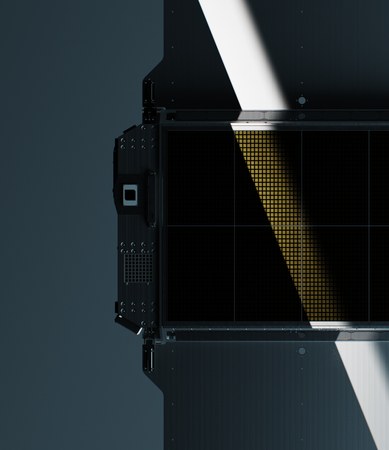
Array Labs
Array Labs designs, builds, and operates radar satellites that fly in coordinated clusters to image the same place on Earth from many angles at once. By distributing the radar across many small, mass-manufacturable satellites instead of one large bespoke spacecraft, the company aims to produce continuously refreshed, high-resolution 3D maps of the planet - a form of space-based radar it likens to what SpaceX did for launch. Founded in 2021 and based in Redwood City, California, Array Labs raised a $20M Series A in January 2026 to scale radar manufacturing and prepare to launch the world's first formation-flying radar satellite cluster.
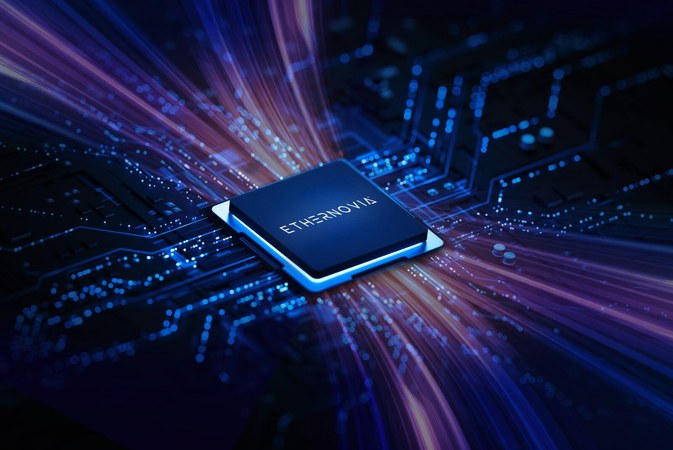
Ethernovia
Ethernovia is a San Jose semiconductor company building a new class of high-performance automotive and edge packet processors, Ethernet PHY transceivers and switches in 7nm. Its chips act as the deterministic 'nervous system' for software-defined vehicles and physical-AI machines, scaling from 1 Gbps to 10 Gbps to move sensor and compute data with low latency and low power. Founded in 2018 by veterans of Aquantia, the company has raised more than $150 million from backers including Porsche SE, Qualcomm Ventures and AMD Ventures.

Foxglove
Foxglove is a San Francisco company building a data and observability platform for robotics and Physical AI. Its tools let engineers record, sync, search, and visualize the multimodal sensor data their robots produce - 3D point clouds, video, GNSS, and proprioceptive streams - so teams can debug and improve autonomous systems without building expensive in-house infrastructure. Founded in 2021 by two Cruise and Coinbase veterans, Foxglove maintains the open-source MCAP file format (now the default recording format in ROS 2) and counts NVIDIA, Amazon, Anduril, Wayve, and Waabi among its users.

Lumotive
Lumotive is a Redmond, Washington optical-semiconductor company that turns beam steering into a chip. Its patented Light Control Metasurface (LCM) technology uses thousands of tunable liquid-crystal optical resonators etched into a CMOS die to steer light electronically - no moving parts - powering solid-state LiDAR, 3D sensing, and, soon, optical switching for AI data centers. Spun out of Intellectual Ventures and Bill Gates-backed metamaterials research, the company sells programmable beamforming chips like the LM10 to sensor and systems makers rather than building full LiDAR units itself.
MicroVision, Inc.
MicroVision, Inc. (NASDAQ: MVIS) is a Redmond, Washington-based developer of lidar and perception technology built on more than three decades of MEMS laser beam scanning. Once known for pico-projection and its PicoP scanning engine used in consumer displays, the company has pivoted to become a supplier of automotive-grade and industrial lidar sensors - the MAVIN and MOVIA lines - plus perception software, targeting ADAS, autonomous vehicles, robotics, and a fast-growing security and defense business.
Owl Autonomous Imaging
Owl Autonomous Imaging (Owl AI) builds Monocular 3D Thermal Ranging cameras and AI perception software that let vehicles and machines see people, animals and obstacles in total darkness, blinding glare, fog, rain and snow. Founded in 2018 by Chuck Gershman and Gene Petilli, the Fairport, New York company pairs its own HD long-wave infrared focal plane array with thermal CNNs to deliver both classification and distance from a single passive camera - aimed at pedestrian automatic emergency braking, ADAS and defense.

PIX Moving
PIX Moving is a city-robotics company that builds modular, drive-by-wire electric 'skateboard' chassis and autonomous 'mobile spaces' such as its RoboBus and RoboShop. Founded in 2014 and rooted in both Silicon Valley and China, PIX combines metal 3D printing, generative design, and self-driving software to turn vehicles into reconfigurable rooms on wheels - a shuttle that can become a cafe, gym, retail pop-up, or library. It sells its chassis and full vehicles to developers, cities, and mobility operators, and runs a Robot-as-a-Service model aimed at deploying fleets across dozens of countries.

Roboto AI
Roboto AI is a Seattle-based analytics platform for robotics and Physical AI teams. It ingests multimodal robot logs - ROS bags, PX4/ULog, MCAP, Parquet, video - and uses AI agents plus a Python SDK and CLI to automatically search, analyze, and surface edge cases, anomalies, and failures across entire robot fleets. Founded in 2022 by former Amazon Robotics leaders Benji Barash and Yves Albers-Schoenberg, the company spun out of the Allen Institute for AI and raised a $4.8M seed to help robotics developers stop digging through petabytes of sensor data by hand.

TERN
TERN is an Austin-based startup building IDPS (Independently Derived Positioning System), an AI-powered, software-only alternative to GPS. Instead of relying on satellite signals that can be jammed, spoofed, or blocked by tall buildings and tunnels, TERN's AI reads the sensors already inside vehicles and phones - accelerometers, gyroscopes, speedometers - and matches that motion against existing map data to figure out exactly where you are. Founded by AI engineers and former U.S. special operations personnel, TERN serves automakers, delivery fleets, emergency services, and defense customers who cannot afford to lose their location when the signal drops.
ACEINNA
ACEINNA is a Massachusetts-based MEMS sensor company building high-performance, low-cost inertial measurement units (IMUs), GNSS/RTK precision-navigation systems, current sensors, and flow sensors. Spun out of MEMSIC in 2017 with a roughly $50M investment, ACEINNA is best known for its open-source OpenIMU platform and for shipping centimeter-accurate positioning solutions for autonomous vehicles and ADAS at a fraction of the price of legacy systems.
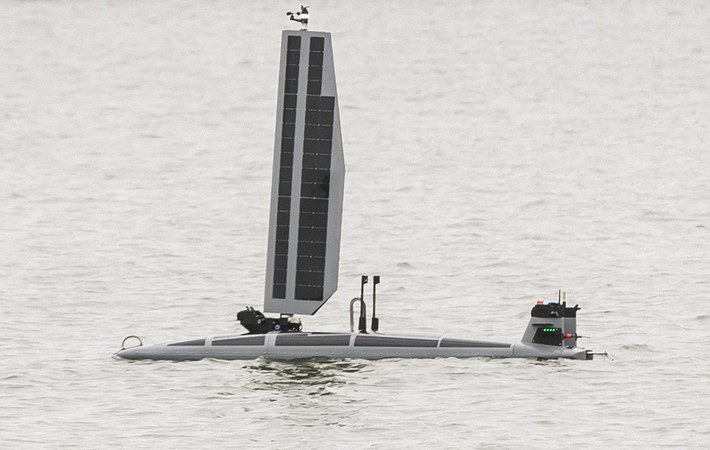
Ocean Aero Inc
Ocean Aero builds the Triton, the world's only autonomous vehicle that both sails on the surface and dives beneath it, powered entirely by sun and wind. Founded by U.S. Navy veterans in 2012 and now headquartered in Gulfport, Mississippi, the company makes long-endurance, crewless ocean robots used by the U.S. Navy and allied partners for surveillance, mine countermeasures, and ocean research, as well as by energy and science customers for seabed mapping and environmental monitoring.