Sixteen little black circles stared back at the photographer. The Light L16 looked less like a camera than the eye chart at a very expensive optometrist. That appearance was the point. Each circle was a lens and sensor, and Light wanted several of them to make a picture together. The company’s founders had noticed a plain contradiction: people bought serious cameras for quality, then left them at home because the phone was easier to carry. They set out to make the inconvenient camera convenient.
The short version
- Light combined images from many small cameras to make detailed photos and calculate depth.
- Its L16 reached buyers in 2017, but price and workflow limited its appeal.
- The company moved into vehicle perception; Deere acquired Light-related assets in 2022.
Rajiv Laroia, an electrical engineer and avid photographer, and Dave Grannan founded Light in 2013. Their wager was that software could do work previously assigned to a large lens and sensor. Put small cameras behind a flat face, aim them at the same scene, and combine their different views. The result could be a large, detailed image with adjustable depth of field. The same differences between views also contain something a machine would later want badly: a measurement of distance.
A pocket full of lenses
The L16 was a direct answer to the travel bag dilemma. Light announced it in 2015 and shipped its first production cameras in 2017. It carried sixteen camera modules of different focal lengths; a subset captured each shot, and Light’s software assembled the result. The headline specification was up to 52 megapixels. A photographer could zoom without the usual extending barrel and adjust a picture’s depth of field after capture. Those were striking promises in a body roughly shaped like a large phone.
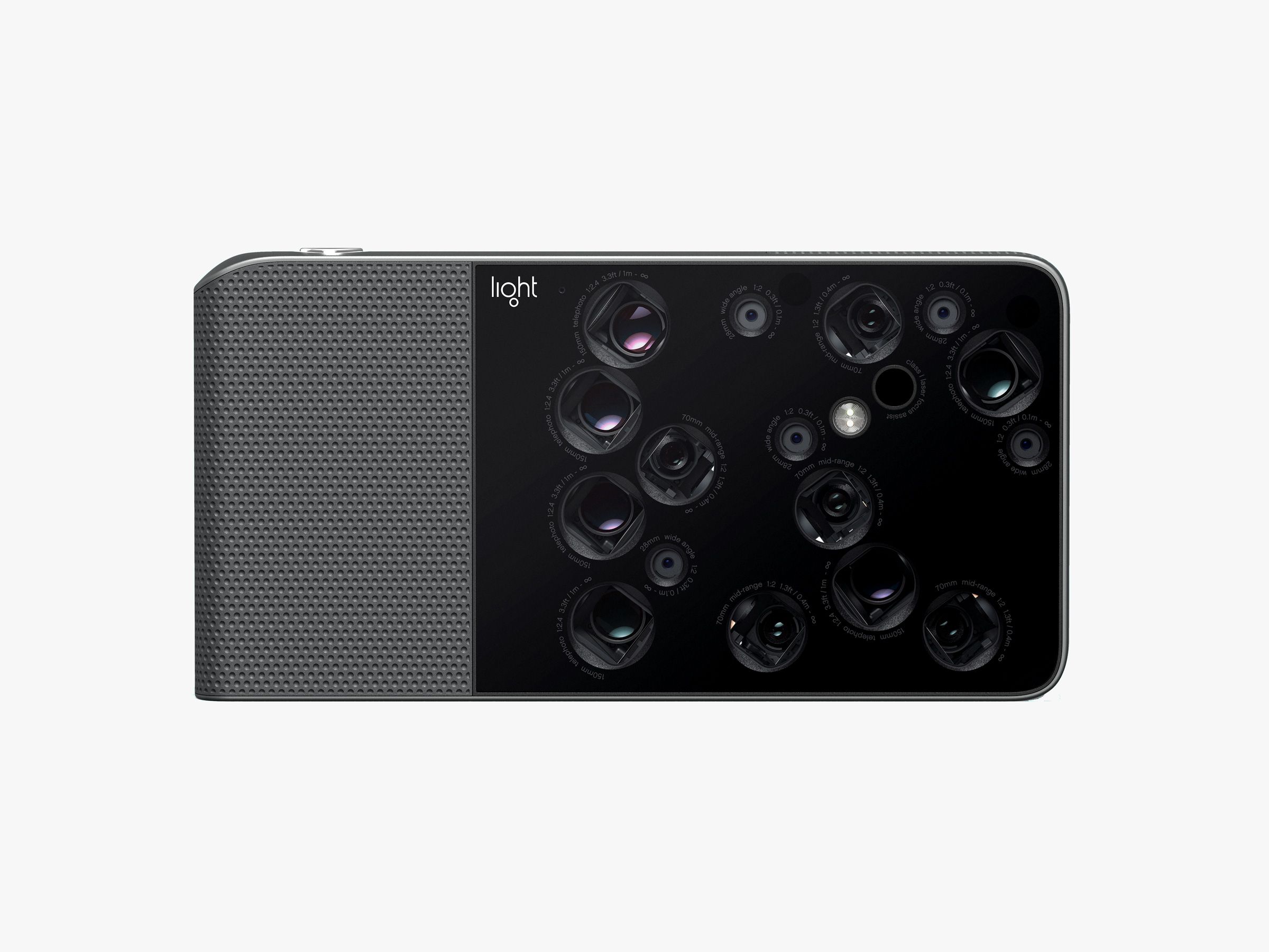
Light had to invent a camera and a workflow. Capturing several images was only the opening move; the company then had to align, process, and present them as one usable photograph. Early customers also needed its Lumen desktop software for full-resolution processing. This was a different bargain from taking a photo on a phone and sharing it immediately. The product asked the user to value the final image enough to tolerate the intervening steps.
The cost was considerable on both sides of the counter. A retail buyer faced about $1,950 by late 2017. The company raised $9.7 million in Series A funding, $25 million in Series B, and $30 million in Series C to get the idea through prototypes and manufacturing. Its $121 million Series D in 2018, led by SoftBank Vision Fund with Leica participating, lifted reported total funding to about $185.7 million. Those sums funded an ambitious platform, but they did not make the L16 an easy point-and-shoot.
The photograph had a waiting room
Reviews gave the L16 credit for what it could do in good conditions and were candid about what it could not. WIRED’s 2017 review praised its power in a small package while calling out weak low-light performance, missing video, and the unfinished feel of the product. Imaging Resource likewise found an intriguing idea attached to a high price. The first failure was practical: the path from shutter press to satisfying image was longer and less reliable than the pitch suggested. A camera can win the argument about optics and still lose the afternoon.
“Light’s Clarity platform enables machines to see better than humans.”Dave Grannan, 2021 Astemo announcement
Light was already looking beyond the solitary camera. Foxconn both helped manufacture the L16 and licensed Light technology for mobile devices. HMD Global’s Nokia 9 PureView, launched in 2019, put a five-camera array into a phone. Its cameras fired together and fused their images into a single photograph. That was closer to the original dream of bringing multi-camera quality to a device people already carried. It also showed that the clever part of Light could travel without the L16 body.
By 2020, Light had left consumer imaging for automotive work. Public reporting does not give one private moment when management changed its mind. The observable sequence is enough: a difficult standalone camera, a phone partnership, then a declared focus on cars. The move followed the strength of the technology. Cameras at slightly different positions can reveal how far away objects are. For a person, depth can make a portrait more pleasing. For a vehicle, depth is part of knowing where the road ends and an obstacle begins.
Merge multiple camera views into one high-resolution image.
Use simultaneous cameras in a device customers already carry.
Turn camera differences into depth data for vehicles.
The same eyes, a different customer
Light called its vehicle platform Clarity. It combined multiple cameras, calibration, and signal processing to produce real-time three-dimensional perception. Light claimed it could detect structures from 10 centimeters to 1,000 meters away. Such figures are the company’s stated capability, not a universal guarantee for every road and weather condition. The market was no longer photographers choosing between a phone and a dedicated camera. It was automotive suppliers deciding how cameras, processors, and other sensors could help driver-assistance and autonomous systems understand their surroundings.
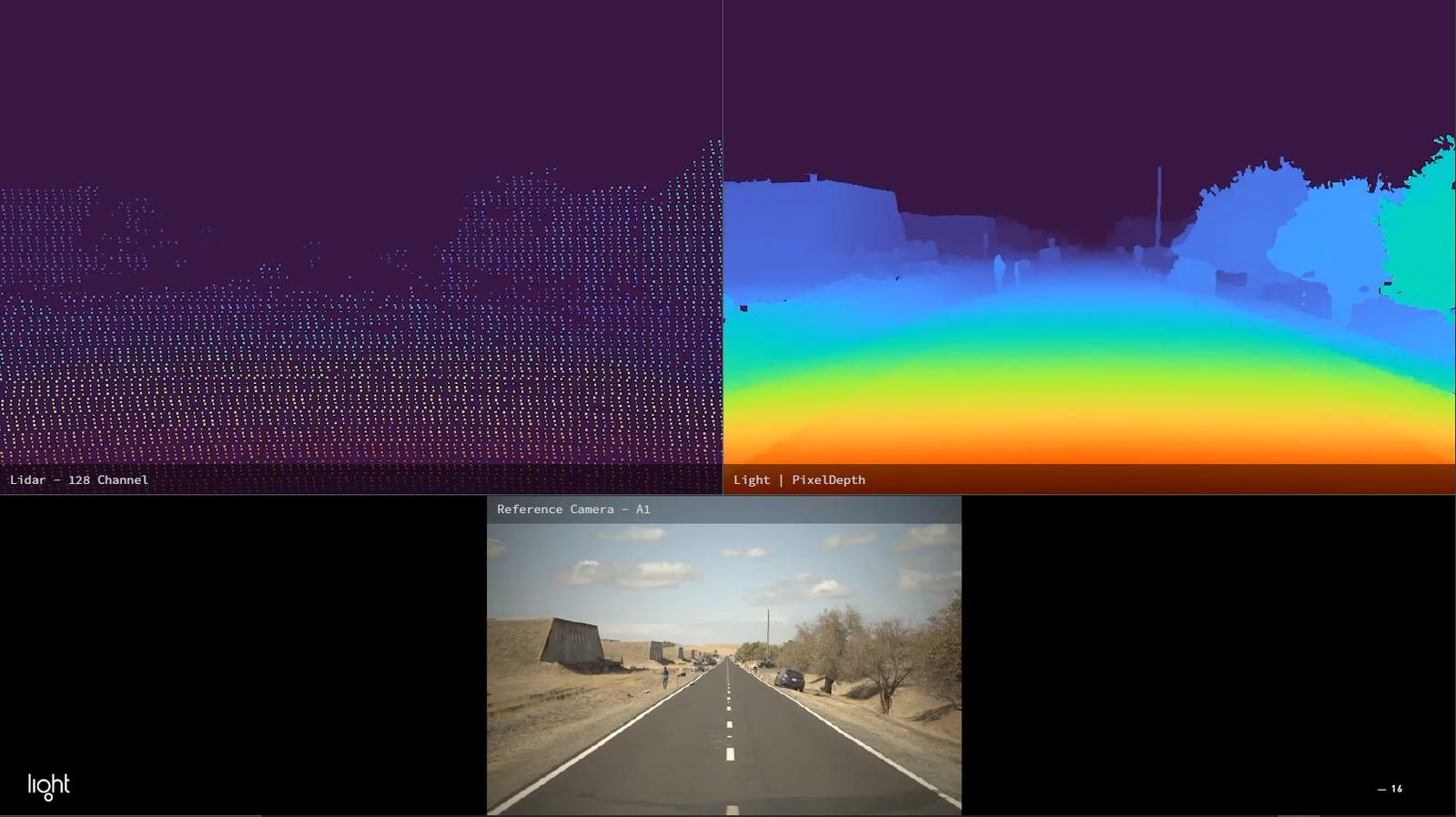
In July 2021, Astemo Americas and Light announced a proof of concept for a forward-facing driver-assistance system and said they would begin field testing. The partnership matters because it moved Clarity from a claim about what the technology could see to an integration problem with an established vehicle systems supplier. Vehicle perception must work inside real hardware, power, cost, and safety constraints. It competes with established stereo vision and lidar approaches, each with its own compromises.
Then came the most unexpected customer. In 2022, Deere acquired Light-related depth-sensing and camera-perception assets; its annual report names LGT, LLC, or Light, among acquisitions that year. The price was not disclosed. Light’s knowledge fit Deere’s push toward autonomous machines, though public records do not establish that every Light claim became a feature on a shipping tractor. That distinction is useful: an acquisition can validate the value of a technical capability without proving every former product promise.
What travels when the product does not
The lesson here is more precise than “pivot.” Light made an expensive object to prove a hard technical idea. The object exposed the idea to customers and reviewers, who found both its promise and its friction. The company then carried the capability into markets where knowing depth could be worth more than making a beautiful image. The transferable asset was not sixteen lenses as a fashion statement. It was the ability to coordinate multiple views and turn them into information.
There are conditions to copy, and conditions to avoid. The useful move is to ask what a product can do unusually well, then find a customer for whom that capability solves a costly problem. It helps if the capability can be separated from the first product’s cumbersome form. It fails when a team mistakes an impressive demonstration for a tolerable daily workflow, or assumes one set of performance claims will survive every new environment. Light’s L16 made the first warning visible. Its Clarity work tested the second.
The odd camera remains the memorable image: sixteen eyes on a black slab, each one doing a small part of the work. But Light’s more interesting achievement was discovering that the sum of those views mattered in a place where nobody was trying to take a photograph.