A pedestrian on a billboard has a peculiar advantage over a pedestrian in the road: it never needs to move. To a machine looking at one picture, however, both may look alarmingly alike. Recognizing a person and knowing where that person exists are different problems. Compound Eye has built its business in the space between them.
The Redwood City company makes software that gives cameras a three-dimensional account of their surroundings. Its platform, VIDAS, combines learned clues about a scene with measurements from different viewpoints. The intended users are vehicles and robots that must move through the world, preferably without making an expensive mistake.
- The product: real-time depth, scene understanding, and position tracking from cameras and embedded computing.
- The distinction: passive sensing gathers information without transmitting a lidar or radar sensing signal.
- The commercial turn: the Army needs that quietness, especially where GPS is unreliable or denied.
A second view changes the picture
Hold a finger in front of your face and look at it through one eye, then the other. It seems to jump. That displacement is useful information. Two cameras seeing overlapping portions of a scene can use the same principle, binocular parallax, to triangulate distance.
A moving camera offers another opportunity. Comparing successive viewpoints provides motion parallax. VIDAS combines those measurements with semantic cues: learned information about what objects and scenes tend to look like. Its name spells out the ambition - Visual Inertial Distributed Aperture System. Cameras supply views; software turns those views into depth, labels, and estimates of position.
The distinction matters because an image carries both evidence and ambiguity. A learned model can recognize familiar patterns; geometric measurement can help establish their physical arrangement. Compound Eye’s approach makes those sources of information work together. The software supplies a perception layer that other developers can use for vehicle displays, driver assistance, or autonomy.
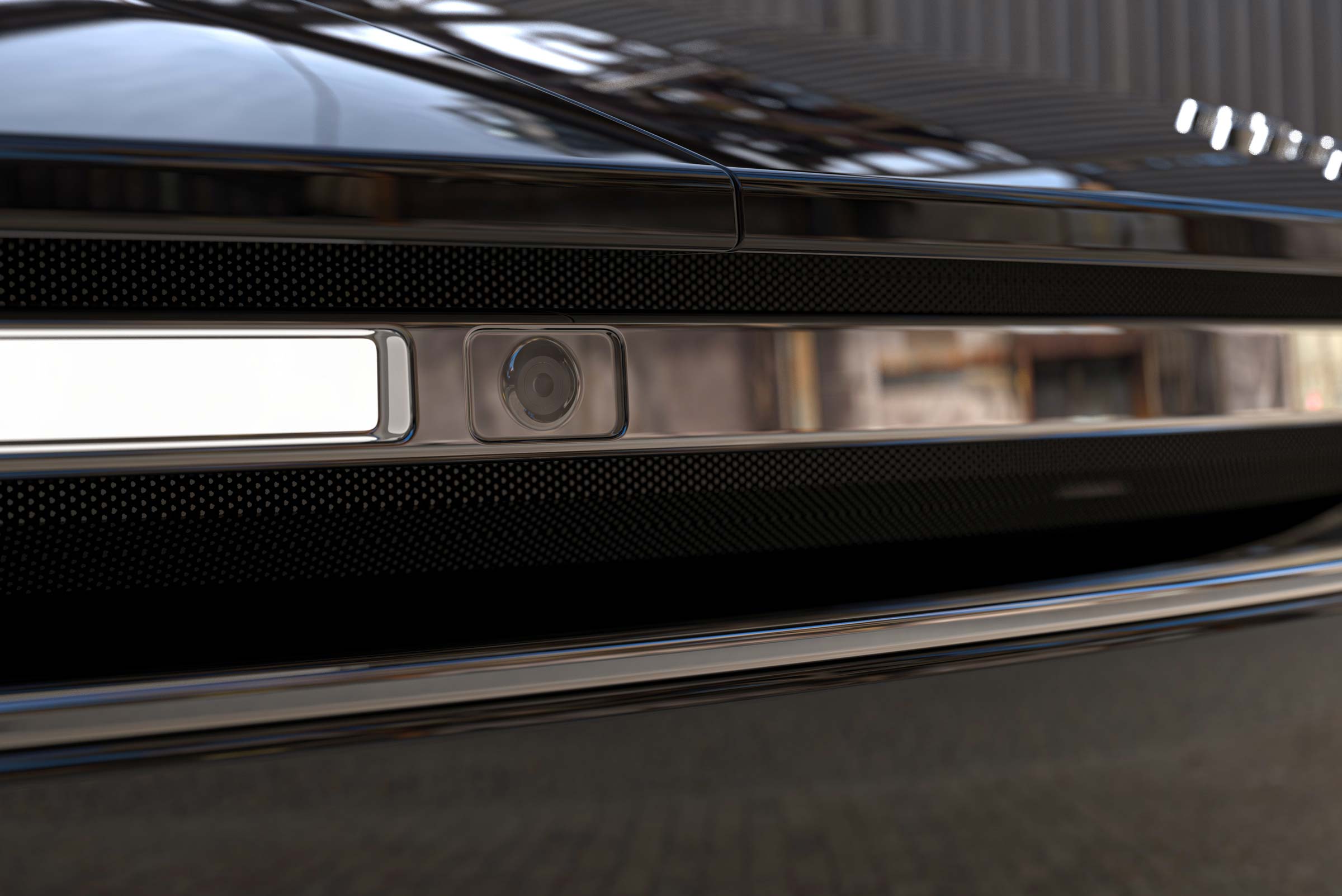
The first constraint was the bill
Jason Devitt and Haoyang Wang founded Compound Eye with a human-vision premise: combine geometry with understanding. The company says its first product dealt with three-dimensional situational awareness in an environment where millimeters mattered. Its later customer conversations pushed toward a broader requirement: perception that could fit different vehicle platforms without costing more than the vehicles themselves.
That is a useful constraint for a sensing business. A device can work beautifully in a demonstration and still be difficult to package, power, or afford across a fleet. Compound Eye’s choice of conventional cameras and embedded computers places the specialist work in software. It aims to let customers build around components that already have established manufacturing ecosystems.
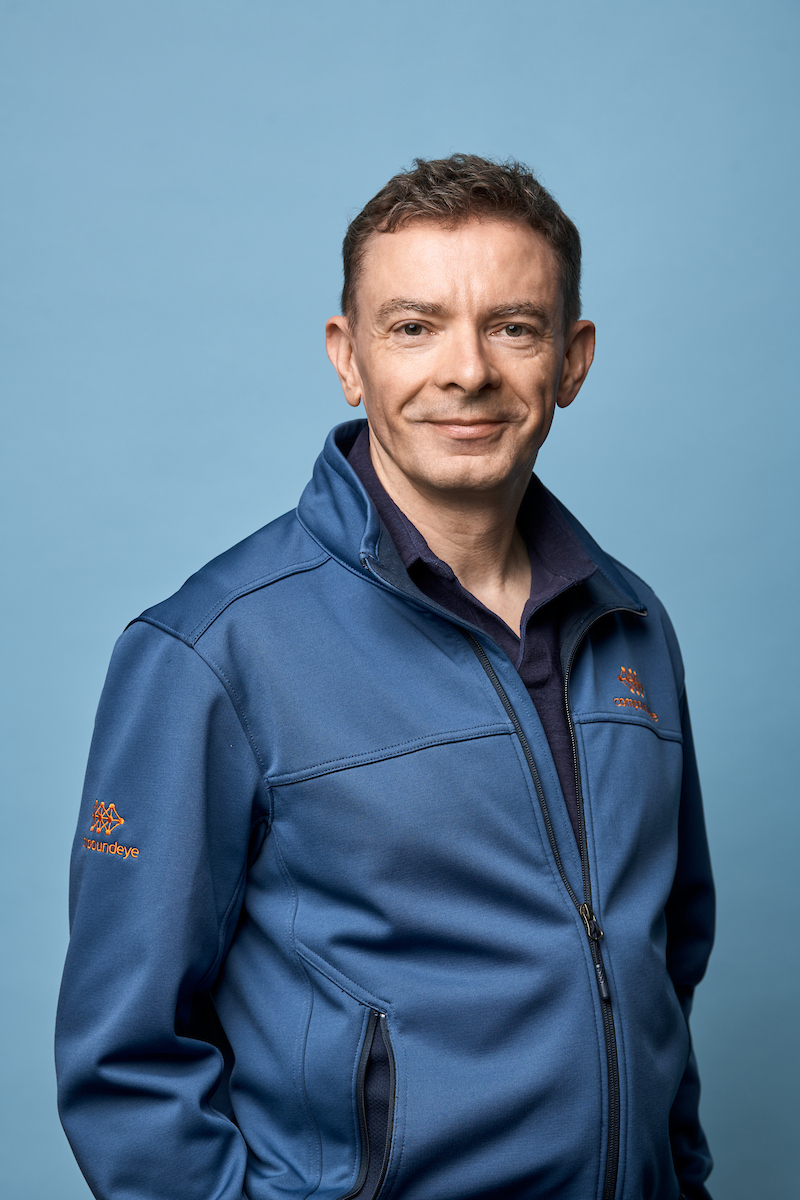
Co-founder and CEO

Co-founder
The 2022 early-access DevKit made this proposition tangible. It bundled reference cameras and compute with software for collecting and inspecting perception data. An SDK let engineers build applications around the outputs. For a vehicle builder, this is a way to ask a practical question: what does the system perceive on our route, with our installation, under our conditions?
The business therefore sits upstream of a finished autonomous vehicle. Compound Eye supplies sensing and perception technology to manufacturers and integrators; those customers must connect it to their own applications. Its public commercial offering is an evaluation and integration path. Government work adds another business line: funded adaptation of the technology to specific defense requirements.
Quiet became a feature
For an automaker, a passive camera system offers a potential cost and packaging advantage. For a military vehicle, the absence of a transmitted sensing signal can carry a different meaning. A sensor that emits light or radio energy may advertise its presence. Receiving information without sending out that signal is an operational property as well as an engineering choice.
Compound Eye was initially hesitant about engaging with defense, according to the Army’s account. The xTech program supplied a route into a market it had never worked with. The company entered xTechSearch 5 in 2020, became a finalist, and gained accelerator access. In 2021, a $1.56 million Army contract funded adapting VIDAS to combat vehicles, with PEO Ground Combat Systems as a partner.
Prizes earned through xTechSearch 5, alongside access to the accelerator and defense contacts.
The change of mind had a concrete mechanism. The accelerator introduced the company to end-users and strategic partners, including prime contractors. A perception technology developed for vehicles could now be discussed with people facing a particular military problem. The same cameras had acquired a different audience.
Subsequent work expanded the question from what surrounds a vehicle to where the vehicle itself is. VIDAS-SLAM extends the platform toward simultaneous localization and mapping, a route to navigation when GPS is unavailable. Army reporting also describes Air Force development contracts. The documented relationship is research and integration work aimed at operational use.
An award is a beginning, with paperwork
The early obstacle described in Long Capture’s case study was organizational: limited bandwidth, resources, and familiarity with federal business. Compound Eye had technical work to do and another market to learn. Long Capture says it helped develop a capture strategy, prepare proposals, and introduce the company to the people who could move projects toward purchasing decisions.
“We could have just won SBIRs, but this was far removed from people with buying power.”Jason Devitt, in Long Capture’s case study
There is a lesson here for other specialist suppliers. The person enthusiastic about a prototype may have a different job from the person able to buy it. An award can fund development; an integrator can connect that work to a platform; a transition partner can help define the requirement. Compound Eye’s progress depended on making those relationships alongside improving its software.
The funding figures need the same care. Army PIT reported $20.6 million in private capital by 2025, including a $12.8 million Series B. Separately, the CATALYST effort secured $13.3 million in development funding. Investment pays for a company’s growth; a contract pays for specified work. Neither figure tells a vehicle builder the price of installing VIDAS.
Reported by Army PIT in 2025. Separate measures; the CATALYST award is part of defense development funding.
Army xTech places full CATALYST funding in July 2025, with RTX Advantage as integrator. Its account describes recent data collection across varied terrain and ongoing unmanned-ground-vehicle integration. Those details locate the project in the unglamorous work between a promising system and a usable capability: gathering data, connecting components, and refining performance.
The road does not owe you good clues
Compound Eye’s technical writing is refreshingly interested in awkward cases. Blank walls offer few distinctive points to match between views. Reflective surfaces can change appearance with the viewing angle. Learned cues have their own weaknesses when objects have unfamiliar sizes or the ground refuses to be flat. Combining methods helps because their weaknesses differ.
A single moving camera also loses its motion-based depth cue when it stops. Devitt’s 2022 interview summary raises the example of a vehicle waiting to turn into oncoming traffic. Simultaneous overlapping camera views remain useful in that situation. The practical lesson is to think about camera placement, overlap, movement, and scene content together.
For a potential customer, the next move is evaluation against the actual task. Compound Eye’s public demos include highway traffic, low-light rock crawling, and driving beside a steep drop-off. They show colorized point clouds that visitors can rotate. These examples make perception inspectable: the viewer can examine the reconstructed space instead of merely watching an ordinary driving video.
The attraction is easy to understand. A construction vehicle, a car, and a military platform all need useful information about nearby space. Their budgets, surroundings, and consequences differ. Compound Eye’s bet is that a common perception layer can be adapted to those different demands. Its progress will be measured where every sensing company eventually meets its examiner: on the vehicle, in the terrain, doing the job.
Take a closer look
Explore the technology, turn the point clouds, or listen to the camera geometry argument.
Company website ↗Interactive product demonstrations ↗VIDAS and the development kit ↗Company articles and news ↗Autonocast: Jason Devitt and Tarani Duncan ↗The Army’s account of the partnership ↗LinkedIn ↗Compound Eye on X ↗