media-production
(30)
The Agency That Learned to Sell Attention Twice
MARTIN* made a state slogan immortal, gave insurance a gecko, and made Snoop Dogg quitting smoke into national news. Its harder trick was learning that attention only matters when the business underneath can cash it.

The Studio That Learned to Run the Mission
Media Fusion began by making an invisible spacecraft visible. Thirty years later, its more revealing trick is making the invisible work around America’s technical missions run smoothly.

The Agency That Put a Three-Eyed Alien to Work for New Mexico
MediaDesk discovered that public information travels farther when it stops looking like public information. Its proof is an Emmy-winning alien, a water campaign with 1.5 million views, and a business built for clients whose hardest product to sell is participation.
The Consulting Company That Built a Stage - Then Turned the Lobby Into a Job Market
Corp4ness began with a language problem: companies had good intentions and forgettable ways of expressing them. Its answer now stretches from strategy decks to television studios, conference stages and a free arena built around real job vacancies.
The Small Firm That Learned to Make the Press Its Own Client
Veritas Group rarely behaves like an agency standing outside the room. It gets inside the machinery - producing the event, shaping the coalition, building the outlet, and making communications part of the work itself.
Platinum Media and the Art of Owning the Whole Conversation
A small New York agency has built its offer around a useful idea: the message, the picture, the event and the media plan should behave like parts of the same sentence.
Little Bird Built a Business Out of Knowing Who Should Meet Whom
Becca Falborn turned the advertising business's oldest tool - the trusted introduction - into a company that sells, publicizes and problem-solves for independent creative shops.

The Source Behind 70,000 Stories
Fuente Latina found the missing desk in international news: the one that answers in Spanish. It turned that gap into a donor-funded network of fixers, producers, translators, and fellowships built for reporters on deadline.

PremiereTV Built a Publicity Machine That Turns One Room Into Twenty Markets
For more than three decades, a small California production company has practiced a useful kind of media arithmetic: one spokesperson, one tightly run session, and interviews across a map. When hotel junkets stopped, the arithmetic survived.
Carter Media Group and the career beyond the feed
Courtney Carter built a management company around people whose ambitions outgrew a platform. Its work with creators, comedians and cultural entrepreneurs makes a useful case for thinking past the next post.
Lancer Media Group has a deadline before graduation
At California Baptist University, students publish the news, preserve the year and make television. The useful part is that somebody outside the classroom actually gets to see it.
Eyes of the World Media Group makes the complicated watchable
A Culver City studio put brain science, engineering ethics and world population data into forms people could actually use. Its most revealing product comes in three parts.
ZDS Media agency and the business of being asked back
A seven-year client relationship led this Egyptian creative agency to a sister company’s factory. Its portfolio makes a case for keeping design, video and digital marketing in the same conversation.
YOLO: a software reel, a rap identity, and a painted monkey
Inside the early portfolio of a Washington-area design studio that put corporate software, music branding, and hand-painted experiments on the same workbench.
Storefront Political Media and the voters who walk to the fridge
Eric Jaye’s campaign firm has spent years wrestling with an awkward fact: buying an ad does not mean anyone watches it. Its experiments reveal just as much about the economics of consulting as they do about politics.
The Ad Was Approved. Then 160 Files Needed Fixing.
The Resize Guys works in the gap between a good idea and an ad that can actually run. Its business is making the last mile of a campaign less eventful.
BOGDANOV wants your brand to outlive the scroll
The family design studio sells a year of brand stewardship from $12,000. Its argument: the website, the film and the wall should all belong to the same business.
Hazy Makes the Party Part of the Pitch
A custom bar, a camping-themed product launch, a room full of budtenders: the Los Angeles production company puts cannabis brands where conversations happen.

Ambient Digital Media made the movie after the movie
DVD menus, bonus features, and a television soundtrack rebuilt for iTunes: Ambient Digital Media worked where entertainment became a finished release. Its history shows how much production happens after the cameras stop.
A-Rod Corp puts fame to work. The rent came first.
Alex Rodriguez built his investment business around apartment buildings, then added startups, sports teams and a media operation. Its most revealing deals show both the value of a famous name and the limits of one.
VICE Bet $5.7 Billion on Owning Youth Culture. Bankruptcy Taught It to Rent.
The punk magazine that became a media empire lost the economics before it lost the audience. Its second act is smaller, stranger and surprisingly practical: finance the shows, license the brand and let partners carry the machinery.
The Private Equity Firm That Refuses to Separate the P&L From the Point
One Planet Group owns the machinery that turns consumer intent into revenue, then uses the same operator’s discipline to back early-stage ideas. Its wager is unusually explicit: profit and purpose should share a balance sheet.
Radio’s Second Act Is Hiding in Plain Sound
Audacy still owns the morning commute. Now the 58-year-old broadcaster is turning local voices, sports obsession and a rebuilt balance sheet into an audio network that travels far beyond the dial.

Telfaz11
Telfaz11 is a Riyadh-based creative media studio that pioneered Arabic online video in the early 2010s and has since grown into one of Saudi Arabia's leading film and content producers. Founded in 2011 by Alaa Fadan, Ali Al Kalthami and Ibraheem Alkhairallah, it began as a YouTube-first network aimed at Saudi youth and evolved into feature films, streaming originals and branded content. Its 2022 wrestling comedy 'Sattar' became the highest-grossing Saudi film ever, and the studio holds a multi-picture deal with Netflix.

Meadowlark Media
Meadowlark Media is a New York and Miami based sports content studio and creator network founded in 2021 by former ESPN president John Skipper and longtime on-air host Dan Le Batard. It develops and produces premium, personality-driven sports storytelling across podcasts, radio, streaming video, and documentary film for third-party buyers such as Netflix, Apple TV+, and DraftKings. Anchored by The Dan Le Batard Show with Stugotz and a roster that includes Pablo Torre Finds Out and Nothing Personal with David Samson, Meadowlark blends daily audio programming with prestige documentary work like Good Rivals and The Comeback: 2004 Boston Red Sox.
Jacob Braunstein
Jacob Braunstein is the co-founder and CEO of LiveControl, a Santa Monica company that turns any venue into a professional live-video studio using PTZ robotic cameras run by a remote team of producers. He invented the remote-camera system at the core of the platform, which now produces thousands of streamed events each month for churches, schools, theaters, government bodies and memorial services. Braunstein was named to the Forbes 30 Under 30 list and has raised roughly $33 million, including a $30 million Series A led by Coatue Management in 2021.
Callaway Digital Arts
Callaway Digital Arts - operating today as Callaway Arts & Entertainment - is a New York media and publishing house founded by Nicholas Callaway that designs and produces museum-quality illustrated books, luxury limited editions, award-winning children's apps, and immersive cultural experiences. The company is known for landmark titles including Madonna's Sex, The Beatles: Get Back, Bob Dylan: Mixing Up the Medicine, and a three-volume Sistine Chapel edition shot in gigapixel detail with the Vatican Museums.
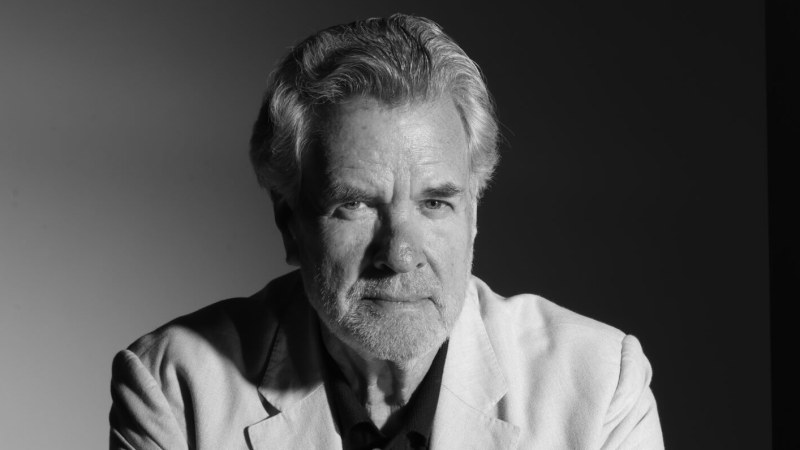
Nicholas Callaway
Nicholas Callaway is a New York publisher, app maker, and television producer who has spent more than 40 years making books and media that push the limits of how art can be reproduced. As founder and CEO of Callaway Arts & Entertainment, he produced Madonna's 'Sex' (still the best-selling illustrated book of its era), David Kirk's 'Miss Spider' series, the $22,000 life-scale Sistine Chapel three-volume set, and the panoramic 'Bob Dylan: Mixing Up the Medicine.' In 2010 he spun off Callaway Digital Arts with backing from Kleiner Perkins, after Steve Jobs took notice of his children's apps, and went on to publish #1 hits like 'Endless Alphabet.'

Genvid Holdings Inc.
Genvid Holdings Inc. is a New York media-technology company that invented the Massively Interactive Live Event (MILE) - part TV show, part video game, where thousands of viewers vote on what happens next in real time. Founded in 2016 by Square Enix cloud-gaming veterans, Genvid has produced the Emmy-winning SILENT HILL: Ascension, the Webby-winning The Walking Dead: Last Mile, Rival Peak, and DC Heroes United. Backed by $166M in funding, the company is now extending its production infrastructure into studio-grade generative AI tooling for professional creators.
LucidLink
LucidLink is a San Francisco-based company that makes cloud storage feel like a local hard drive. Its Filespaces platform streams file data on demand from cloud object storage, letting creative teams and enterprises around the world collaborate on huge files - video, design, datasets - without syncing or downloading. Customers include Paramount, Spotify, Adobe, A&E Networks, BuzzFeed and Shopify.