The most valuable sentence in Virginia advertising is four words long, contains no product claim, and has survived seven governors, the arrival of cable television, the birth of the web, and enough branding fashions to fill a gift shop: “Virginia is for Lovers.” MARTIN* helped make it in 1969. The slogan is so familiar now that it hardly feels written. It feels geological.
That is the commodity this Richmond agency has sold for six decades. Not ads, exactly. Not clicks. It sells the possibility that a paid message might escape its slot, enter ordinary conversation and stay there. The company calls this “fighting invisibility.” A less polished description would be: making the thing difficult to ignore.
Today MARTIN* is a full-service creative agency inside Interpublic Group. Its roughly 450-person operation works across strategy, advertising, design, social, public relations, entertainment, media, production and analytics. Its customer list reads like a tour of American errands - GEICO, UPS, CarMax, OREO, Papa Johns, TIAA, Hershey’s and, as of 2026, Subway. The agency serves big organizations with big distribution and a stubborn problem: scale has made them visible everywhere and interesting almost nowhere.
The gecko is infrastructure
Consider insurance. It is compulsory, abstract and usually discussed after something unpleasant. MARTIN* and GEICO answered with a small green spokes-lizard whose misunderstanding of the company name became an asset with the lifespan of a power plant. The Gecko did more than front commercials. He accumulated memory. Each appearance began with years of recognition already paid for.
That is one difference between a campaign and a system. A campaign asks to be noticed again. A system arrives pre-noticed. MARTIN* has repeatedly built the latter: the Gecko, the cavemen, “Hump Day,” and ad formats such as “Unskippable,” which used the annoyance of pre-roll as the premise rather than pretending it did not exist.
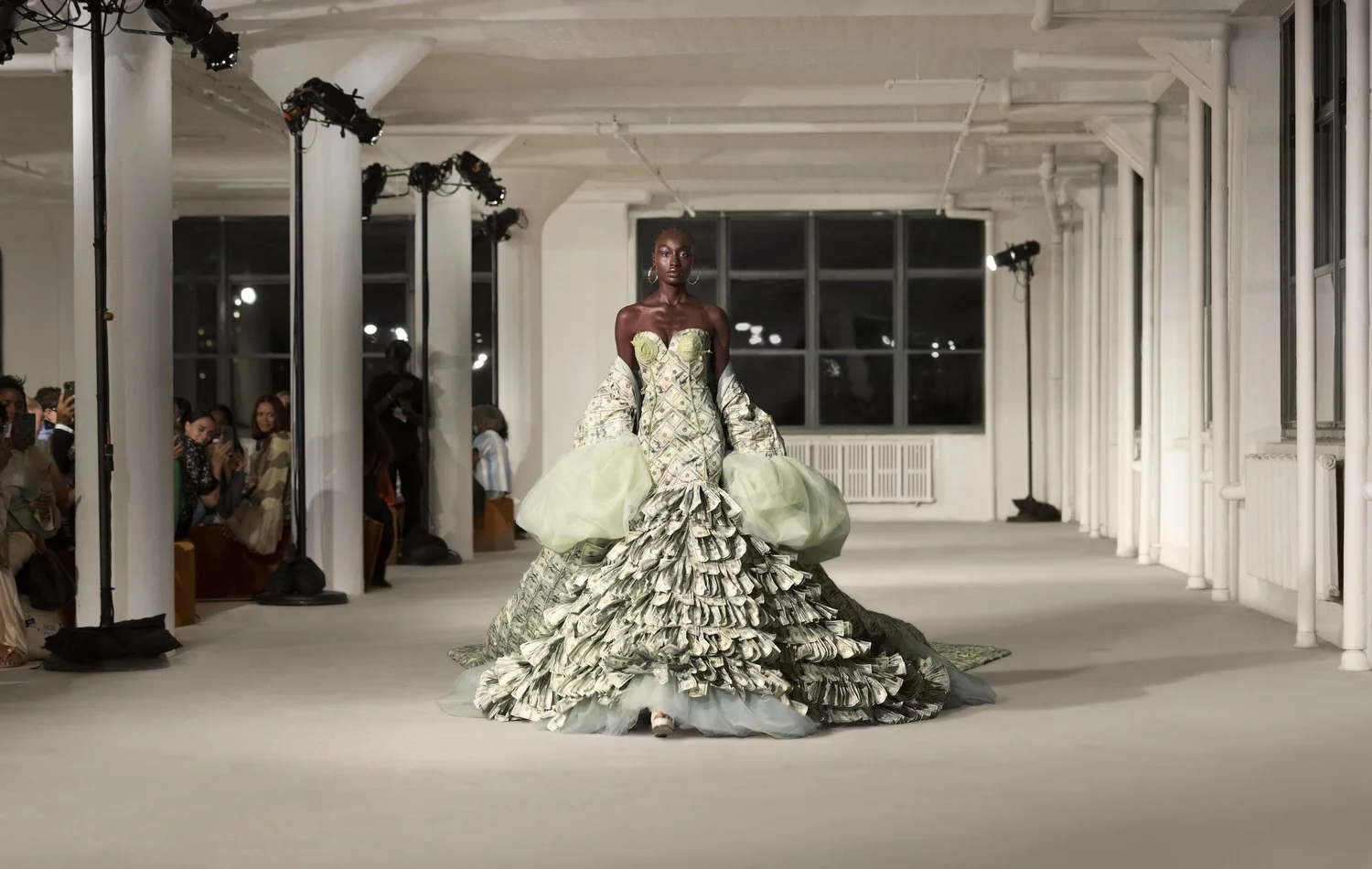
The method travels. For UPS, brown delivery trucks became mobile canvases for diverse artists and cultural moments. The work produced more than four billion impressions, with 1.7 billion earned impressions around New York Fashion Week alone. For TIAA, a retirement-income gap became a gown. Designer Fe Noel sent The Dre$$ down a runway with a 16-foot train made to evoke the potential $1.6 million shortfall created by unequal lifetime earnings. The statistic stopped behaving like homework.
The first thing that failed was the institution
The cleverest part of MARTIN*’s story is not an advertisement. In late 2017, allegations of harassment led to senior departures and exposed a workplace whose reputation could no longer be separated from its output. Kristen Cavallo was given less than a day to absorb the offer to become chief executive. Karen Costello became chief creative officer. Their first brief was the agency itself.
They made safety, representation and accountability management questions rather than recruiting copy. Leadership changed. The executive committee became more diverse. By 2020, half of the leadership team was female and a quarter were people of color. The agency later committed that at least 50% of directing and editorial talent across video production would come from underrepresented groups; it reported 68% in 2022.
The commercial numbers followed. In 2019, MARTIN* reported nearly 10% revenue growth, $28 million in new revenue and a pitch win rate above 80%, up from below 20% two years earlier. Adweek named it U.S. Agency of the Year in 2020 and 2021; Ad Age followed in 2023. During Cavallo’s first CEO tenure, the agency says it grew 50% in five years.
“There’s nothing in advertising that is gained or won by yourself.”Kristen Cavallo
The copyable lesson is unglamorous. Culture is not a poster in reception. It is who gets promoted, who feels safe contradicting the room, who directs the film, who edits it, and whether the people selling boldness to clients experience any inside the building. A creative turnaround became believable because an operating turnaround arrived with receipts.
When fame sends the wrong invoice
Then came a wonderfully clean test. In November 2023, Snoop Dogg announced that he was giving up smoke. Speculation did the media buying. Days later, the reveal arrived: he was promoting a smokeless Solo Stove fire pit. MARTIN* had helped turn a product benefit into a celebrity plot twist.
The campaign dominated conversation, expanded awareness and reduced customer-acquisition costs. It also failed to produce the sales lift Solo Stove expected during the holiday quarter. The client increased marketing investment for its first national push, then cut its revenue outlook and replaced its chief executive. A viral idea had done the job of a viral idea. The rest of the business had not converted enough fascination into purchases.
This is where MARTIN*’s favorite equation - cultural impact drives sales - becomes interesting instead of decorative. The arrow between those phrases contains price, distribution, seasonality, creative frequency, landing pages and whether the audience was ever likely to own a fire pit. Attention is leverage. It is not legal tender.
The internet can deliver a crowd to the shop window. It cannot make the product, price and moment agree.
The campaign also revealed what changed the marketers’ minds. Rather than directing Snoop line by line, the team let him riff and adjusted the media plan around what he naturally said. That surrender of control made the work feel like news instead of endorsement copy. It is worth copying when the creator has genuine cultural authority and the product has a simple reveal. It is much less useful when the spokesperson is interchangeable, the joke needs a paragraph of explanation, or the buying journey is too complicated to survive the punch line.
A full-service agency with a newsroom pulse
MARTIN* makes money the way a large agency does: brands pay for teams and outputs through retained relationships, project scopes and agency-of-record assignments. The unusual part is how the disciplines are arranged around speed. Its Cultural Impact Lab blends public relations and cultural intelligence. Social managers stay close to rapid-response producers, content makers and analysts. Martin Design spans identity, packaging, environments and campaigns; client investment in that practice rose 750% by early 2025, and 80% of clients were commissioning design-led projects.
The market around it is crowded. Ogilvy, VML, BBDO, FCB, Droga5, Wieden+Kennedy, Mischief and 72andSunny all sell varieties of strategic creativity. In-house brand teams and specialist studios squeeze from the other direction. MARTIN*’s position is the integrated middle: enough infrastructure to serve a giant account, but a pitch built around behaving like a smaller cultural operator.
In 2026, that promise acquired an AI layer. The agency began using predictive intelligence to locate overlooked audiences, test assumptions and map growth drivers, while developing tools meant to preserve brand originality rather than generate a beige infinity of options. It trained employees and worked through performer-rights questions, including responsible voice use. Fast Company put MARTIN* ninth on its list of innovative advertising and marketing companies for that combination of scale and restraint.
What a brand can actually copy
- Turn the statistic into an object people can photograph, name and explain.
- Build recurring characters and formats so recognition compounds instead of resetting.
- Let creators alter the plan when their natural behavior is better than the script.
- Measure attention and conversion separately; do not ask one number to impersonate the other.
- Fix the room making the work before promising culture-changing work outside it.
The boomerang CEO
Cavallo left the MARTIN* CEO role in 2024 as Danny Robinson, a 20-year agency veteran and artist, took over. In April 2026, the arrangement reversed with unusual grace: Robinson retired to pursue an artist residency in France, and Cavallo returned from leading Richmond’s Branch Museum of Design. By August, Subway - born in the same year as the agency - had appointed MARTIN* its U.S. creative agency of record.
There is a neat temptation to call this a return to origins. It is more useful to see it as continuity with edits. The agency that once proved a Richmond shop could compete with New York now has to prove a mature network agency can use AI without sounding like everyone else, chase culture without mistaking noise for demand, and make a safe workplace part of the creative product.
“Virginia is for Lovers” lasted because strangers could carry it. The Gecko lasted because each new joke strengthened an old memory. The Dre$$ worked because anyone could grasp the unfairness before reading the footnote. MARTIN*’s durable product is not virality. It is compression - the knack for shrinking a complicated business problem until a person can repeat it. Sometimes the repetition becomes revenue. Sometimes it merely becomes famous. Knowing which one happened is the second sale.