At forty miles an hour, a car does not look much different from a car moving at thirty-five. The extra speed is invisible. Its consequence is not. Struck at forty, a human body absorbs something like the damage of a fall from a five-story building. This is useful physics and lousy conversation. Numbers pass through the mind politely. A fall from a roof visits the stomach.
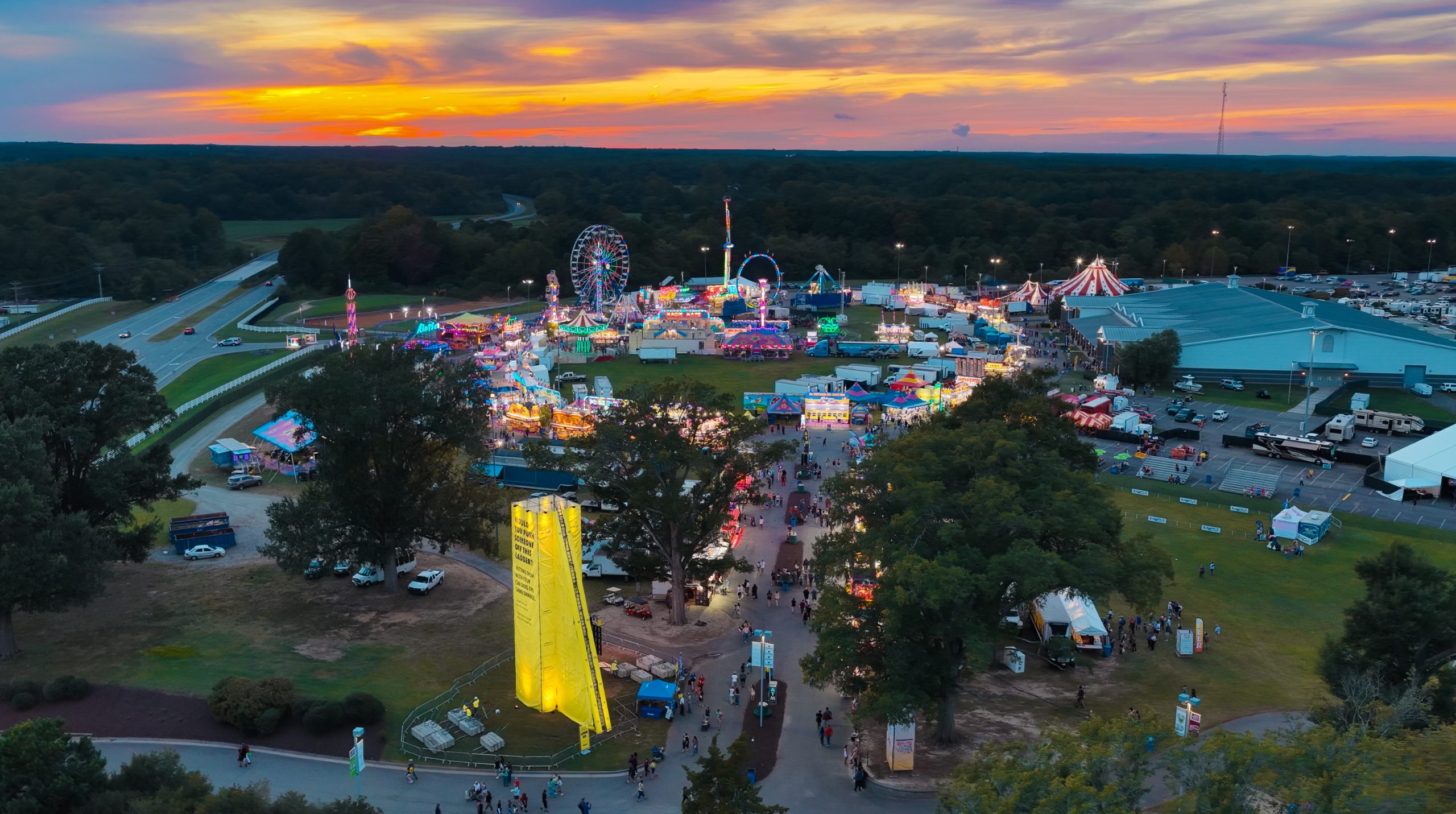
In the summer of 2025, twotango collaborative® and the Virginia Department of Motor Vehicles decided to close that gap. They installed a bright yellow, 54-foot ladder at The Diamond, home of Richmond's minor-league Flying Squirrels. Markers climbing its frame translated 10, 20, 30 and 40 miles per hour into equivalent falling heights. At the top was a question nobody could misunderstand: would you push someone off this ladder?
A professional climber went up. A camera looked down. The object toured to the Virginia State Fair. What had begun as a road-safety message became a landmark, a film set, a conversation starter and an unusually alarming piece of street furniture. In its first case study, Two Tango counted more than 3.3 million in earned-media reach and sharing across ten countries. The expanded campaign's 2026 award submission later reported 48 media mentions, more than 131 million in estimated reach, nearly 3,000 face-to-face safety conversations and $1.2 million in estimated publicity value.
The first casualty was the ordinary PSA
The assignment came with an old problem. Drivers know speeding is dangerous. Signs, cameras and stern announcements keep telling them. Knowledge was not the missing ingredient. Two Tango's executive creative director, Erin Sarro, said the team could no longer rely only on traditional messaging vehicles. The City of Richmond's engineers supplied the comparison between speed and height; the agency and its partners turned that germ into a structure, video, public event and media story.
This distinction matters. Two Tango did not discover that fast cars hurt people. It found a form in which familiar information could feel newly true. The creative move was translation: velocity became altitude; impact became vertigo; a driver's casual five miles over the limit became a rung you could point to.
The useful trick is not making data louder. It is finding the comparison the body understands before the brain has time to file it away.
What did it cost? Two Tango and DMV have not published an exact figure. The campaign won the 2026 AAMVA international award in the category for multi-faceted communications campaigns with budgets above $50,000. That tells us the floor, not the invoice.
A new name for an old reflex
Two Tango is a young brand wrapped around an old company. Roger Neathawk, Susan Dubuque and Charles Miller founded Market Strategies Inc. in 1984 with a focus on healthcare marketing. It became Neathawk Dubuque, merged with the Packett Group in 2004, expanded through acquisitions and spent years as Neathawk Dubuque & Packett, mercifully shortened to NDP.
Then came two ownership changes, Roger Neathawk's retirement in 2021 and Amy Baril's appointment as CEO in 2022. Kalyan Pathuri acquired the company that March. In October 2023, NDP became Two Tango. Sarro, who had joined as executive creative director, led the naming exercise. The metaphor was the unusually close connection between tango dancers and between dancers and audience. “Collaborative” was appended to describe the way the company wanted to work, not merely the legal category it occupied.
Market Strategies Inc.
Healthcare-focused beginnings in Richmond.
Neathawk Dubuque & Packett
A merger adds the Packett name and Roanoke roots.
NDP + Free Agents
The firm adds talent and work in finance, retail, hospitality and healthcare.
Two Tango Collaborative
The initials leave; the operating idea steps forward.
The renaming could have been cosmetic. Instead, it clarified the company's bet: creative and media planning should move in lockstep. Its roughly 25-person team at the time of the rebrand was small enough to keep senior people near the work, while production studios, technologists and subject experts could join when a job demanded them. That is the difference Two Tango sells against an in-house department, a specialist media shop or a much larger agency network.
What they actually sell
The practical list is familiar: audience research, brand strategy, campaign development, design, digital, public relations, content, production, media strategy, buying and measurement. The customer list is broader than a boutique label suggests. It includes Virginia DMV, Virginia Lottery, Virginia Farm Bureau, Wounded Warrior Project, the National Center for Missing & Exploited Children, CoStar, Langley Federal Credit Union, the Virginia Department of Health and Richmond's technology council.
Revenue comes from projects and ongoing agency engagements. Public contracts show the legal entity, Neathawk Dubuque, Inc., doing business as Two Tango Collaborative. Standard rates and present revenue are not disclosed. Richmond BizSense reported $22 million in gross revenue for 2020, before the rebrand. This is an established service business, not a venture-funded software story: no public funding round, valuation or product subscription sits beneath it.
The portable part
Name the private payoff
Research what the audience gets from the behavior, not what the marketer wishes it believed.
Make the idea physical
Turn a number into a height, character, cost, place or choice people already understand.
Plan the journey early
Build creative, media, events and earned attention as one system instead of sequential handoffs.
The brief can be wrong-sized
The clearest example is not the ladder. Richmond Technology Council asked Two Tango to brand a “Tech Town” initiative. The agency began with research, personas and a strategy session. While writing taglines, the team noticed that the initiative was not the weak link. Richmond itself lacked a crisp position among better-known technology cities. The work changed altitude. “Tech's Most Creative City” became a platform for the place, not a slogan for one program.
That is what changed their mind: evidence gathered before execution exposed a problem larger than the client request. The client later said Fortune 500 partners found the positioning authentic and that the phrase influenced organizational decisions. The lesson is easy to repeat and hard to practice. A brief is a hypothesis. Treating it as a command saves time early and wastes it later.
The same instinct appears in the agency's road-safety portfolio. Research with men ages 20 to 49 found that the emotional reward of speeding was control and the sensation of winning; distant threats of injury were not landing. “You Speed, You Lose” borrowed the visual grammar of racing games and emphasized immediate losses of money and time. For pedestrian safety, “You Are Not a Duck” used the patience drivers extend to ducklings as a comic rebuke to the impatience they show people. For motorcycle awareness, 2026's “I Spy” viewed riders through a child's eyes, stripping away the stereotype before delivering the safety point.
The part worth stealing
A marketer can copy the sequence without copying the yellow ladder. Begin with the behavior, especially the embarrassing or irrational reward behind it. Invite the people who understand the mechanics into the room early; in Richmond, engineers helped unlock the metaphor. Search for an analogy that is accurate enough to survive scrutiny and ordinary enough to require no instruction. Then make distribution part of the concept. A ladder that lives only in a presentation is a prop. A ladder at a baseball game, on video, at a state fair and in reporters' inboxes is a campaign.
There are limits. A physical metaphor fails when the science is wobbly, when spectacle outruns the public purpose or when the media plan cannot carry the idea beyond the event. Humor fails when the audience feels mocked. And an integrated shop loses its advantage if “collaboration” becomes extra meetings with no decision-maker. Two Tango's examples work because the metaphor, audience tension and channel reinforce one another. Remove any leg and the dance becomes expensive standing around.
The company is now old enough to know that a new name does not create a new operating system. But it can reveal one. Four decades after three founders opened a healthcare marketing firm, the most telling object in its portfolio is not a logo. It is a ladder: one side research, one side imagination, every rung a media decision, and a human being looking down from the top.