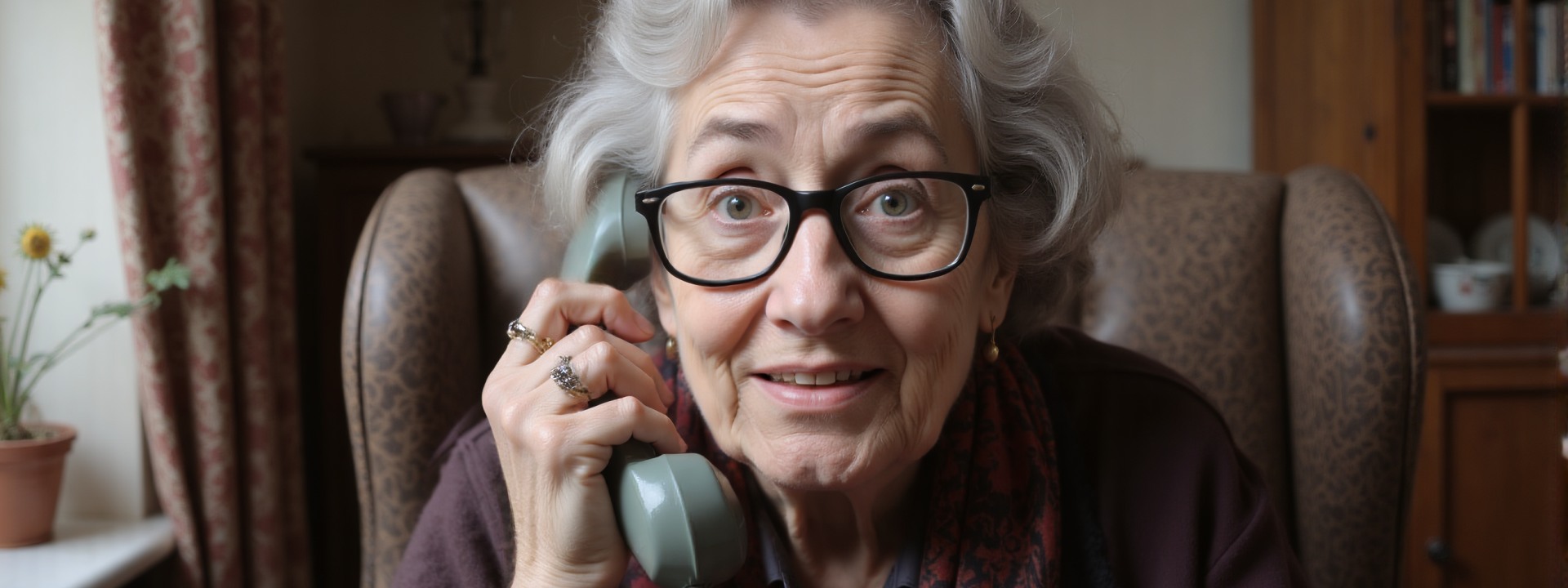
The most revealing thing about VCCP is a telephone call that should have ended quickly. A scammer rings what appears to be an elderly British woman named Daisy. She is friendly, a little vague and catastrophically slow with her bank details. She digresses about knitting. She loses her place. Forty minutes pass. The scammer is still talking. Daisy, meanwhile, is not a grandmother. She is a stack of generative models assembled by VCCP's AI studio, faith, for O2.
This is advertising only in the loosest sense. The campaign film and social clips matter, but the central object actually does the job in the promise. It occupies fraudsters, teaches the public what scam calls sound like and gives O2 a role beyond selling airtime. Daisy generated more than 1.5 billion earned impressions. Campaign recall for O2 peaked at 17 percent, its highest of 2024, while satisfaction with the brand's anti-fraud efforts rose 42 percent. By 2026, the character had won more than 100 awards.
Four surnames and a very useful first client
To understand why an agency would build a fake grandmother instead of merely filming one, go back to 24 January 2002. Charles Vallance, Rooney Carruthers, Adrian Coleman and Ian Priest started VCCP - their surnames supplied the initials - around Vallance's kitchen table. They said they were tired of the industry's bad habits. That sentence can sound like standard founder folklore until you notice the other fact: O2 was waiting on the first day.
The mobile brand brought a reported £35 million advertising account. It gave the new shop revenue, visibility and a chance to help launch a national name. It also created the first obvious weakness. Industry observers worried that too much of the young agency depended on one flagship client. VCCP's earliest problem was not finding work. It was surviving the success of the work it had found.
Three years later, Chime Communications paid £14.5 million upfront for VCCP, with another £15.5 million available if profit targets were met. For the four founders and 19 senior managers, the total potential payday was £30 million. The sale supplied a larger platform and a route away from dependence on a single account. Yet O2 did not disappear. More than two decades later, the founding client and the sold-early agency were making Daisy together.
“It only works if it all works.”VCCP's operating motto
The product is the room
Today VCCP sells advertising, but that description is like calling a department store a shelf. Its offer includes brand strategy, creative, media planning and buying, production, PR, social, CRM, design, digital products, retail experience, gaming, health, behavioural science and AI. More than 1,600 people work across nine offices and 20 capabilities. The customer list ranges from Cadbury, easyJet and Virgin Media O2 to Google, Barclays, TfL, Primark, Spectrum and Wimbledon.
The business model is familiar: project fees, retainers, media and production income, and consulting work. The arrangement is less familiar. Specialists are meant to gather around the same commercial problem before the answer has hardened. Cowry's behavioural scientists might diagnose the decision. VCCP Media finds where attention can be won. Girl&Bear makes the work. Bernadette designs the service. faith tests whether a model or agent can do something genuinely useful. VCCP Roar makes the idea travel through press and influence.
One brief, many ways in
PROBLEM
The difference from a conventional holding-company roster is supposed to be proximity. A client does not buy five agencies and then pay, in meetings and patience, to make them agree. VCCP sells the room in which the disagreement happens. The test is coherence: does a campaign still feel like one thought when it becomes a product screen, a retail display, a TikTok clip and a press story?
Why Daisy worked when AI garnish does not
Faith launched in 2023, when many agencies were treating generative AI as a fast way to make more pictures. VCCP's more interesting choice was to make the system the campaign. Daisy used a large language model for personality and knowledge, a voice model based on an employee's grandmother, a custom diffusion model for her appearance and image-to-video tools for movement. Scambaiter Jim Browning advised on how to attract dubious calls and keep them going.
The expense was organisational: technologists, prompt engineers, creatives, strategists and a fraud expert had to make one character believable in real time. The first things to fail in this kind of work are continuity, consistency and hallucination - limitations VCCP now teaches staff to work around in its own AI film programme. Its policy keeps a human responsible for inputs, parameters and final quality. The studio says it is technologically agnostic because today's favourite tool can become tomorrow's antique.
What changed the agency's approach was not a belief that AI could replace the creative department. It was the recognition that AI could turn communication into behaviour. Daisy does something. That distinction matters. A synthetic image can save production time; an interactive character can alter the shape of the idea.
The useful AI question is not “Can it make this?” It is “Can the thing it makes perform the promise?”
A culture written in verbs
On its first day, VCCP wrote ten principles: be on time, honest, approachable, happy, clear, agile, lean, proud, responsible and unprecious. They are almost suspiciously ordinary. That is their strength. “Be unprecious” gives a junior employee language for challenging a senior person's polished idea. “Be clear” is a defence against the ornamental vocabulary agencies use when the answer is foggy.
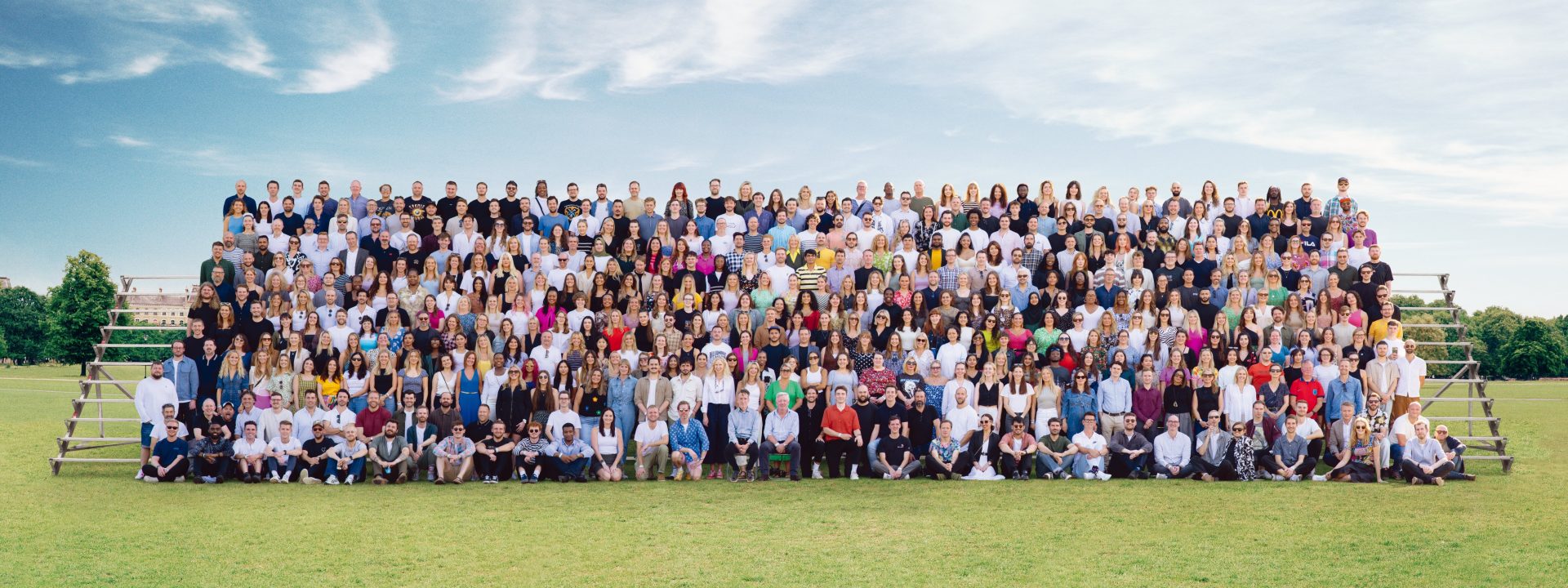
There is evidence the culture is more than wall copy. VCCP reported 9.7 percent employee turnover for 2025, less than half the cited industry average, and said 52 percent of its entry-level intake came from underrepresented backgrounds. Its Challenger Academy works with schools and colleges through mentoring, work experience and paid internships. The agency also expanded its diversity and inclusion collective from 15 to 40 people while parts of corporate culture were moving in the other direction.
What another company can actually copy
Do not copy the word “challenger.” It has suffered enough. Copy the mechanics. First, write behavioural rules short enough to use in a tense meeting. Second, define the category convention before proposing the idea. Third, put every specialty around the problem early, not after creative approval. Fourth, test bold work with real people. Vallance's advice on research is unusually sane: if an idea is disruptive, run toward public reaction, because the public will eventually see it anyway.
Then ask for an observable job. Daisy had to hold a scammer's attention. The “Oops” campaign for O2 had to make screen-repair insurance understandable in a split second. Integrated work is most persuasive when each channel can be judged against the same action.
There are conditions where this model becomes cumbersome. A small business that needs one local execution may not benefit from twenty capabilities. A client organised into defensive departments can recreate silos inside the agency team. And “challenger” thinking becomes theatre when leaders want unconventional ideas but conventional approval. Integration adds value only when specialists share information, authority and a commercial measure. Otherwise, the room is simply crowded.
Founded around a kitchen table with O2 as the first client.
Sold to Chime for up to £30 million.
Acquired behavioural-science consultancy Cowry.
Launched faith and topped the UK creative-agency billings table.
Daisy began answering scammers for O2.
Won three Campaign global golds and added Macmillan Cancer Support.
VCCP's achievement is not that it remained small. It very clearly did not. Nor is it that every piece of work disrupts a category. No agency earns that claim. The interesting feat is structural: it sold, spread across markets, accumulated specialties and kept returning to the same founding question - which comfortable industry habit is getting in the way?
Sometimes the answer is a silo. Sometimes it is a fraud ad that asks victims to do all the work. And sometimes the answer is a scammer who assumes the grandmother on the line has nowhere else to be.