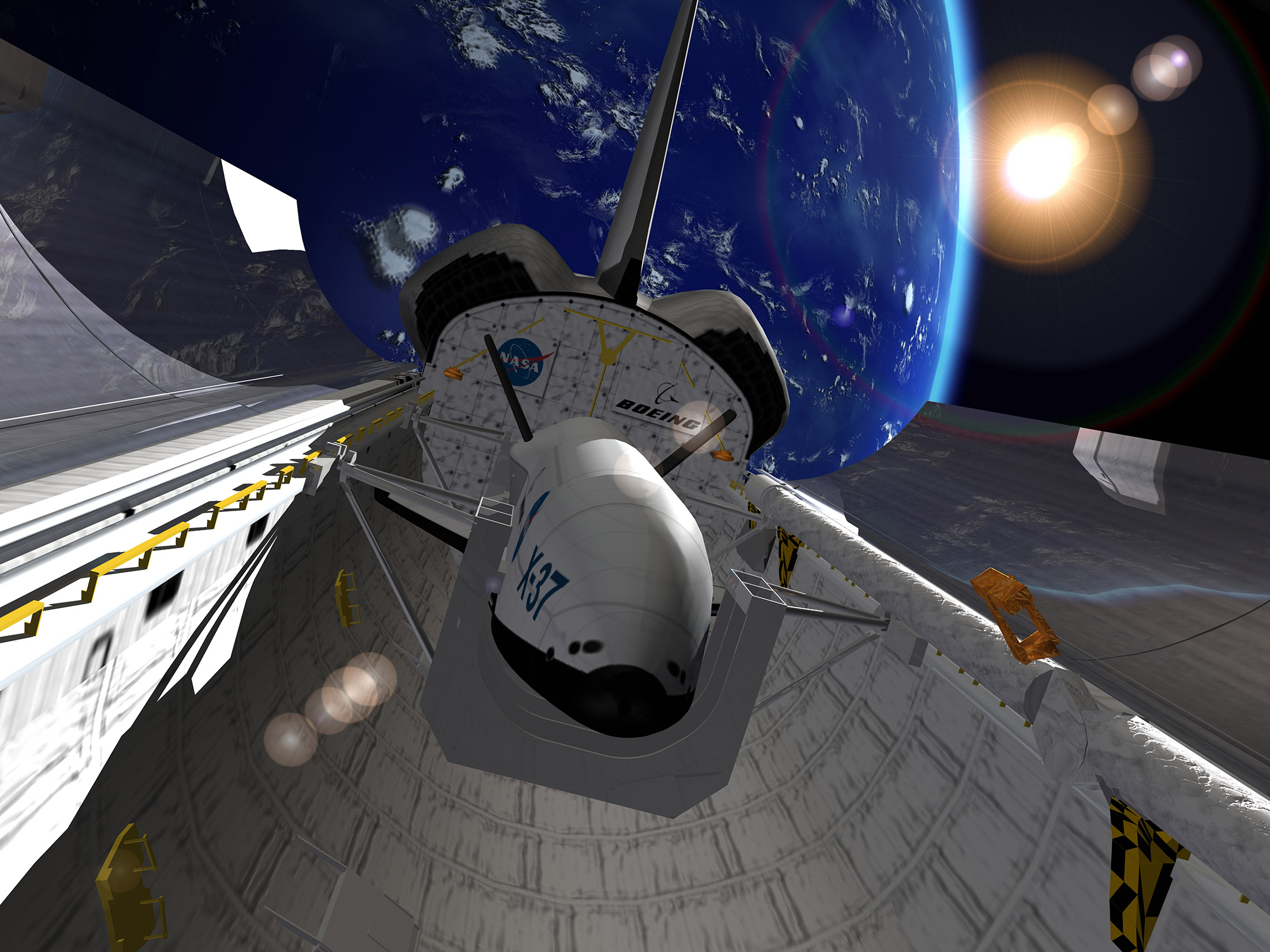
The question was almost childlike: Can you help us show the world what the X-37 will look like? It was 1999. The experimental spacecraft was more idea than public object, and NASA’s Marshall Space Flight Center needed the idea translated into an image. Media Fusion was four years old, a little Huntsville multimedia studio founded by Tim McElyea and a co-founder whose name the company does not publicize. The studio answered with the period’s newest production tools. Its work helped put the project on the cover of Aviation Week. A picture of the future had created a path into it.
Many agencies would have polished the reel, hunted the next dramatic commission and stayed an agency. Media Fusion kept walking through the door. The company discovered that the person who needs an animation may also need a communications plan, an exhibit, a photographer, a technical publication, an event team - or someone to manage procurement, budgets and the research library. The picture was not the customer’s whole problem. It was simply the visible edge.
The first thing to fail was the label
“Media production studio” stopped describing the company long before it stopped describing some of the work. In 2001, Media Fusion received SBA 8(a) certification, which gave the small business a better route into federal procurement. In 2007 it won its first prime contract, supporting communications at NASA Headquarters. By 2010, it had created the first public-facing animation of the Space Launch System, NASA’s Moon rocket. Then the headcount moved from 25 to 125 between 2012 and 2014, while the company appeared on the Inc. 5000 three years in a row.
The change was not from creative work to something unrelated. It was from making communication products to owning more of the conditions that make those products useful. Today the menu includes animation, video, photography, graphic design, websites and virtual reality. It also includes public affairs, campaign planning, technical writing, acquisitions, cost analysis, financial services, office administration, resource management, events, exhibits and travel support. At federal sites, employees work alongside the customer. The firm becomes less like a visiting studio and more like a piece of institutional infrastructure.
A contractor with a director’s eye
This combination is the company’s competitive position. A production shop can make a handsome film but may not understand a federal mission’s approval chain. A generalist contractor can staff a program but may not know how to render a vehicle that does not exist. Media Fusion occupies the seam. Its artists work around engineers; its contract teams include researchers, analysts, public-affairs specialists and administrators. The creative brief and the statement of work are treated as neighboring documents.
“Can you help us show the world what the X-37 will look like?”The request that began Media Fusion’s NASA work
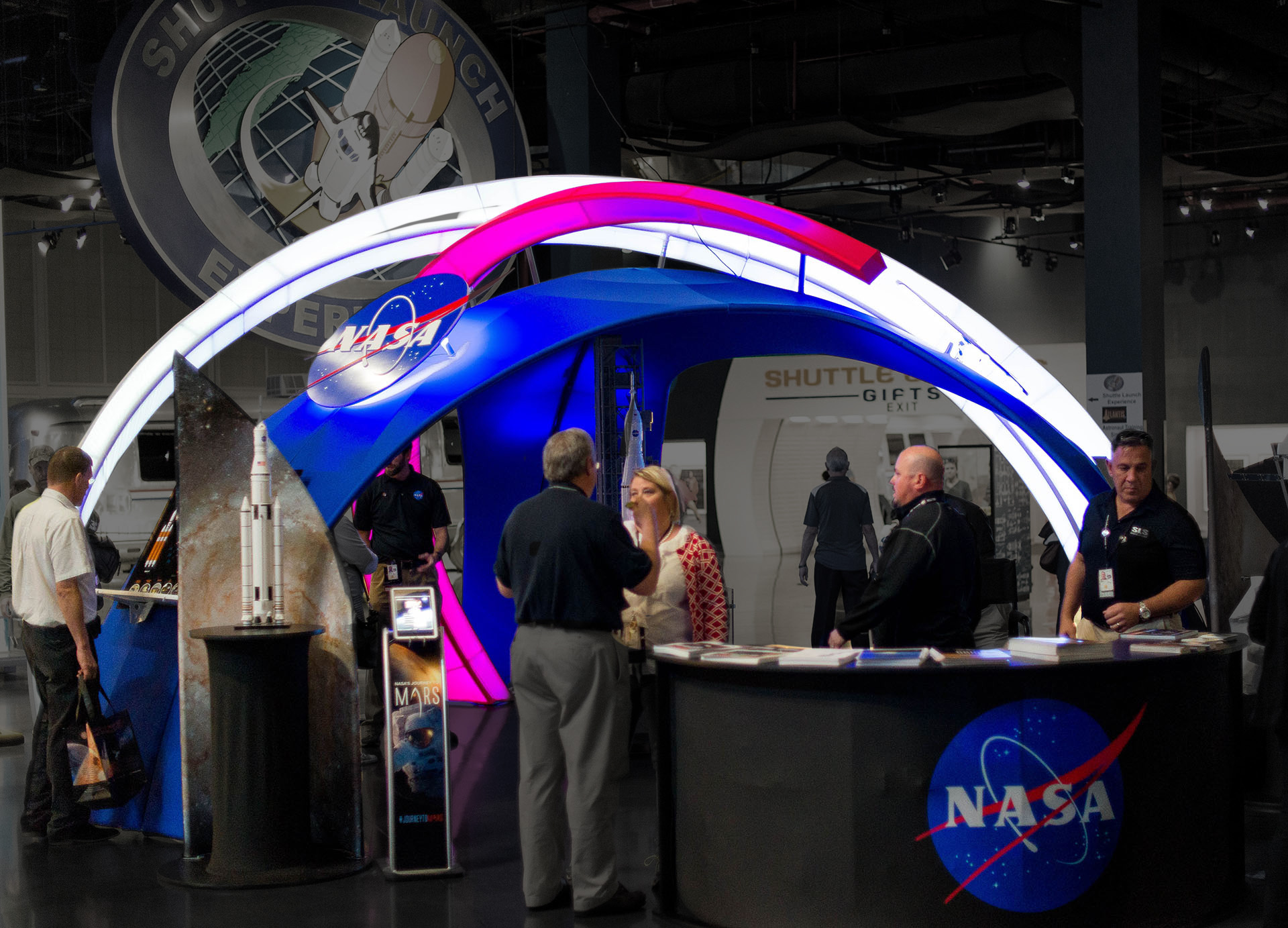
NASA is the clearest example and, by the company’s own account, its largest customer. Media Fusion has supported Marshall, Headquarters, Armstrong and other centers, while publicly listing customers across the Army, Air Force, Navy, DARPA, Missile Defense Agency, HUD, Energy and Interior. Commercial names have included Boeing, Lockheed Martin, SAIC, Emerson and Intergraph. The connective tissue is not an industry vertical so much as a type of problem: an organization has complicated work and needs it explained, organized or both.
The money is in duration, not magic
Media Fusion earns revenue through scoped commercial projects and long federal contracts. Government buyers reach it through competitive procurements, task orders and contract vehicles such as GSA’s Multiple Award Schedule and SeaPort-NxG. That model rewards a different kind of creativity: hiring correctly, maintaining compliant systems, measuring performance and repeating good work for years.
The public numbers are large but easy to misread. A NASA administrative and technical support contract announced in 2013 could be worth up to $17.9 million over five years. The Marshall SRACES contract awarded in 2020 had a maximum potential value of roughly $57.5 million. Those are ceilings across base periods, options and orders - not price tags for a video and not guaranteed revenue. The cost of the 2018 acquisition by the Poarch Band of Creek Indians was not disclosed.
What the acquisition changed was capacity. Media Fusion remained a standalone operation, while gaining a place inside the Tribe’s broader federal-services portfolio. It then contributed personnel and past performance to the formation of sister company PCI Productions. In 2023, PCI Productions won NASA’s agency-wide Communications Services contract, a vehicle Media Fusion’s history values at $217 million and celebrates as a shared milestone. Ownership enlarged the field without requiring the original company to pretend it had started somewhere else.
The reusable part is adjacency
There is a tempting but bad lesson here: add services until the brochure becomes a phone book. Media Fusion’s better lesson is narrower. Expansion works when each new capability answers a problem already visible inside a trusted customer relationship. The X-37 image led toward NASA communications. Communications exposed the need for exhibits, events, measurement and on-site staff. Long contracts demanded program management and compliant business systems. Each step had an adjacent buyer and a reason to exist.
A playbook with useful fine print
Copy this: begin with a hard, conspicuous problem; deliver well enough to observe the customer’s next constraint; add the capability only when it strengthens the same promise.
Be careful: it depends on patient procurement, repeat demand, rigorous contract operations and enough talent to work inside the customer’s environment. It is a poor fit for a company chasing quick transactions, refusing compliance overhead or expanding before trust exists.
Media Fusion reports “Exceptional” federal performance ratings and customer-satisfaction scores between 90 and 100 percent. It also lists a cabinet full of creative awards, from the Webbys and Tellys to Addys and Communicator Awards. The interesting thing is not that both kinds of recognition exist. It is that the company needs both. The awards say the work can hold attention. The ratings say the people will still be there when the monitor needs calibration, the exhibit needs shipping and the program needs next year’s option exercised.
In 2024, NASA Marshall named Media Fusion its Small Business Prime Contractor of the Year. By then the relationship was a quarter-century old. The little studio had become a tribally owned national contractor with a creative department, a program-management discipline and staff at government locations from coast to coast. Yet the original question still fits. Can you help us show the world what this looks like? Media Fusion’s durable answer was to learn everything required before and after the picture appears.