The advertising world has an oddly expensive problem. Everybody knows somebody, yet the right people still fail to meet. A producer needs a colorist who understands comedy. An agency needs a director who can make medicine look human. A post house has a fine new reel, but nobody with a live brief remembers to open it. The distance between good work and paid work can be no wider than an inbox - and still prove impassable.
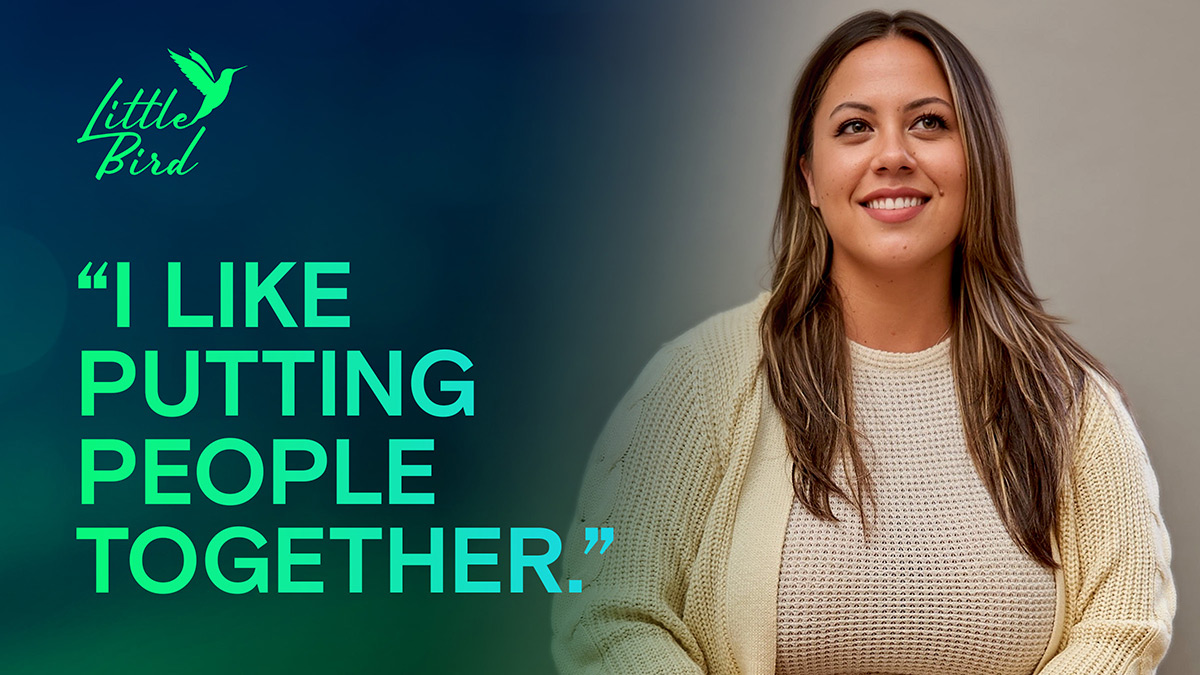
Little Bird occupies that distance. Founded by Becca Falborn in January 2024, the Jersey City company represents independent production and post-production shops, develops their business, packages their news and introduces their talent to agencies and brands. Its roster runs from live action, editorial and VFX to sound, music, immersive production, production travel and award-entry software. This is less a talent agency in the Hollywood sense than a switchboard staffed by someone who understands what happens after the call connects.
That distinction matters. A traditional rep can open the door and negotiate around the work. Little Bird's pitch is that opening the door is only the beginning. Falborn added social posts, press releases, thought-leadership pieces and brand positioning to the sales job. In an industry powered by bursts of activity, the company sells continuity: remain visible after delivery, remain useful before the next brief, remain familiar when a producer suddenly needs help on Thursday.
The receptionist noticed the whole room
The origin story begins below the glamorous floor. Falborn worked as a production assistant on Jersey Shore, Snooki & JWoww and Tattoo Nightmares. The first thing that failed was the obvious career route: being on set was not where she felt most comfortable. What held her attention was the machinery around the work - the clients, schedules, handoffs and decisions that made production possible.
In 2014 she joined the post house Nice Shoes in reception and client services. Then came business affairs at Hogarth, producing at Sound Lounge, and a rise to executive producer by age 28. In 2019, she worked across twelve Super Bowl campaigns. She later became Lime Studios' first East Coast employee and eventually split business-development duties between Lime and the New York post company Assembly.
Each job offered a different view of the same market. Reception showed who walked in. Business affairs showed what could be bought. Producing showed what could go wrong. Sales showed why excellent shops could remain invisible. By 2022, demand for Falborn's help had stretched beyond her full-time job. In 2023, with support from Lime and Assembly, she began laying track for a company of her own.
“I kind of felt like there should be more of a return from your repping experience.”Becca Falborn, describing the idea behind Little Bird
What changed her mind about making the leap was not a theatrical revelation. It was accumulated proof. People kept asking for the same mix of access, commercial judgment and publicity. Falborn has said she was nervous, second-guessed herself and wondered whether she could do it alone. The evidence eventually became harder to ignore than the nerves. Her instruction to herself was plain: stop overthinking and jump.
January to March 2024
The response was immediate. Little Bird began with Lime Studios, Assembly, Carousel Collective, PULL and Schofield's Flowers. Within its first month, launch coverage counted thirteen partnerships. By June 2026, Falborn described a roster of more than fifteen companies. The exact lineup changes as representation agreements do, but the operating logic has held: cover enough of the production chain to solve a brief without turning every recommendation into the same answer.
The product is judgment, packaged four ways
Little Bird owns no soundstage, camera fleet or edit suite. Its product is selection. Which director fits the tone? Which VFX shop has the right artists? Does the idea need a conventional shoot, a virtual-production stage or an integrated team that can carry it from development through delivery? The roster is inventory, but judgment is what makes the inventory usable.
The customers sit on both sides of the introduction. Production and post companies hire Little Bird to represent and publicize them. Agency producers, creatives and brand teams use the firm to reach a filtered set of suppliers. Publicly announced partners have included Cutters Studios for editorial, JAMM and BRASH for VFX and finishing, Lime for sound, Maverick and Caravan for production, and AwardCore for award-show administration technology.
There is no public rate card, revenue figure or funding announcement. The sensible reading is a services business built on representation agreements rather than a venture-funded marketplace. That matters because the economics reward relevance, not traffic. Little Bird does not need a million users. It needs a smaller number of clients to trust its recommendations, answer its calls and award work.
Why a bowling lane can beat a dashboard
Falborn's networking is unusually literal. A profile of her opens at Chelsea Piers, where the Madmen Bowling League gathers advertising people on Wednesday nights and she co-captained a team called the Glory Bowls. The silly name is useful evidence. Relationship-building works better when nobody has to pretend the relationship is the only thing being built.
The bowling league is not a cute detour from the business model. It is the business model in miniature. Put people in a room without a procurement agenda. Let them discover one another before either needs a favor. Remember the conversation months later, when a brief arrives. Falborn's observation is that everyone may become a client or prospect as careers move. The rep's job is to see not only who a person is today, but where that person might land next.
“I like to put people together who probably don't know each other, because you never know where people are going to end up or how they'll move around.”Becca Falborn on the compounding value of introductions
This is also where Little Bird differs from a directory. A database can return a hundred production companies. A trusted rep reduces the list and accepts reputational risk for the recommendation. Four people independently pointed Caravan co-founder Jon Muedder toward Falborn within three days, he later said. After years of holding off on representation, that cluster of referrals made the decision easy. The network was not merely large. It was self-confirming.
The play that another small firm can copy
The transferable lesson is not “know everyone.” It is more manageable: make one commercial service produce material for the others. A sales call reveals a market concern. That concern becomes an article. The article creates a reason to contact clients. Client work becomes social proof. Social proof makes the next introduction warmer. Little Bird combines activities that are often purchased from separate vendors and lets each one feed the next.
A founder can copy the sequence. Start with a narrow group whose craft you can evaluate. Map the buyers and the moments when they feel a problem. Make introductions before asking for a transaction. Turn genuine client expertise into useful public material. Track whether visibility produces meetings and whether meetings produce briefs. The spreadsheet can be color-coded; Falborn is known to enjoy those. The important part is that somebody owns the follow-through.
Conditions for the model
It works when the representative understands the craft, has buyer trust, avoids destructive roster overlap and can point to meetings or wins. It weakens when every partner sounds interchangeable, when publicity becomes noise, or when agencies move enough production in-house that outside specialists are invited too late to shape the work.
That last pressure is already visible. Holding-company consolidation and demands to keep work inside agency networks have made independent wins harder. Falborn's response is to search beyond the obvious doors: independent agencies, emerging creative companies and specialists with capabilities the internal studio lacks. The roster itself reflects the bet, expanding from classic production and post into immersive stages, technology and integrated services.
The middleman earns the middle
There is a tendency to describe connectors as though connection were a mystical gift. It is usually clerical work performed with taste. Keep the notes. Learn the reel. Write the follow-up. Show up at the party. Know which new director deserves the larger brief and which established company needs a different story told about it. Do this long enough and, from the outside, it resembles instinct.
Little Bird's rapid start came from a founder who had already spent a decade doing those things inside other companies. The firm did not invent creative representation. It noticed that the introduction had become too thin for a fragmented, noisy market - then wrapped it in sales, publicity and persistent attention. The amusing part is that the new model depends on a very old technology: one person staking her name on the belief that two other people should talk.
Continue the conversation