Michael Coldwell and Kurt Ouchida met in the most Las Vegas way possible: as men paid to make competing casinos look irresistible. Coldwell ran communications at Caesars Entertainment. Ouchida did the same at Las Vegas Sands. Each could see the other's work glowing across the Strip. They were rivals, but they also had complementary brains - Coldwell the showman and storyteller, Ouchida the strategist and operator. In June 2006 they left the corporate side and opened Braintrust, the agency they said they had always wanted to hire.
The timing was either inspired or terrible. Social media was scrambling the old borders between advertising, publicity and direct communication. The founders believed those borders would keep dissolving, so they assembled specialists across the major marketing channels under one roof. Then, about six months into the experiment, the financial system started to wobble. Las Vegas, a city built on discretionary spending, felt every tremor.
01 / The first testSix months later, the economy broke
What failed first was not the agency's idea. It was the comfortable economy around it. Client budgets tightened while the demand for results became less forgiving. Coldwell later described Braintrust's early education plainly: doing more with less. Financial pressure made the firm more nimble, more dynamic and more inventive because an attractive campaign that could not defend its expense had become a luxury.
That constraint explains the modern Braintrust better than a list of services does. The company now offers brand strategy, identity, copywriting, creative, PR, social media, media buying, search, programmatic advertising and custom web development. Those can be purchased as focused projects or as an integrated engagement. The real product, though, is fewer seams. The person who defines the promise is close to the person who designs it, the person who buys the audience and the person who watches the numbers.
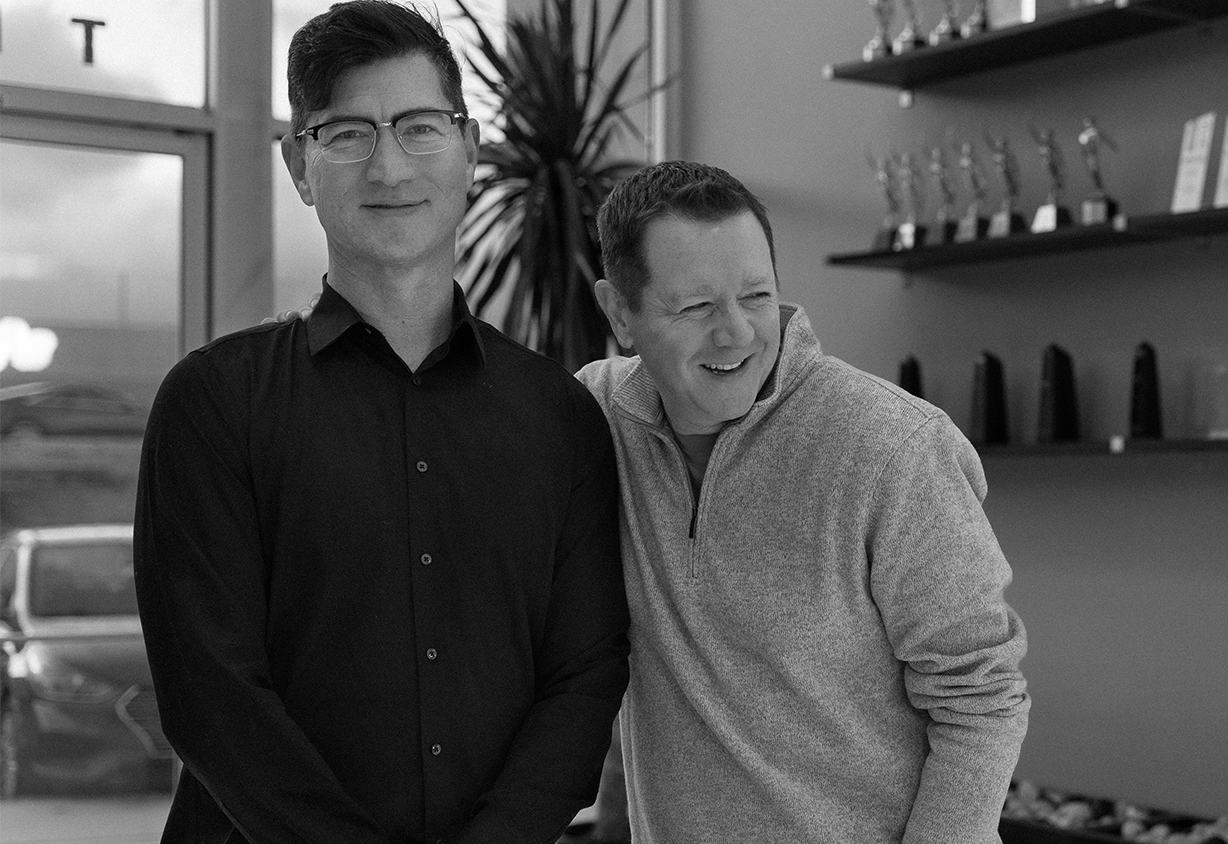
“We were built literally as a brain trust.”Michael Coldwell on assembling specialists across the major marketing channels02 / The product behind the products
An agency built to eliminate the awkward handoff
Most marketing work is injured in transit. Strategy becomes a deck. The deck travels to a creative shop. The assets move to a media buyer. A publicist hears about the campaign late. The website team receives a folder called “final-final-2.” Each handoff introduces translation, delay and the small possibility that everyone is now solving a different problem.
Braintrust's difference is organizational: it tries to keep that translation inside one team. The firm is small enough - LinkedIn lists 11 to 50 employees - to behave like an extension of a client's marketing department, yet broad enough to execute across disciplines. Its sweet spot is an organization with a story that must travel: a resort changing hands, a bank refreshing its promise, a health district speaking to underserved communities, or a destination trying to turn curiosity into a booked trip.
It is not a software platform, and it does not have a public rate card. This is a people business sold through retainers and projects. Its alternatives are other full-service firms, local specialists, an in-house department, or a collection of separate vendors. The Braintrust wager is that the premium for coordination costs less than the waste created by fragmentation.
03 / A complicated show, one simple sentenceThe Marley brief had two products and one icon
Bob Marley Hope Road presented the sort of problem that makes marketers over-explain. It was both an immersive daytime attraction and a high-energy nighttime performance. It had to respect a cultural legacy, attract tourists and locals, speak across generations and compete in a city already fluent in spectacle. Braintrust's solution was to hold the complexity behind a paired promise: One Timeless Icon. Two Transformative Experiences.
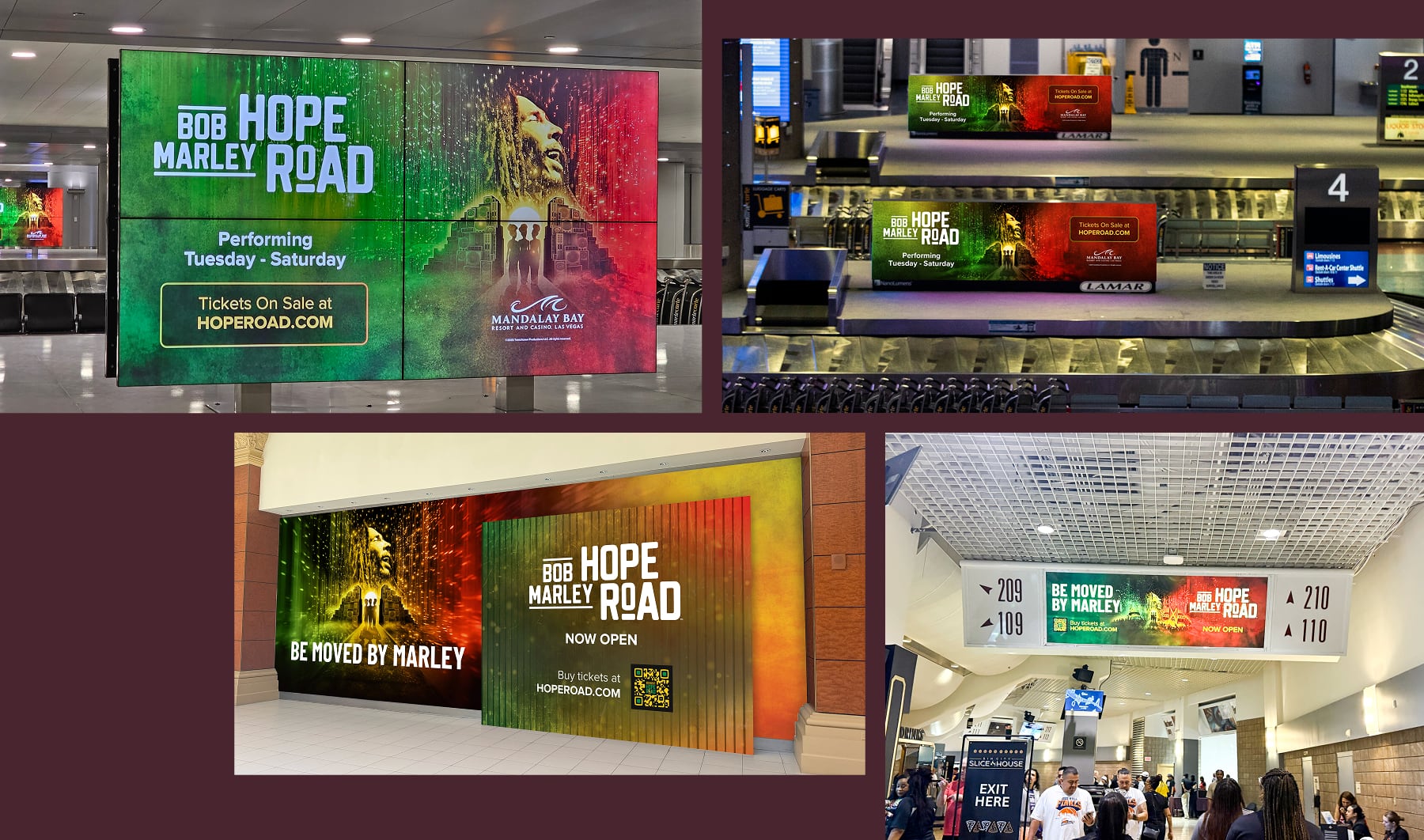
The line did several jobs at once. “One” and “two” explained the structure. “Timeless” protected the legacy. “Transformative” promised participation rather than observation. The visual system then carried that thought across billboards, airport media, property walls, print, digital and social. Braintrust reported 18 million impressions, 8,000 ticket sales, $500,000 in ticket revenue and about five times return on ad spend.
At 5× ROAS, $500,000 in attributed revenue implies roughly $100,000 in media spend. That is a calculation from the published figures, not an all-in agency fee.
04 / Ideas that survive resizingThe three-letter strategy
For Nevada State Bank, Braintrust found its campaign platform hiding inside an existing line: “It Matters Who You Bank With.” The useful word was who. Ask a banking question, answer it with NSB. The structure could address a business owner on a billboard, a family on a mobile screen or a private-banking client in print without losing its shape.
This is less glamorous than inventing a universe from scratch, and more useful. A strong campaign system needs enough rigidity to be recognizable and enough room to accommodate different products. The same instinct appeared in Braintrust's handling of The Mirage's transition to Hard Rock International. “Rock Out” framed the old property's farewell; “Rock On” pointed toward what came next. Beneath the wordplay sat crisis messaging, employee communications, media relations and organic content from inside the resort.
The client list makes the market position legible: The Mirage and Hard Rock, Wolfgang Puck, Colonial Williamsburg Resorts, Nevada State Bank, Southern Nevada Health District, Visit Pahrump and the City of Las Vegas. Hospitality remains the native language, but public agencies and community organizations use the same machinery when a message has to be both clear and widely distributed. For the 2025 Otonomus Hotel launch, Braintrust says its PR push secured nearly 200 clips, 472 million impressions and coverage in more than ten countries.
05 / What travelsThe part worth stealing is a sequence
A reader does not need an agency - or a Las Vegas address - to copy the useful part. Start by compressing the customer's problem into one sentence. Build a system, not a single execution. Put unlike specialists together before the idea hardens. Decide what success means before buying attention. Then let the reported result revise the next round.
A five-step brief for fewer seams
- Name the tension in language a customer would actually repeat.
- Write one organizing line that can survive print, video, social and a landing page.
- Invite creative, PR, media and web people into the first conversation.
- Attach one behavioral measure to every channel - a booking, visit, lead or sale.
- Keep a phase two. The first result is information, not a verdict.
The method has limits. It depends on client access, shared measurement and a willingness to choose one organizing idea. It is a poor fit for a buyer who wants high-volume commodity production, keeps each vendor in a separate silo, or changes the objective after the media is running. Integration is not magic. It is a series of decisions made early enough that they still matter.
Twenty years on, Braintrust's public personality remains revealingly unserious about itself. Team biographies contain movie lines, Tetris records and office dogs with job titles. The case studies, by contrast, are thick with impressions, revenue and return. That pairing may be the founders' old rivalry in miniature: one side knows how to get a room to look up; the other wants to know what everyone did next.