There is a particular kind of confidence required to open an advertising agency in Detroit in 1982. Christina Lovio-George has described the timing with an image more economical than any business plan: her door opened while the moving trucks were going the other way. The city was losing people, factories and faith. She started a communications company.
Lovio George never became enormous. Its public headcount today is about 14. That turns out to be relevant. The firm sits in Midtown, still independent and woman-owned, selling the familiar agency mixture of brand strategy, design, advertising, public relations, digital work and events. But the menu is less interesting than the memory behind it. This is a shop that has helped explain Detroit's 300th birthday, its riverfront, convention center, entrepreneurs, parade, coney dogs, watches and auto show. It does not merely know the city. It remembers earlier drafts.
The small survey before the enormous party
The cleanest example arrived in late 2000. Detroit 300, the organization planning the city's tricentennial, brought in Lovio George just one month before the yearlong campaign launch. The overall initiative was pursuing $27 million in fundraising. That number was the scale of the civic effort, not a disclosed agency fee. Lovio George's own project price has never been made public.
What the agency inherited was not merely a deadline. It was confusion. The marketing lacked a consistent message, old assumptions about Detroit were hard to dislodge, and people did not yet have a clear reason to care. So the team did something wonderfully uncinematic: it asked questions. It polled nearly 100 people at the North American International Auto Show and interviewed business and community leaders. The answer changed the brief. Awareness alone was insufficient. The celebration needed one story that could build local pride, cross the river to Windsor and survive translation across dozens of channels.
The resulting line - “Tall Ships. Cool Sounds. One Beginning.” - was not poetic decoration. Each phrase pointed to something people could actually attend. Lovio George carried it through television spots with Stevie Wonder, radio, print, billboards, festival guides, merchandise, media credentials, a press trailer and on-site broadcasting. The campaign was integrated in the literal sense: one idea did many jobs.
The stated festival target was 1.1 million visits. Reported attendance exceeded 5.7 million. The campaign produced more than 270 million positive print impressions and $4.5 million in added advertising and promotional value; the festival's economic impact was estimated at $158 million. Marketing did not produce those numbers alone. Twenty-four tall ships, 45 local performers, an 800-voice gospel choir and a free concert featuring Stevie Wonder gave people excellent reasons to arrive. The useful lesson is that the message and the experience agreed.
The car is a memory machine
Two decades later, Lovio George used the same instinct for the 2025 Detroit Auto Show. The obvious creative raw material was metal: horsepower, prototypes, expensive curves. The agency looked instead for autobiography. “My Drive. My City. My Show.” put ten Detroit voices in front of the campaign, from athletes and musicians to everyday residents, each telling a personal car story.
This is a precise Detroit observation. Here, a first car is rarely just transportation. It may be a parent's shift at the plant, a Saturday repair, a courtship, a layoff, a road trip, a union badge or a stubborn machine that started in February. Lovio George and its film partners treated the automobile as a container for memory. The campaign later received four Communicator Awards across marketing effectiveness, film, branded content and social, plus a Silver at Detroit's 2025 D Show.
The first idea the weather fired
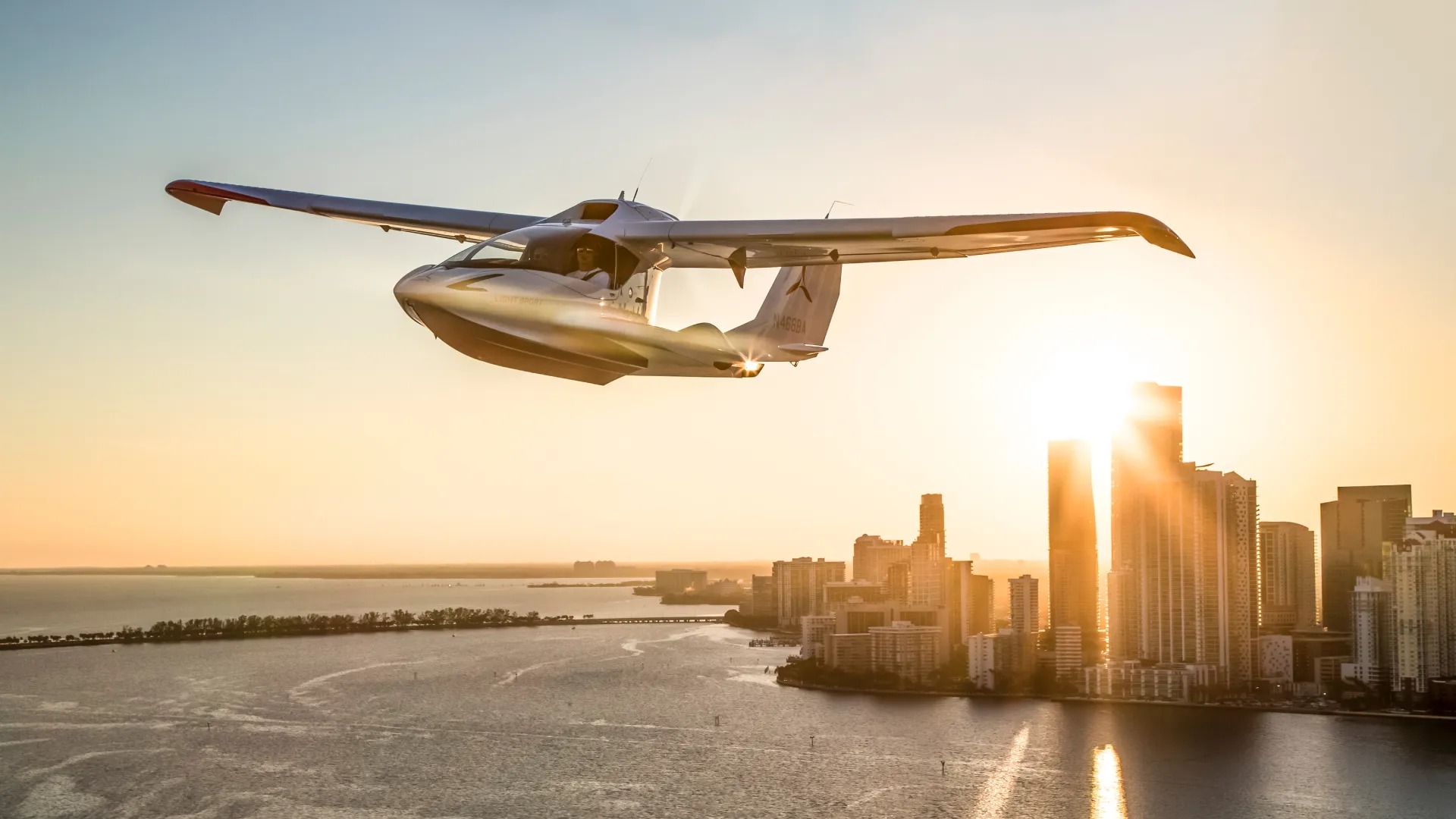
One piece did not make it. For the Auto Show's return to January, a giant banner was designed for Detroit's roadside Uniroyal Tire. The image showed a car racing toward the viewer. Then wind and brutal cold made the retrofit unsafe. The spectacular part of the plan was cancelled.
That failure is more instructive than a clean case study. The campaign did not depend on a single clever object. Its center was ten human stories, distributed through film, social media and the wider show promotion. Weather could veto the tire, but it could not erase the idea. The copyable principle is simple: put the campaign's meaning in something portable, then let the stunts amplify it. If losing one placement destroys the premise, the premise was only a placement.
What the client is actually buying
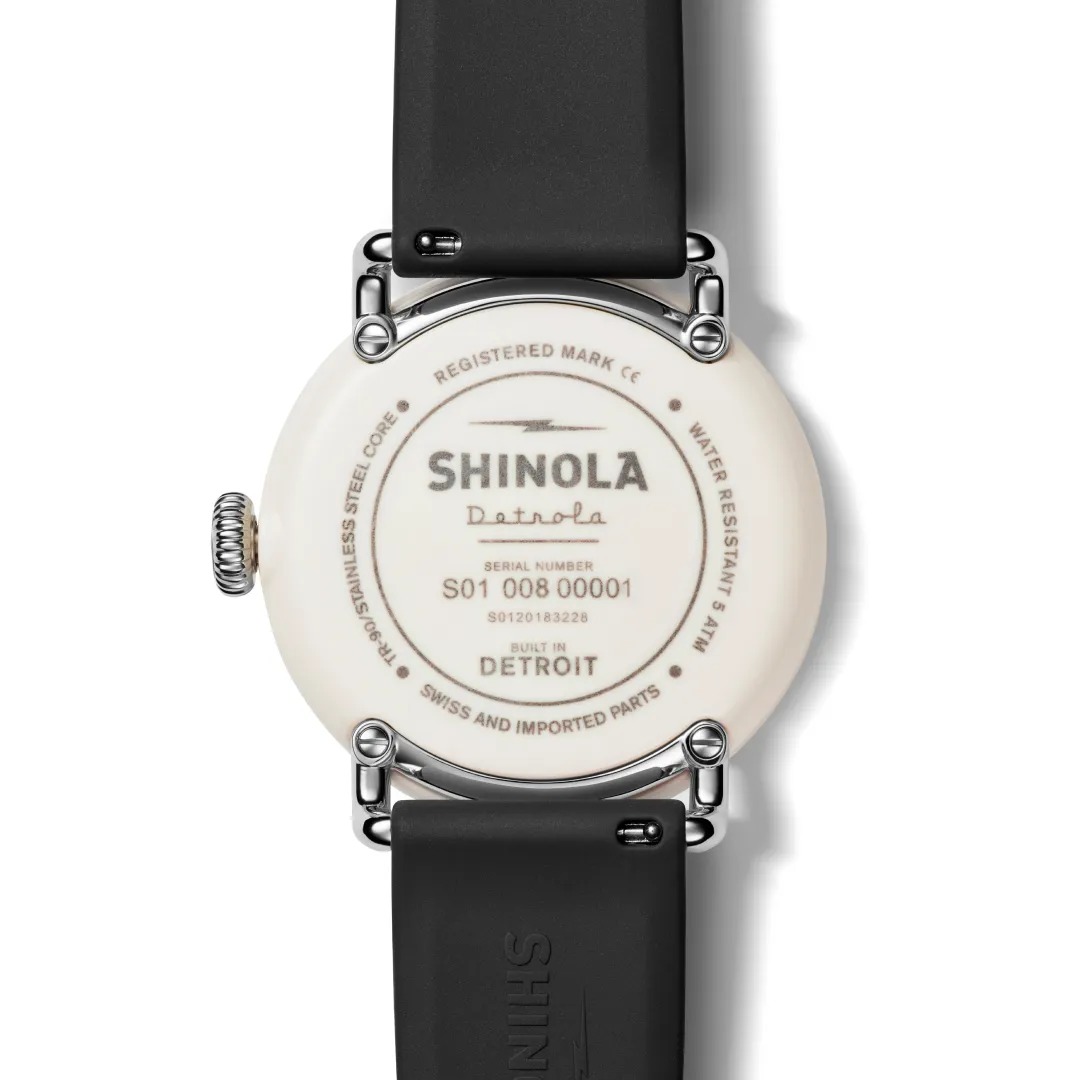
The customer list looks delightfully unruly: Shinola, National Coney Island, the Detroit Riverfront Conservancy, MDOT, Huntington Place, Regina Andrew Design, The Parade Company, HNTB, Visit Detroit and the Auto Show. These are consumer brands, public agencies, nonprofits and civic events. They meet at one problem. Each needs many audiences to understand the same thing at roughly the same time.
Lovio George's business is professional services: clients buy a scope that may combine research, naming, identity, campaign creative, media relations, digital content, web work and live experience. The firm does not publish a rate card. Its practical position in the market is between the specialist boutique and the full agency network. It offers enough disciplines to keep one thought intact, but with a team small enough that the people who understand the brief remain close to the work.
That compactness helped in 2015, when local accounts including Shinola, National Coney Island, the Riverfront Conservancy and the convention center grew revenue and prompted two hires. It also sets a boundary. A small local team is an advantage when context, trust and senior attention matter. It is less obviously suited to a client demanding simultaneous execution in dozens of countries, enormous in-house media buying or endless commodity content. Detroit fluency is powerful only when Detroit - or the ability to understand a place this closely - matters to the assignment.
Borrow the method, not the accent.
- Interview the people who carry the stakes before polishing the slogan.
- Find the misunderstanding, not merely the awareness problem.
- Build one idea that can move through press, design, film, social and a room full of people.
- Make the experience deliver what the advertising promised.
- Give the campaign a portable human center so one failed stunt cannot sink it.
Forty-four years of useful context
The tempting way to tell this story is as perseverance: a founder stayed, the city came back, everyone learned a lesson. That is too neat. Detroit did not move in a straight line, and neither did the work. The more practical explanation is accumulation. Every campaign added a relationship, a correction, a piece of language, a memory of what the city had already been promised. Over time, proximity became expertise.
Plenty of agencies can make a beautiful poster. Plenty can buy a billboard, manage a press room or produce a film. Lovio George's narrower distinction is knowing when the poster sounds like Detroit talking and when it sounds like someone talking about Detroit. That difference is difficult to place on a rate card. It is also, after 44 years in the same neighborhood, difficult for a competitor to manufacture quickly.