The campaign looked finished. Creative approved, messaging settled, files delivered. Then the media owners began rejecting the assets. The specifications were wrong. According to Michael Brady, founder of The Resize Guys, his team was brought in to rebuild more than 160 print and digital deliverables before the launch slipped away. The idea had survived approval. The files had failed their next test.
Brady recounts the episode in his company’s Beyond Billboards blog series. His team sorted the specifications, rebuilt the assets and prioritized their release. He says the campaign ultimately launched successfully. For a business with an almost comically modest name, it is an instructive calling card. Resizing can sound like dragging the corner of a picture. Here, it meant getting an apparently finished campaign back into usable condition.
The Resize Guys occupies a precise stretch of the advertising business: after the concept has been approved, before the material reaches its audience. It prepares the mechanicals and final assets that let one creative idea appear on a phone, a printed poster, a transit wrap or a digital billboard. The customer may be an agency, a brand or an in-house creative team. The assignment is to make the approved work survive the journey.
The trouble begins after “approved”
The first failure in Brady’s rescue story was a mismatch between files and placement requirements. It was discovered when media owners rejected the work, after the team thought it had met its deadlines. That distinction matters. Delivering a file and delivering an acceptable file are separate events. A schedule that records only the first can give everyone a comforting, expensive illusion.
In another account, Brady describes a digital outdoor campaign for an unnamed music streaming platform. Final specifications expanded the scope into three concepts, each with three versions, across multiple environments. Each screen required the correct dimensions, sequence, version, filename and delivery route. The underlying idea remained the same; the production assignment became more complicated as the details arrived.
These experiences explain the emphasis in his current writing. He argues for involving production earlier, while specifications and workflows can still be questioned. His account supports a practical shift in how to buy the service: treat file preparation as something to plan, with people and approvals attached. Waiting until the artwork is signed off leaves fewer opportunities to discover what the media plan actually demands.
“When production goes well, nobody notices it.”Michael Brady, Beyond Billboards
A studio built for the handoff
Brady founded The Resize Guys in 2015 after two decades working in San Francisco agency studios. Its history names Y&R California, TBWA\Chiat\Day SF, Cutwater, Butler, Shine & Stern and Goldberg Moser O’Neill. The proposition grew out of a familiar agency need: production capacity that could move quickly and flex with the assignment, while keeping the technical standard intact.
The company describes a remote team of production artists, producers and animators. Its stated working values include shared learning, regular check-ins, fair compensation and room for rest. Those are company commitments, rather than an independent assessment of working life. They are nevertheless relevant to the service being sold: coordinated output from people who may be working apart.
Its expertise is particularly visible in print. The studio discusses color builds, press tolerances, ink density, dielines and last-minute color-profile adjustments. Those details put some substance behind the promise of experienced production support. A packaging layout must respect folds and cuts. A print file must work with the intended press requirements. Looking convincing in a presentation is only one part of being ready.
From a bus wrap to a moving banner
The service menu stretches across three connected areas. For print, The Resize Guys prepares newspaper and magazine ads, brochures, packaging, point-of-purchase material and trade show graphics. For outdoor advertising, it handles printed and animated billboards, transit takeovers, bus wraps, retail displays and even aerial banners. The common ingredient is an existing creative direction that needs production treatment for its destination.
Digital work brings another set of outputs: static display ads, HTML5 banners, social graphics and videos, mobile formats and motion for public screens. The company describes tailoring files to placements on platforms including Meta, Google Ads, LinkedIn and TikTok. It also offers lighter finishing tasks such as image cleanup, photography retouching and image animation.
What connects this range is adaptation. The outdoor team describes preserving readability, layout and brand standards through crops and resizes. Digital production includes workback schedules to stage deliverables and approvals. Print work includes preparing technically suitable files. A buyer can therefore bring a mixed media plan to one production partner, with the coordination work forming part of the assignment.
Media specifications
Print and motion
Delivery to spec
Big names, specific production jobs
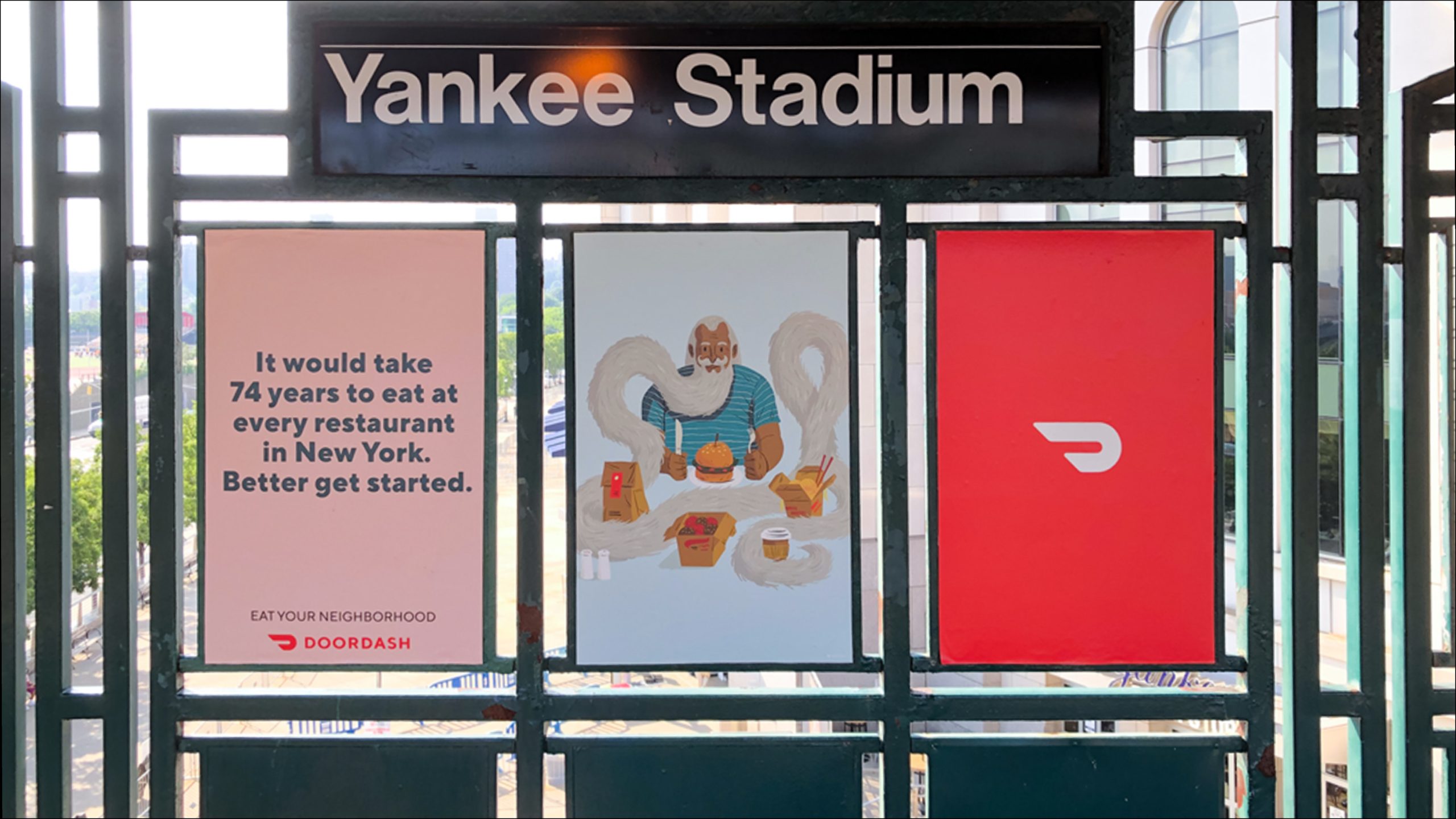
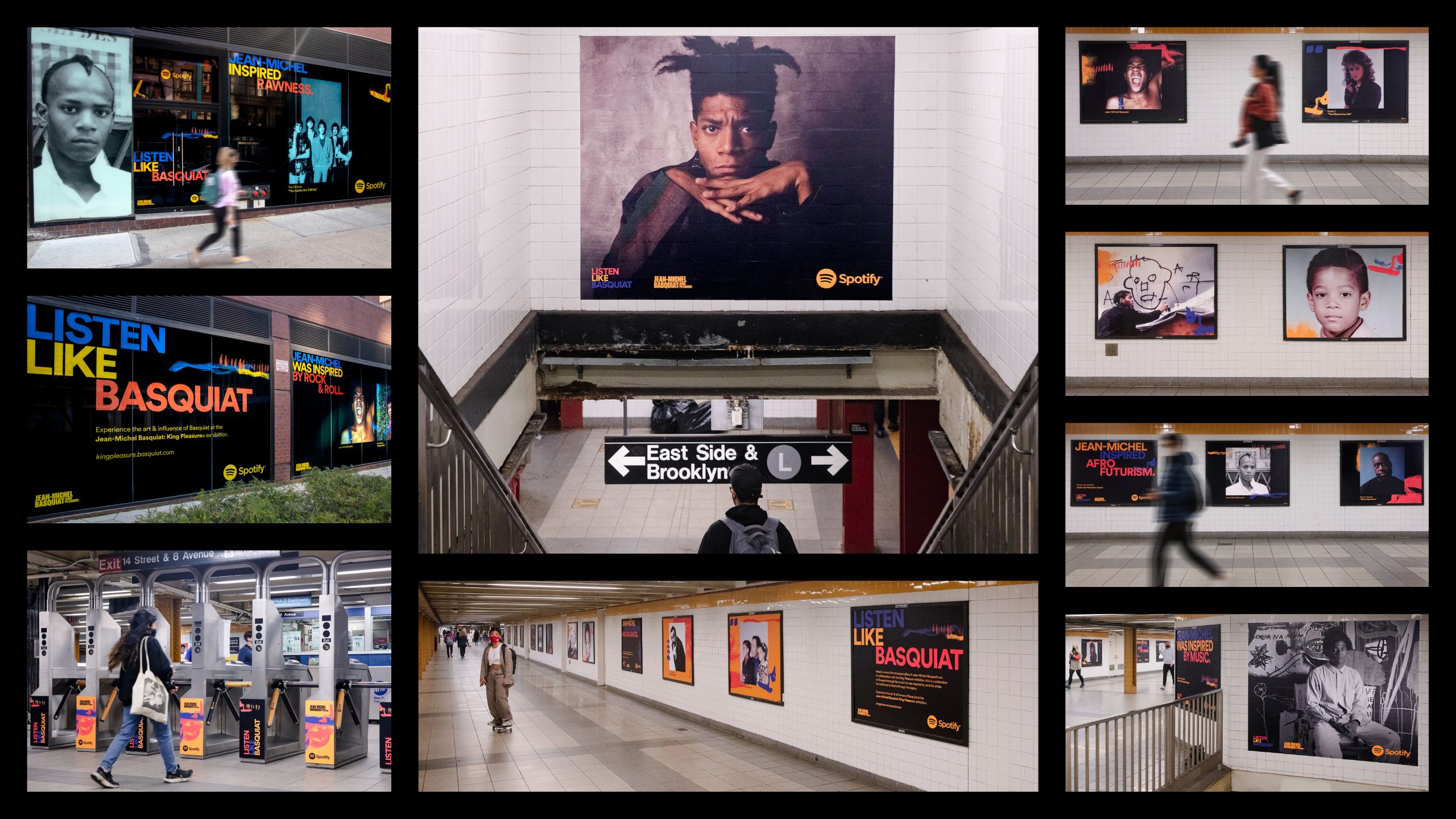
The portfolio is useful because it assigns roles to the studio. Spotify work includes animated and static digital outdoor assets, printed outdoor advertising, social material, posters, print ads and on-platform graphics. DoorDash work includes transit wraps, mechanical production and retouching alongside printed and digital outdoor formats. These are production credits, and they make the company’s contribution easier to understand than a row of client logos would.
Other assignments add texture. The studio lists outdoor work for Gemini and mechanical production and outdoor assets for Hinge. Hoka work includes retouching, print and display banners. ServiceNow work includes trade show graphics and display banners. A shoe company, a dating service and a technology company can have very different messages while needing similar help getting the versions built.
The homepage also reports more than 2,000 digital ad resizes in under two weeks for a global advertising and marketing firm. That is a company-reported example of throughput, not a guaranteed delivery rate. Its significance is the kind of buying problem it illustrates: when a campaign produces a large family of assets, a production team must organize the batch as well as make the individual files.
The quote covers production
The business model is a service relationship between companies. Prospective clients are invited to request a quote or custom estimate. The contact form asks for a company, timeline and project description, and the studio says it responds within one business day, often sooner. The practical next step is a scoped conversation about the assets and deadline.
The distinction between production and media spending is explicit in its FAQ: The Resize Guys does not sell advertising space. Preparing a billboard file is separate from paying for the placement. A buyer assessing the economics should keep those jobs distinct and ask what the production estimate includes, which versions are covered and how changes to the brief will be handled.
Its alternatives are familiar: an agency’s own studio, the brand’s internal team, freelance production artists or another outsourced production company. The Resize Guys positions itself around flexible capacity and experience across formats. That makes it especially relevant when an existing team has approved work and more execution than it can comfortably absorb. The portfolio demonstrates range; it does not establish a universal price or speed advantage over those alternatives.
What to borrow before the next launch
The useful lesson is accessible even to a team that never hires the studio. Assemble the approved assets and the actual placement specifications together. Identify which version belongs to which destination. Give approvals an owner. Build the schedule backward from delivery, allowing space for checking and correction. These are editorial takeaways from the company’s described workflow, rather than a promised formula for a trouble-free campaign.
Brady offers a memorable warning about outdoor dimensions: a height-and-width misunderstanding can leave a large board prepared in the wrong orientation. The broader habit to copy is reading the recipient’s requirements before building the file. The studio’s FAQ also explains preflight checks for problems such as missing fonts, low-resolution imagery and incorrect color modes. These checks belong before release, when a correction is easier to accommodate.
The service fits best when the client can supply an approved direction, a defined media mix and workable decisions. If the central idea is still changing, producing more versions can multiply the revision work. If placement requirements remain unsettled, delivery remains exposed to change. And a team seeking media buying or an original campaign concept has a different immediate need from the execution work described here.
The Resize Guys has chosen a business whose successful output usually carries somebody else’s name. Its portfolio makes that arrangement tangible: DoorDash at a station, Spotify across a wall, brand artwork adapted for another screen. The reader sees an ad. Somewhere earlier in the chain, a production artist has checked that this particular version belongs in this particular place. That is a small decision to get right thousands of times.
See the work in motion
Explore the campaign portfolio, watch the DoorDash production reel, or visit the studio website. For company posts, follow The Resize Guys on LinkedIn. Brady’s Beyond Billboards essays expand on production planning; the contact page starts a project inquiry.