A car dealership can buy attention all day long. It can bid on search terms, fill a screen with inventory and invite another thousand people through its digital front door. Then someone asks about a monthly payment, cannot find a useful answer, and leaves. The advertising worked. The website wasted the introduction.
That gap is DealerOn’s territory. The company sells the website, the machinery behind it and the marketing services that bring people there. Its underlying proposition is wonderfully practical: the dealer already has cars to sell. Make it easier for the person looking at one to take the next step.
- Websites, SEO and advertising built for automotive retailers.
- Cosmos connects inventory browsing, payment displays and lead capture.
- Published independent-dealer website plans start at $599 a month.
- New AI tools monitor search visibility and assist website operations.
The expensive click that goes nowhere
Consider Ourisman Fairfax Toyota. In DealerOn’s account, the store faced 15 other Toyota dealers within 25 miles. It was spending on digital marketing, but its website was producing too few leads to justify parts of that spending. Internet operations director Troy Nieves believed his staff could handle more inquiries. The constraint was getting them.
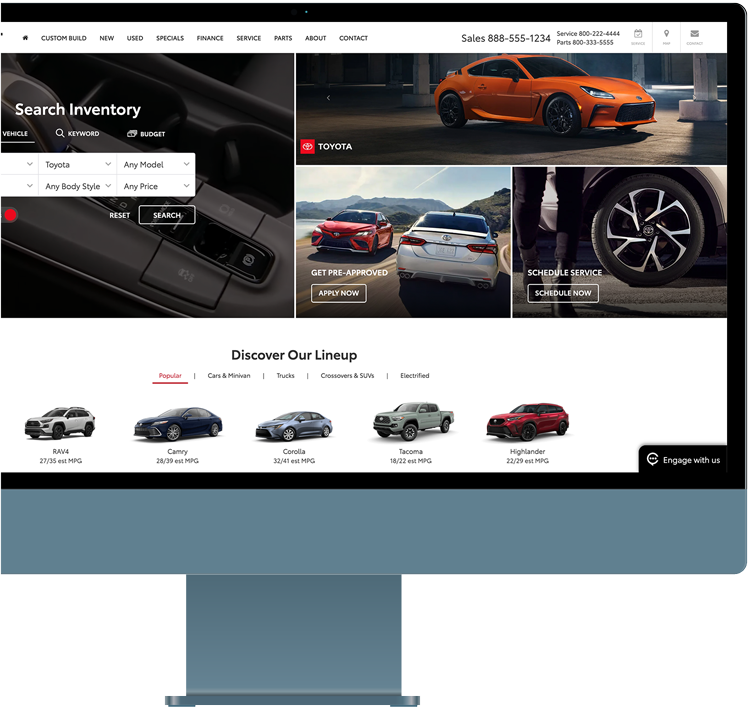
DealerOn’s lead-increase guarantee caught his attention. Other Toyota customer examples helped persuade him to switch. The replacement site emphasized popular inventory, clearer calls to action and content aimed at local Toyota searches. DealerOn reports a 192% increase in leads, reaching more than 30 daily. Those are company-published results from one customer, rather than a forecast for every store.
The useful lesson travels beyond car retail. Before increasing a traffic budget, inspect what happens to the traffic already arriving. Can someone find the relevant product? Understand the offer? Ask a question without beginning an obstacle course? A conversion problem can masquerade as an advertising problem for a very long time.
A payment, a photograph, a next step
Brothers Ali and Amir Amirrezvani founded DealerOn in 2004. Ali remains its CEO. Today, the company reports serving more than 7,000 dealers. Its customers include independent stores, franchise dealerships and groups coordinating several locations. This is business software bought by retailers; the shoppers using those websites are the people it ultimately needs to satisfy.
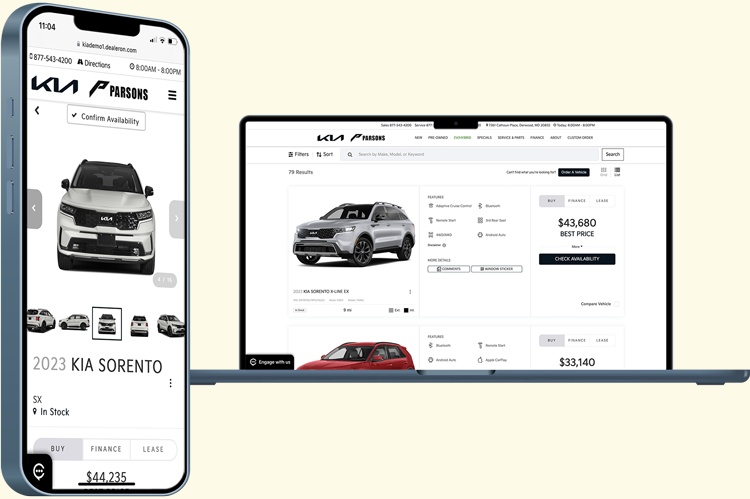
Cosmos, launched in 2022, is the website platform at the center. A shopper can search by vehicle, price or monthly payment. PriceStak displays cash, finance and lease offers and can align calculations with an existing digital retailing provider. APEX lets a shopper begin shaping a payment plan. Loop adds practical return invitations, including price-drop alerts and vehicle sharing by text.
Behind the screen are less glamorous jobs that matter just as much. Listings Manager updates business information across supported listings. Design Studio helps staff assemble creative from templates. Enterprise Specials Manager supports offers across multiple stores. The expertise lies in knowing how vehicle inventory, manufacturer offers, search visibility and dealer workflows collide on a single page.
The monthly bill has layers
The business model combines recurring software charges with optional tools and managed services. DealerOn’s independent-dealer page lists Core at $599 monthly, Premier at $899 and Elite at $1,199. Core includes inventory integration and reporting; higher tiers add engagement and payment features. These are published independent-store packages, not a universal price list for franchise groups or a complete advertising budget.
Managed SEO and advertising extend the relationship beyond hosting. That puts DealerOn alongside alternatives such as Dealer.com and Dealer Inspire, which also sell dealership websites and marketing. DealerOn’s pitch centers on integrated retailing, conversion measurement and service. Buyers should compare the manufacturer program, required integrations and actual service scope before treating any feature list as decisive.
There is a revealing wrinkle in DealerOn’s Feldman Automotive Group story. After a website change, the company says, inquiries arrived faster than the sales operation knew how to handle them. More leads can expose the next weak link. A retailer without timely follow-up, accurate inventory or competitive offers will struggle to turn a better website into a better business.
The platform gets bigger
DealerOn’s expansion has involved both building and buying. Its NexPhase Capital partnership was announced in January 2020, when the company reported more than 3,500 dealership partners. It acquired fusionZONE Automotive in 2023 and Sincro from Ansira in September 2024. The Sincro announcement described broader website, inventory, advertising and retailing capabilities; transaction terms were undisclosed.
Partnerships fill other gaps. Reynolds and Reynolds announced plans in 2024 to connect website behavior with customer records and DealerOn’s Signals personalization. Lyteflo followed in 2025 with EV merchandising tools. OnMarketplace gives outside application providers a route onto DealerOn sites. The strategic direction is clear: own more of the connections that a dealer otherwise has to manage separately.
Signals offers a useful example of the measurement challenge. At Matthews Motors, DealerOn reports that 85% of leads came after a shopper had seen a Signals banner. That establishes exposure before conversion. It does not establish that the banner caused the inquiry. Visitors who browse longer also have more chances to encounter a message. The distinction matters when a dealer decides where the next dollar goes.
A buyer can copy the discipline without copying the entire software stack. Record a baseline before switching providers. Define which actions count as leads, keep track of traffic sources and ask how duplicate inquiries are handled. Then follow those inquiries into appointments and completed transactions. A stronger conversion rate means more when the lead definition stays consistent. The dealer needs enough staff to respond, and someone must own the reporting. Otherwise, a migration can produce an impressive comparison that answers the wrong business question.
Now the shopper asks a machine
In May 2026, DealerOn announced OnPrompt, a beta platform for checking how dealerships appear in AI-generated answers. It monitors relevant prompts, brand descriptions, competitors and content gaps. The launch announcement explicitly distinguishes that work from access to private consumer queries. Its accompanying GEO service helps dealers act on the findings through content and technical changes.
“SEO is not going away. It is expanding.”Ali Amirrezvani · OnPrompt product page
Sidekick, announced the same month, applies AI to merchandising, chat, compliance monitoring and insights. These products extend DealerOn’s established work: help a store get discovered, present its vehicles and respond when someone shows interest. Their commercial test remains straightforward. Measure qualified conversations, appointments and sales alongside visibility. A dashboard can count attention. A dealership still has to earn the customer.