A car dealership can be a surprisingly difficult place to buy a car before you ever reach the dealership. Open a vehicle page and the invitations begin: check availability, calculate a payment, value a trade, request a quote, start a chat. Each button has a constituency. Together, they can resemble a committee that has mistaken its agenda for a conversation.
Dealer Inspire has spent years building the technology behind those conversations. By 2025, it was publicly making a rather delicious argument: the industry needed to simplify the screen. A company that sells digital capabilities was explaining the commercial value of making fewer demands on the customer.
- The customer: dealerships and dealer groups buying websites, retailing tools, and marketing support.
- The original problem: marketers could not easily improve websites controlled by somebody else.
- The bet: connect discovery, payments, and conversation so a shopper can keep moving.
- The lesson: adding a useful tool can still make the whole page less useful.
01 The agency hits a locked door
The story begins upstream from the showroom. Launch Digital Marketing started in 2011 as an SEO business. Its teams were supposed to help clients attract customers, but their work depended on website providers they did not control. In a 2017 interview, agency executive Jason Stum described requests passing through dealership contacts before reaching the vendor responsible for implementing them.
The delay was built into the arrangement. The person accountable for improving the result could not always change the machinery that produced it. Dealer Inspire emerged as a way to own that machinery: build a platform the marketing team could actually work on.
Joe Chura, its co-founder and former CEO, had worked on Ford’s assembly line and later in automotive marketing and dealership management. That background matters because the product’s organizing unit is the dealer’s business, with its inventory, financing, staff, and local customers. A handsome page was only one part of the job.
In his account of the early financing, Chura dates the separate Dealer Inspire entity to 2013. He approached five prospective investors, all car dealers. Four declined. One Canadian dealer supplied $300,000. Chura says the young business then lost roughly that amount from a cash-flow perspective during the year. Software had arrived with an appetite.
The first constraint was control; the next was capital. There is a lesson here for service businesses tempted to build a product. Knowing exactly what clients need does not pay the developers while the product is taking shape.
02 A website with a salesperson inside
Dealer Inspire sells to automotive dealers and groups, including franchises choosing suppliers through automaker-certified programs. Its OEM program directory covers website, advertising, messaging, and retailing options. That is an important qualification: a franchise website must satisfy a local business and a manufacturer’s requirements at once.
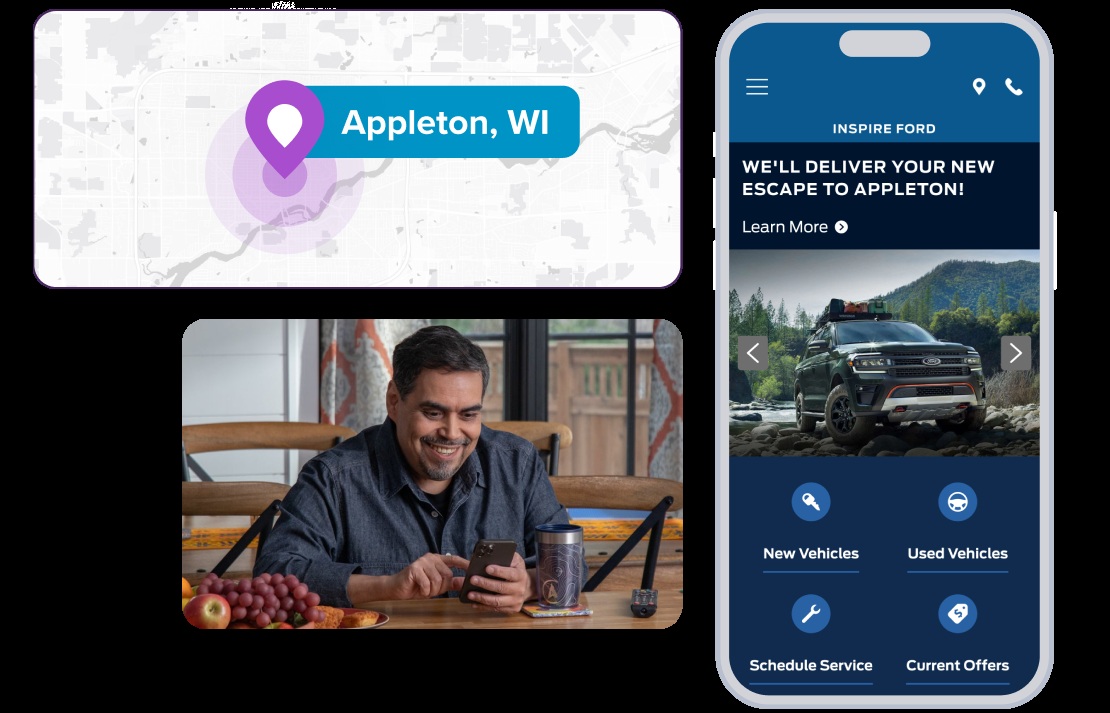
The website organizes inventory and routes inquiries. Online Shopper handles the more consequential questions: which vehicles can I save, how do the payments compare, and how far can I take the deal before visiting? Conversations provides messaging. FUEL connects advertising to inventory. SEO and creative services bring people into the experience in the first place.
These products address different moments in one purchase. A shopper finds a vehicle, considers the price, asks a question, and revises the plan. If every step starts a separate process, the customer repeatedly pays with attention. Dealer Inspire’s proposition is that the pieces should remember they belong to the same transaction.
“The car business is still a people business.”Dealer Inspire’s description of its platform
The company’s current product description puts staff inside that online process: they can recommend vehicles, adjust payment plans, and work with customers through chat or text. The customer gains a way to prepare; the dealership gains a conversation with more substance than an unexplained name in a lead queue.
- 01DiscoverAds + inventory
- 02CompareCars + payments
- 03DiscussChat + dealer staff
- 04DecideFinancing + deal
Editorial schematic of the platform’s intended shopping flow.
03 The $165 million distribution shortcut
In 2017, Dealer Inspire ranked No. 39 on the Inc. 5000. In February 2018, Cars.com announced a deal for Dealer Inspire and Launch Digital Marketing: $165 million in cash at closing, with up to $40 million in additional performance incentives. Those numbers describe the two-company transaction.
The pair had generated $41 million in 2017 revenue and served 1,700 customers. Cars.com brought a sales network reaching more than 20,000 dealer customers at the time. The opportunity was distribution as much as software: a dealer already buying marketplace exposure could also buy tools for what happened after the click.
Today Dealer Inspire sits within Cars Commerce alongside Cars.com, AccuTrade, and other dealer solutions. Its competitive pitch centers on those connections and its managed support. DealerOn and Cox Automotive’s Dealer.com are established alternatives; dealers can also combine specialist vendors. A sensible comparison starts with the dealership’s actual workflow, eligible OEM options, and integration requirements.
Measurement became a product of its own. PRIZM, launched in 2020, brought marketing and product performance into a connected dashboard. Its appeal is easy to understand. When several companies participate in attracting one buyer, every report can find a reason to take a bow.
04 The invoice has several moving parts
This is a recurring B2B software and services business. Dealers buy packages, add capabilities, and pay for people to manage parts of their digital operation. Advertising introduces a separate media budget and management charge.
A published 2025 INFINITI program sheet offers a useful concrete example. It lists Online Shopper at $1,200 per month, plus a $600 setup fee, and base Conversations options from $400 to $800 per month. The digital advertising section specifies at least $2,500 in media spend and a 25% management fee, capped at $3,500. These are historical, program-specific terms; a current proposal depends on the dealership and its package.
Online Shopper, plus $600 setup
INFINITI program sheet, 2025. Add-on pricing; not a full website budget.
The purchasing question is therefore broader than the price of a website. Which services are included? Who manages chat? Which tools duplicate something already installed? A feature earns its place when the team uses it and the customer can understand it.

05 When the buttons began competing
Dealer Inspire’s February 2025 demonstration describes vehicle pages overwhelmed by competing calls to action. Its subsequent website playbook reports that removing excess actions improved conversions in a June-August 2024 pilot, with some cases exceeding five times the earlier rate. These are company-reported results from a particular pilot, rather than a promise for every dealer.
The interesting point is the mechanism. A button asks the shopper to decide what kind of task they are doing. Several buttons can ask that question several ways before the shopper has decided whether they even like the car. Simplification gives the page a point of view about what should happen next.
The company also tackled the machinery beneath the page. Its Website Health Report, announced for March 2025 availability, exposes Core Web Vitals, installed scripts, and third-party tools. Old vendor code can remain after a contract ends. The recommendation to audit it is wonderfully unglamorous: remove the things that no longer have a job.
Personalization need not mean adding another box. In September 2025, Dealer Inspire introduced filter-responsive inline banners, included at no extra cost for customers. A shopper’s year, make, model, or trim selection can change the promotion shown within the inventory results. The same space becomes more relevant.
06 The next reader may be a machine
In April 2026, Dealer Inspire explained its AI-search inventory work: structured content, semantic HTML, and a dedicated inventory experience intended to help assistants find vehicles and send shoppers to their detail pages. The old SEO concern has acquired a new reader. Being interpretable helps discovery; it cannot guarantee a recommendation.
What can another business copy? Audit the handoffs. Give each page a clear next action. Retire abandoned scripts. Put the relevant information within reach of the person answering the customer. These are operational choices before they are purchasing decisions.
The approach still depends on the dealer. In a 2020 interview, Chura emphasized staff who understand both deal-making and the technology. A connected platform cannot rescue inaccurate inventory, neglected conversations, or a team that treats online preparation as something to discard when the customer arrives.
Dealer Inspire’s origin and its simplification push share a useful instinct: examine the obstruction between a willing customer and the next sensible step. Sometimes that obstruction is another company’s workflow. Sometimes it is your own perfectly well-intentioned button.
See the machinery at work
Explore the products, watch the demonstrations, or follow the company.