Imagine a movie star sitting in London. At 8:01, a presenter in Sydney asks a question. At 8:09, another interviewer appears from somewhere else. The star has not moved; the audience has. The apparent interview is really a transport system, carrying a face and a story across borders while leaving the expensive human being in the same chair.
That is the miniature industry PremiereTV occupies. Founded in 1990 and now based in Irvine, California, the privately held company combines three jobs that are often separated: publicity strategy, broadcast booking and production. Its customers include television networks, streamers, entertainment companies, tourism operators, consumer brands and the agencies that represent them. They arrive with a premiere, product, special or spokesperson. PremiereTV turns that raw material into a run of local television and radio conversations, then often adds b-roll, web features, audio releases or a sizzle reel.
The phrase “satellite media tour” makes the business sound like a van covered in dishes. The better picture is an assembly line for attention. A guest stays put. Stations appear one after another. Every interview feels local to its viewers, but the production remains centralized. Travel shrinks; scheduling density rises. What the client buys is not simply camera time. It buys the choreography that keeps talent, producers, transmission, talking points and deadlines from colliding.
The face comes before the feed
PremiereTV's published Tubi case study reveals the most transferable part of the method. In 2019, the free streaming service wanted awareness and subscriptions while competing with Netflix, Hulu and Amazon Prime. PremiereTV's first move was not buying equipment or making a station list. It helped identify a consumer spokesperson: Australian media personality Maude Garrett. She knew pop culture, could discuss the catalogue and, crucially, could make the twentieth conversation sound alive.
Then came timing. Tours were pegged to content announcements and familiar moments such as the Oscars and Halloween. A typical run included more than 20 local television interviews in markets including Dallas, Washington, Phoenix, Baltimore and Las Vegas. Radio stories and web features extended the same premise beyond the live appearance. PremiereTV says those assets produced thousands of broadcasts and web postings, with potential impressions in the tens of millions.
The tempting conclusion is that the campaign made Tubi grow to 25 million users and led Fox to buy it for $440 million in 2020. That is too neat. PremiereTV presents those events as the business context following its work, not as a controlled proof of causation. The sound lesson is narrower and more useful: a capable spokesperson, a recurring calendar and several distribution formats can make one campaign produce far more surface area than a single announcement.
When the hotel room disappeared
The old press junket had a physical grammar: a hotel floor, a sequence of decorated suites, actors in chairs and reporters rotating through. In early 2020, that system was the first thing to fail. People could no longer be flown into the same building. PremiereTV did not abandon the junket. It separated the useful part - controlled, convenient access to talent - from the hotel.
For National Geographic's Barkskins, the company ran a five-hour virtual production with four interview rooms and three roundtables operating at once. Fourteen participants joined from Australia, Britain and the United States. For Disney+'s Muppets Now, three virtual rooms held two Muppets apiece. Journalists completed nearly 90 interviews in a few hours, while Disney also collected a separate roundtable for its own site and social channels.
The format changed from hotel corridors to a grid of windows. The scarce resource did not change: orderly access to interesting people.PremiereTV's 2020 pivot, in one sentence
This is the company's sharpest distinction from an ordinary production crew. A crew can make a clean picture. A PR agency can pitch a story. PremiereTV sells the seam between them: a booked interview has to become a reliable live production, and the production must arrive with an interview that a newsroom actually wants. Its trade-directory language stresses relationships with national networks, newsfeeds, local affiliates and regional outlets. The list is less glamorous than a celebrity photograph. It is also the machinery underneath it.
A menu built around contingency
PremiereTV's services read like variations on the same problem. Satellite and virtual tours move the guest without moving the body. Radio tours exchange the camera for intimacy and speed. Audio and video news releases provide stations with finished material. Electronic press kits, b-roll and sizzle reels give editors the shots they cannot obtain themselves. Event crews, red-carpet coverage and press conferences handle the moments when everybody really must be in one place. Media training prepares the person whose answer can still derail the entire apparatus.
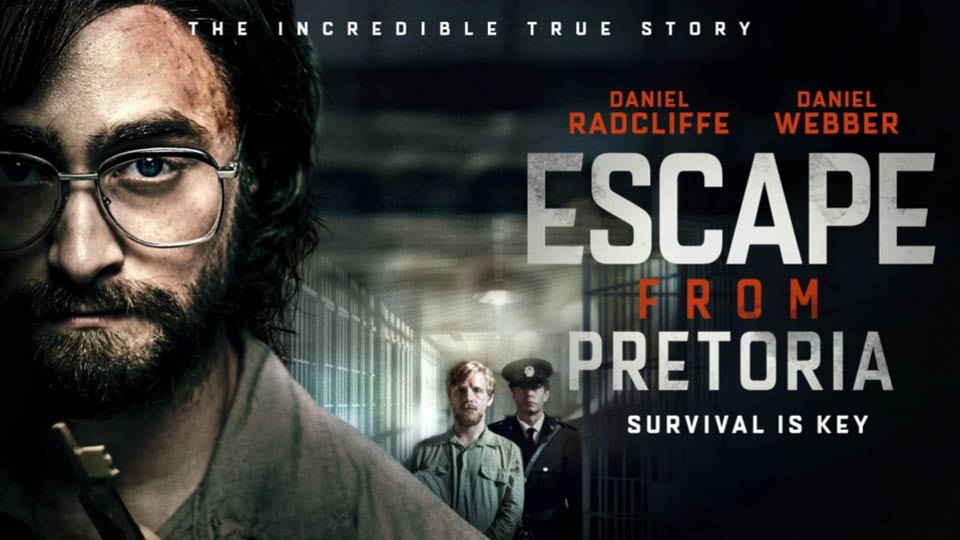
International work raises the number of possible failures: unfamiliar crews, time zones, standards, permits and unreliable connections. PremiereTV says it has worked in 15 countries and more than 20 international cities. For the Daniel Radcliffe film Escape from Pretoria, it partnered with The Switch, using the latter's London studio, crew and low-latency transatlantic network. The arrangement exposes the business model. PremiereTV does not need to own every studio. It needs to know which partner can make a particular production boring in the best possible way.
There is no public rate card. A 2021 industry listing invited prospective clients to request a strategy that fit their budget. That makes sense: a virtual radio tour and an international live video production are not the same product merely because both contain interviews. The quote will move with the number of markets, studio or remote setup, crews, transmission, editing, distribution and the number of deliverables. The buyer is paying to remove coordination risk under a deadline.
The parts worth stealing
A smaller organization can borrow the logic without renting a satellite. Start with the person, not the channel. Find someone who can answer the obvious question twenty times without sounding embalmed. Tie the pitch to a moment the audience already understands. Offer journalists a clean, tightly scheduled conversation. Record material that can be cut into more than one format. Define success before launch: completed interviews and usable placements are firmer measures than theoretical impressions.
The method becomes weaker when the guest is stiff, the hook is thin or the targeted outlets do not serve the intended audience. Multiplication does not improve the original number; twenty dull interviews remain dull. It also works differently for controversy, where rapid repetition can magnify a poor answer, and for stories that require investigation rather than a packaged guest. The production system can distribute attention. It cannot manufacture trust on its own.
PremiereTV also funds a quieter kind of distribution. Through a relationship with The Conservation Fund begun in 2008, the company says it financed 7,000 trees and 20 acres of restored forest over 14 years. It is an oddly appropriate side project. The day job is taking one source and branching it across a network. The trees simply make the metaphor literal.