The refrigerator is an adversary political consultants rarely put in a campaign plan. Eric Jaye had noticed it anyway. When television commercials came on, people left the room. An advertiser could pay to appear on the screen while the intended viewer went looking for something to eat. The transaction was complete. The attention was elsewhere.
In a 2016 interview, Jaye described this problem to Roll Call while explaining I Agree to See, a project launched by his firm, Storefront Political Media, in August 2013. It collected political ads for people who actually wanted to watch them. Somewhere in America, apparently, there was an audience for the commercial break.
“The audience is out, they’re blocking us and they’re very skeptical.”Eric Jaye · Roll Call · 2016
That experiment offers a useful entrance to Storefront. Its work involves an ordinary commercial puzzle with unusually consequential customers: how do you get a message heard, and how much human effort can you afford to spend doing it?
A consultant before the browser tab
Jaye arrived at that puzzle through advance work, labor organizing and political journalism. He worked at Clinton Reilly Campaigns, eventually becoming senior vice president and creative director. He founded Terris and Jaye in 1990, then Storefront in 2001. Software was a later development in a career already organized around messages, people and practical execution.
The firm describes itself on LinkedIn as a Democratic consultancy that combines media with campaign management. That combination matters. A candidate may need an advertisement, but also someone who can make the advertisement fit the rest of the campaign. A beautiful object delivered into a disorganized operation remains a beautiful object.
The Bay Area background supplied an education in the labor behind public visibility. In a 2005 Capitol Weekly account, Jaye described Gavin Newsom’s 2003 mayoral campaign as having 22 full-time employees, 600 precinct captains and 10,000 newly registered voters. Those were his reported figures for the campaign, not Storefront’s staffing numbers. They describe an operation extending far beyond a television studio.

The work travels in several envelopes
Storefront’s portfolio includes television and web work for Matt Mahan, commercials for Jane Kim and Ted Wheeler, and mail for Sam Liccardo and Annise Parker. Antonio Villaraigosa’s gubernatorial campaign appears through branding, website design and video. PG&E also appears. The customer list crosses the boundary between electoral politics and corporate communications.
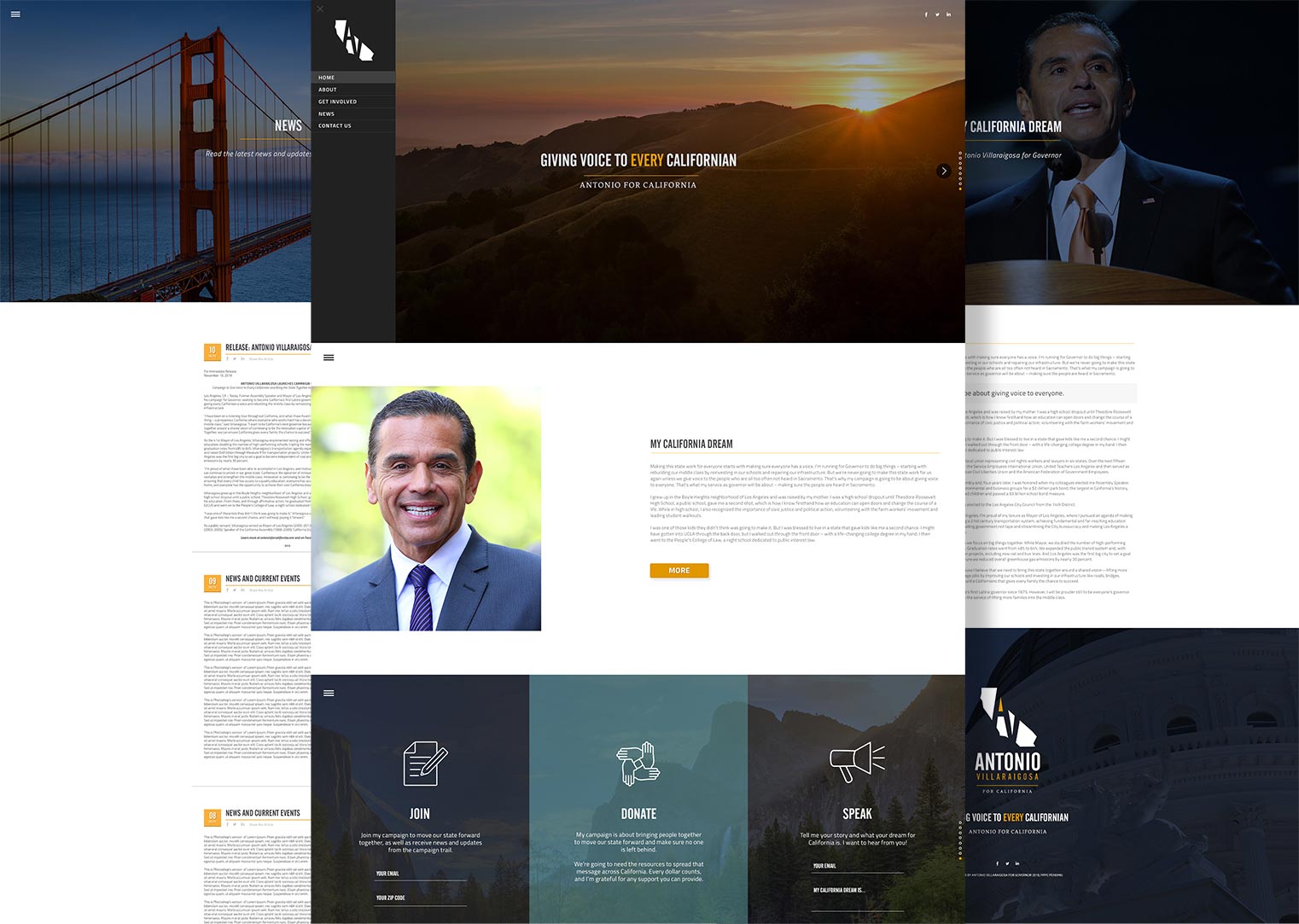
The offering covers strategy, production and delivery across television, radio, mail and digital media. Its commercial value lies partly in coordination: several formats can belong to the same assignment. A client commissioning the whole operation is buying decisions about how the pieces fit together as well as the pieces themselves.
The price tag needs a date
One public record puts actual dollars beside that work. For the reporting period from December 1, 2008, through February 28, 2009, San Francisco’s Ethics Commission listed Storefront’s work for the Newsom for California Exploratory Committee as campaign consulting and media production, distribution and placement.
The two amounts measure different things. The commission’s definition of economic consideration includes fees, commissions and reimbursements, among other payments. Receipts therefore cannot simply be read as the consultant’s take-home earnings. Nor does one committee’s spending establish the price of hiring Storefront today. The useful lesson for a buyer is to distinguish the professional work from the costs of producing and distributing it.
The customer too small for the calendar
A second problem emerged on the supplier’s side: experienced consultants have finite time. In a 2016 article, Jaye and strategist Bergen Kenny described small races their core business would have turned down. Storefront had developed self-service mail and digital businesses that could serve candidates for school boards, city councils and even sanitation districts.
Then customers supplied the surprise. Larger organizations, including the Oregon House Caucus and Ohio House Democrats, found uses for the template system in managing mail for incumbents and less-targeted races. Other consultants used white-label versions. A product intended to help the little campaign could also organize repetitive work for a bigger customer.
The authors characterized development costs, in capital and time, as high. Their account describes a change in the product’s understood use, prompted by customers. It is a more specific business lesson than the familiar instruction to innovate: watch which repeated tasks customers assign to something you built for another purpose.
Small race
Too little consultant capacity
Reusable tools
Mail and digital templates
Larger organizations
Repeatable work across races
A template still needs people
SpeakEasy Political, the related campaign business, makes the division of labor visible. Its published process begins with choosing a design and customizing the message, photographs and disclaimer. Producers and media buyers then launch the work. The company describes union printers handling mail, an internal team managing digital programs and dashboards reporting activity.
That arrangement retains professional execution while making parts of commissioning more standardized. Storefront Political Labs places SpeakEasy alongside Storefront Digital and I Agree to See in its account of tools intended to broaden access to campaigning. The projects address different obstacles: getting materials made, getting them distributed and finding someone interested enough to look.
There was also a modest publishing answer. Jaye and Clayton Koo produced the free guide 101 Steps to Victory: Run for Office and Win, promoted for prospective candidates entering the 2018 cycle. Koo had himself run successfully for school board. A first-time candidate could begin with organized experience on a page before commissioning an entire consulting team.
The corporate customer gets a new sign
The relationship with corporate work now has a separate public identity. Janaé Headly announced Prove It Media as a new brand within the Storefront family for corporate and non-political clients. She described the change as a clearer expression of whom the team serves, with the same people and values behind it.
Prove It’s website concentrates on brands in highly scrutinized industries and the problem of earning trust. Its team page includes Jaye and familiar Storefront colleagues. The professional histories are revealing: Luis Hernandez brings journalism and production experience; art director Anne Walzer worked in magazines and music packaging. Political communication has room for people who know how a record sleeve or a reported story holds attention.
For a prospective client, the distinction is useful. A political campaign can approach Storefront for campaign work; a corporate communications assignment has a clearly named brand to investigate. The development also gives a concrete form to the corporate demand Jaye and Kenny were already discussing a decade earlier.
Who stayed in the room?
I Agree to See brings the story back to the refrigerator. In 2016, Jaye estimated that its regular audience numbered about 250,000. He also acknowledged that people opting in were unlike the average voter. Those historical, self-reported audience figures describe interest in political material. They do not establish votes changed.
The distinction travels well beyond politics. A voluntary audience can help you learn what enthusiasts watch, while telling you much less about people who avoid the subject. Templates can make repeated work easier, while leaving the original judgment unresolved. Storefront’s experiments are most useful when read with those boundaries intact. Before admiring an advertisement, ask the small, inconvenient question that started this story: who was still there to see it?