A monkey nursing a tropical cocktail is an unusual calling card for a branding studio. In BOGDANOV’s Florida poolside mural, he makes perfect sense. The client wanted her garden to continue onto the walls, with flowers, foliage and a little mischief. The painted world accommodates the real one: plants, furniture and an elephant sculpture already on the patio. Nobody needed another rectangular advertisement.
That project offers a useful entrance to BOGDANOV, a family creative business whose work stretches from websites and identity systems to murals and tattooing. Its Brand Gravity Studio wants businesses to become recognizable across the places customers encounter them. A browser window counts. So does a wall.
The proposition has a price and a timescale. BOGDANOV advertises brand management starting at $12,000 for a year. For an owner weary of commissioning disconnected graphics, the attraction is continuity: somebody takes responsibility for making the pieces belong together. The harder question is whether the business will give that person enough authority to do it.
The bill is for a year of decisions
Brand Gravity Management covers identity foundations, digital presentation, physical applications and continuing oversight. The advertised scope reaches from logo variants and typography to image treatment, signage, menus and vehicle graphics. BOGDANOV describes a twelve-month commitment because recognition needs repeated, consistent use.
Published starting price / 12 months of brand stewardship
Approximately $1,000 per month when divided by 12. This is an annual-price comparison, not a stated monthly billing option.This is professional services sold through an ongoing relationship. Other work is scoped through proposals. The buyer is paying for judgment as well as production: which version of the identity belongs on a sign, how a website should organize information, what the next campaign should sound like.
There is a practical distinction here. A freelancer can produce a perfectly good logo. A web specialist can deliver a capable site. The coordination problem belongs to whoever hires both. BOGDANOV’s proposition places more of that coordination inside one studio. Its appeal depends on how much fragmentation the client actually has.
A business commissioning a single, tightly specified asset may have little reason to buy a year of oversight. A restaurant revising its menus, website, photography and street presence has more decisions to reconcile. The annual arrangement makes sense when those decisions keep coming and someone on the client side can approve them.
The logo survives. The welcome changes.
The Courageous Women Association project makes the studio’s argument more tangible than its gravitational vocabulary. In a February 2026 case study, BOGDANOV describes a mark that places a woman’s profile in the negative space of the letters CWA. The studio says that identity has remained unchanged for more than twenty years.
The website received a different verdict. An earlier opening video showed a woman in distress. For the 2026 redesign, the team reconsidered leading with alarm and chose a gentler introduction: hopeful imagery, clearer mobile reading, softer graphic transitions and rounded controls. The familiar identity remained.
The useful lesson is selective change. An organization can preserve the visual cue its audience knows while replacing an experience that no longer feels appropriate. Here, the studio’s account identifies the emotional framing as the element to rethink. A rebrand need not begin by putting every recognizable thing in the bin.
A law firm stops introducing its former self
For Blaxberg & Associates, the mismatch was organizational. The practice was becoming Yanchuck, Blaxberg & Tieder PLLC, with expanded leadership and an exclusive focus on personal injury. Its old website still presented the earlier business.
BOGDANOV’s November 2025 account describes a new typographic identity with a gold ampersand, a Wix Studio rebuild, photographs of actual attorneys and staff, and rewritten copy. Spanish-language access mattered because, according to the studio, more than 80 percent of the firm’s clientele were Latino. The redesign followed the audience as well as the name.
The case study also outlines future AI-enabled marketing automation. Those ambitions belong to the roadmap. The concrete design decisions are easier to evaluate: replace generic imagery with the people clients will meet; bring the practice focus forward; make the language accessible to the community being served.
For a buyer, that is a useful way to read any technology-heavy agency pitch. Start with the visitor’s task. Then ask how each proposed feature makes that task easier.
A restaurant gets the keys
Le Central Bistro supplies another version of the problem. BOGDANOV’s August 2025 project account describes rebuilding the San Francisco restaurant’s website around its French identity, then connecting that presentation with marketing tools inside Wix. The studio lists email, social publishing, search advertising and analytics among the capabilities.
The telling detail is the handover. BOGDANOV says it trained the restaurant team to use the platform. That changes the relationship between a handsome launch and the ordinary work that follows it. Someone has to update the information, prepare the next message and understand what visitors are doing.
Client training rarely wins the biggest photograph in a portfolio. It deserves more attention. A site becomes useful through routine maintenance, and the people doing that work need more than a password. For a restaurant, ownership of the tools is part of ownership of its public face.
The family behind the many surfaces
Peter Bogdanov’s account begins with Perception Graphics, a screen-printing business that moved into identity and web work. The company dates its origins to 1993. Its historical portfolio includes digital projects associated with Hyatt and Pepsi; the broader studio presentation also names the NBA and U.S. Marine Corps.
Peter’s biography describes a career moving between commercial design and physical spaces. Legend Ink, the tattoo practice, remains part of the wider family of brands. This helps explain the interest in surfaces that cannot be closed with a browser tab. His creative responsibilities now include brand architecture, direction and emerging-media production.
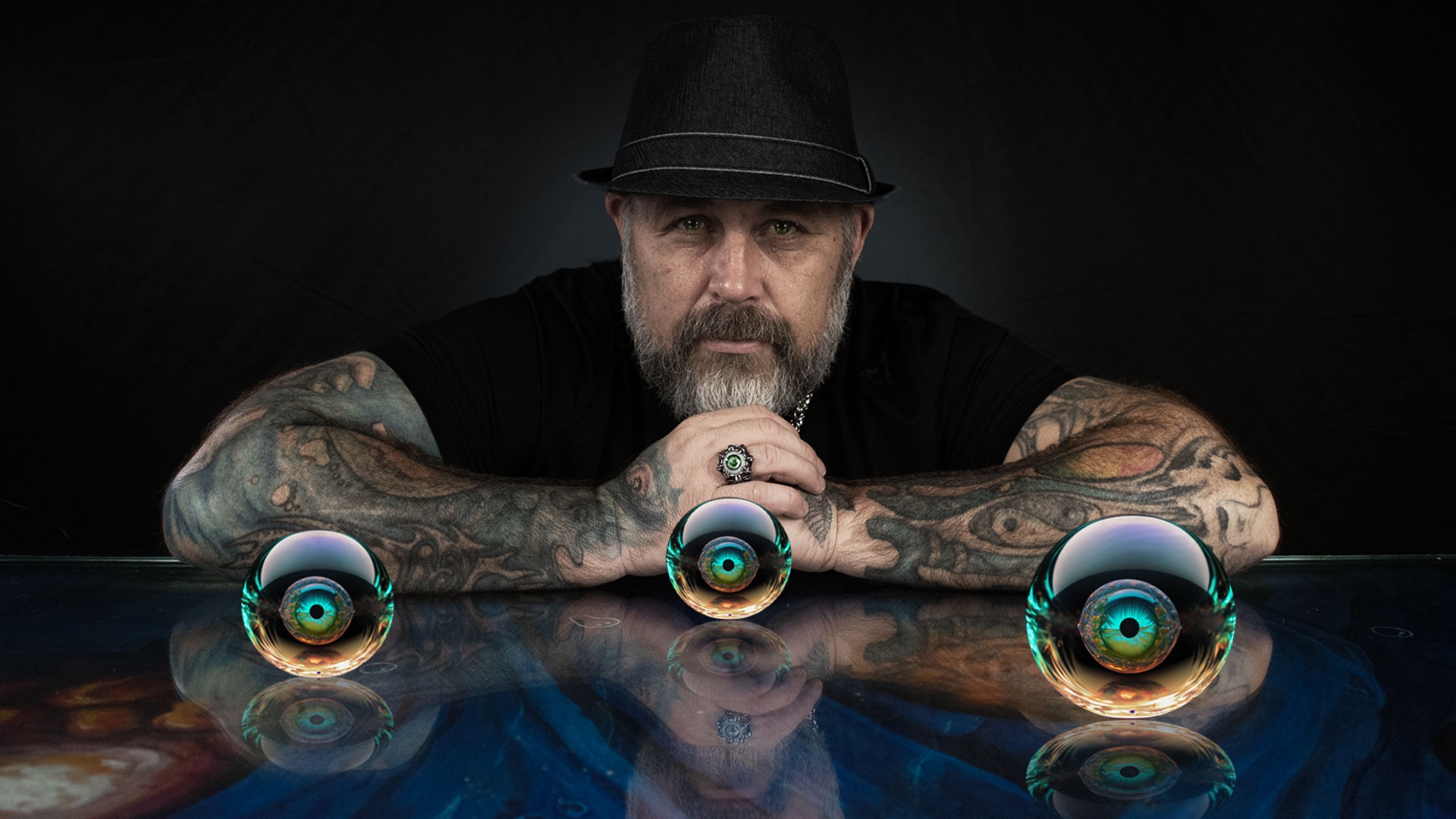
“A brand is a system, not a decoration.”
Peter Bogdanov / Founder & Creative Director
That line from Peter’s biography states the studio’s commercial premise: individual objects need rules and relationships if they are to communicate one identity.
Donna Adelita Bogdanov, co-founder and Chief Stability Officer, handles the work that makes creative ambition administratively possible. Her public responsibilities include finances, documentation, contracts, scheduling and client continuity. Her biography describes early financial support for Peter’s work. The family’s origin story makes room for the person protecting the budget.
Isaiah Bogdanov’s remit brings another generation into production. His published role spans Adobe and Apple tools, web support, architectural visualization and AI filmmaking. Murals can begin as digital mock-ups; film projects can combine conventional production with generative tools. The studio’s culture, as presented by the family, joins artistic discipline to operational and technical work.
The camera follows the paint
BOGDANOV also sells moving images. A September 2025 production article presents three tiers: Indie Essentials at $5,000-$10,000, Brand Builder at $15,000-$30,000, and Director’s Cut at $50,000-$100,000-plus. The proposed scope expands from a one-day shoot to more elaborate music, locations, effects and rollout work.
These are published package ranges, useful for understanding the studio’s intended market. They should be read as starting points for a brief. A shoot day, an original score and a multi-location production create very different workloads.
A separate mural-and-media proposal joins Liquid Walls with content production. The idea is to record the painting through time-lapse, photography and interviews, then turn that material into campaign assets. Its illustrative brewery story is a scenario, rather than a documented customer result. The copyable method is straightforward: plan documentation before the interesting work starts.
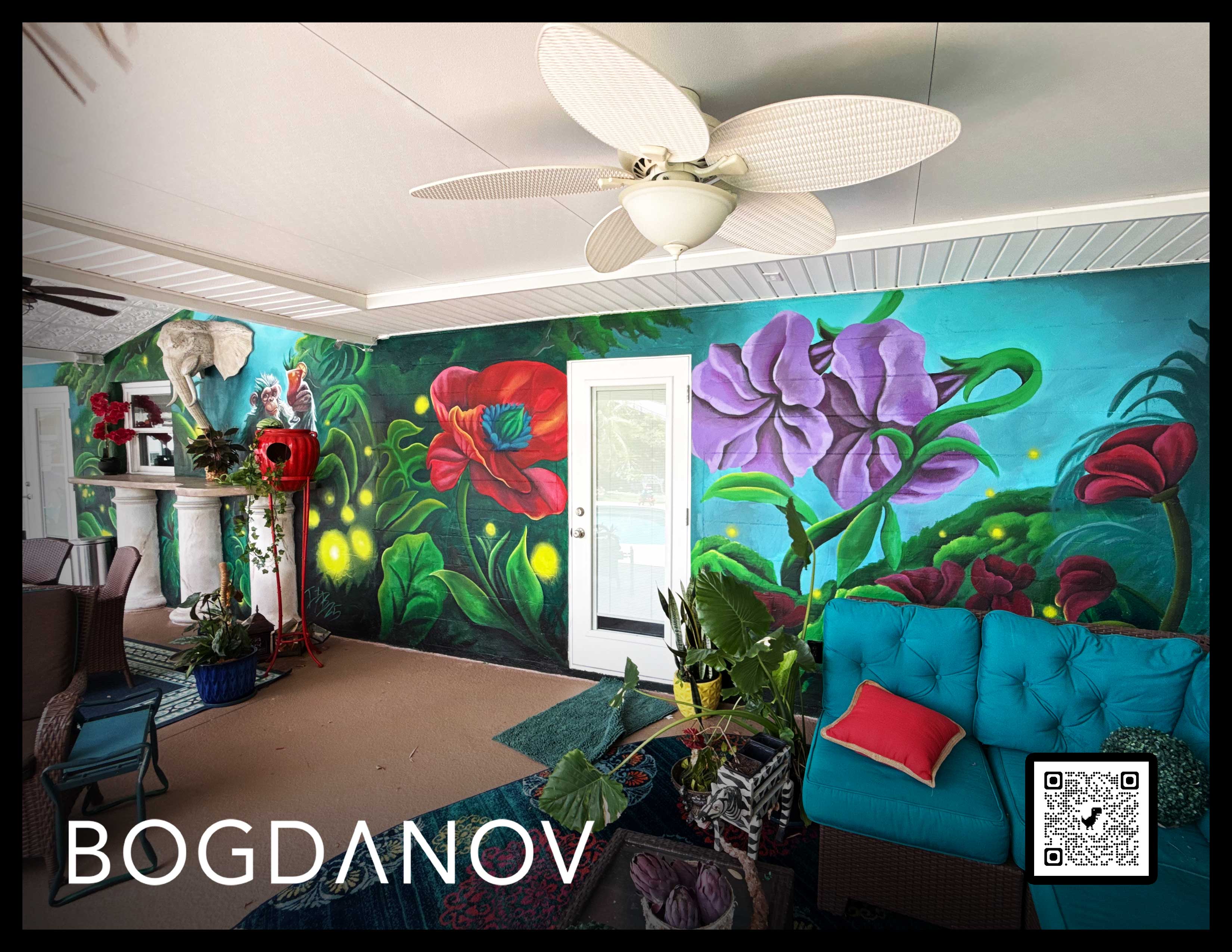
The poolside project shows that physical thinking at residential scale. Its character comes from the owner’s surroundings and preferences. A memorable environment starts with attention to the place. That is a useful discipline for commercial clients, too: inspect what customers already see before adding another layer.
The awkward question for a content studio
BOGDANOV’s most revealing recent writing concerns its own relationship with social media. In December 2025, Peter published an essay estimating that he had spent 44,400 hours on the platforms. It is his personal tally, not a measurement of the company’s labor costs. The essay describes diminishing reactions despite increasing effort and says he deleted the apps and archived accounts.
In a January 2026 follow-up, the studio reframed its ambition around physical presence, referrals and memorable experiences. It argued for making work worth documenting, with social posts following the activity. That is a notable position for a business that also offers content and campaigns.
The tension makes the pitch interesting. BOGDANOV still uses websites, AI tools and film. It is questioning the obligation to keep publishing simply to remain visible. For clients, the practical test is whether a proposed piece of content has a job beyond filling tomorrow’s slot.
The approach requires a business with something coherent to express and the patience to express it repeatedly. Consistent graphics cannot repair a confusing offer or an unreliable service. But when the underlying business works, coordination is a real task. BOGDANOV wants that assignment: the continuing work of making the sign, the site and the room introduce the same place.