The most revealing sentence on Fuente Latina's website is also the strangest: "Fuente Latina is not a news agency." This sounds like a bakery announcing that it does not make bread. The organization arranges interviews, assembles press kits, translates material, pitches stories, produces video, trains journalists, and takes reporters into the field. Yet the disclaimer is exact. Fuente Latina does not primarily want the byline. It wants to make the byline possible.
Imagine a producer in Miami who needs an Israeli expert before the evening broadcast. Or an editor in Madrid trying to cover a breaking story from a region where the newsroom has no correspondent. The usual choices are expensive, slow, or unreliable: fly in a crew, find a freelance fixer, work the embassy phones, or rewrite what an English-language outlet already reported. Fuente Latina inserts itself before that compromise. Its product is not merely information. It is information attached to a person who can say it in Spanish, on camera, before deadline.
The call from Madrid
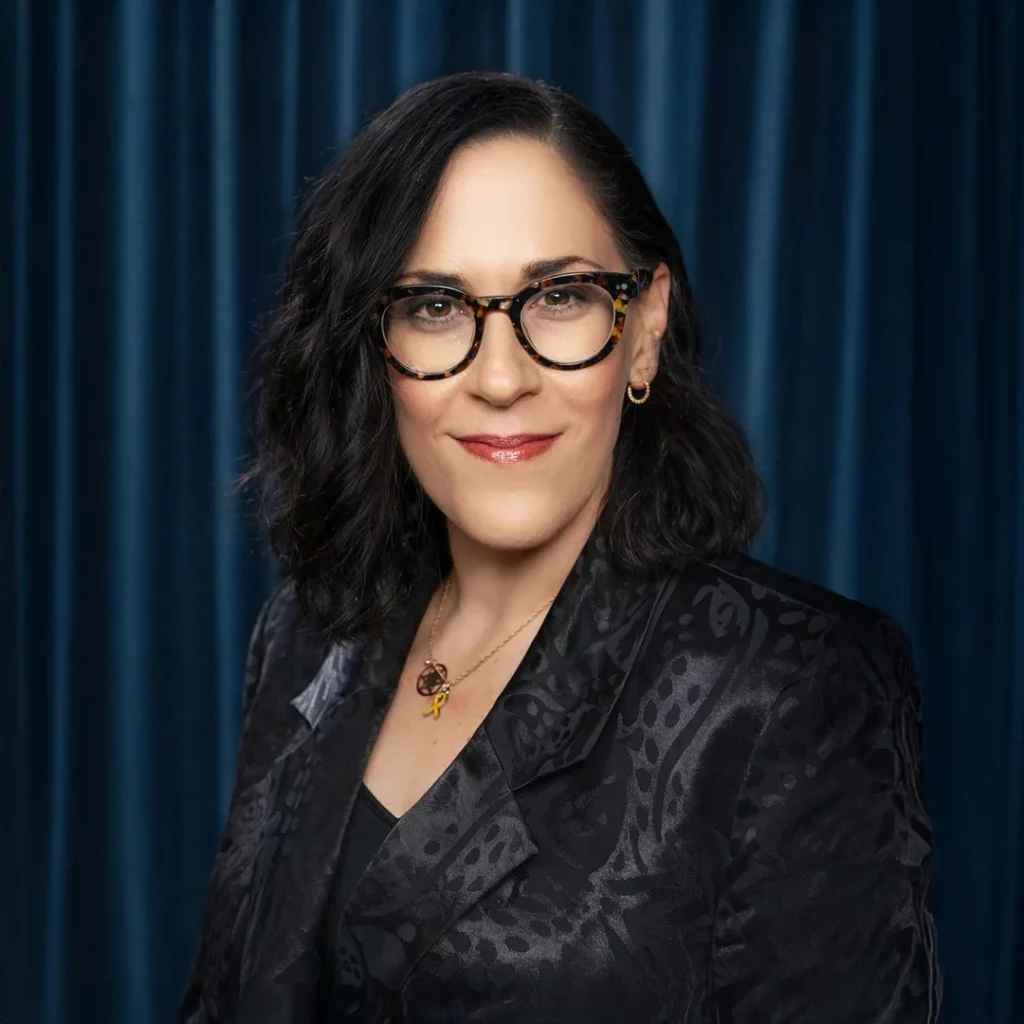
Leah Soibel noticed the gap from the inside. Born in St. Louis to Argentine parents, she spent seven years at The Israel Project, including work on its Spanish media program. Reporters would call from Madrid, Miami, or Mexico City asking for an interview with an Israeli startup founder or a member of parliament. The question was rarely whether the person existed. The question was whether somebody could connect the two sides quickly enough to make air.
In 2012, Soibel started Fuente Latina from her kitchen table in Jerusalem. This was not a romantic garage myth so much as a service desk with nowhere else to sit. English-language foreign correspondents had an ecosystem around them. Many Spanish-language outlets did not. Soibel's change of mind was practical: after years of fielding requests inside another organization, she concluded that Spanish-language access was not a side program. It was the whole job.
The first thing that had failed was not journalism. It was the plumbing. Sources, context, translation, and logistics were available, but not in the same place, not in the right language, and not at newsroom speed. Fuente Latina made that fragmented work into one operation.
“They can be in Madrid, Miami, or Mexico City - they call Fuente Latina and say, ‘I want to interview this Israeli startup.’”Leah Soibel, describing the job in 2020
What the organization actually sells
The menu begins with daily media support: factsheets, translations, press kits, video, audio, research, pitches, briefings, and interviews with officials or experts. For visiting crews, Fuente Latina handles production in Israel. For newsrooms that cannot send a crew, it can help produce the material remotely. It also organizes ground and helicopter tours, an unusually literal way to explain geography. Past passengers have included comedian George Lopez, Argentine television personality Marley, and former Panamanian vice president Isabel Saint Malo.
Then there are the fellowships. Since 2013, more than 600 journalists from the United States, Latin America, and Spain have joined week-long reporting programs in Israel; reporting at the end of 2025 put the count above 655 journalists and influencers. Fuente Latina covers travel, accommodation, and food. The fellow's obligation is work: at least two stories during the trip or shortly after it. The bargain is access in exchange for output.
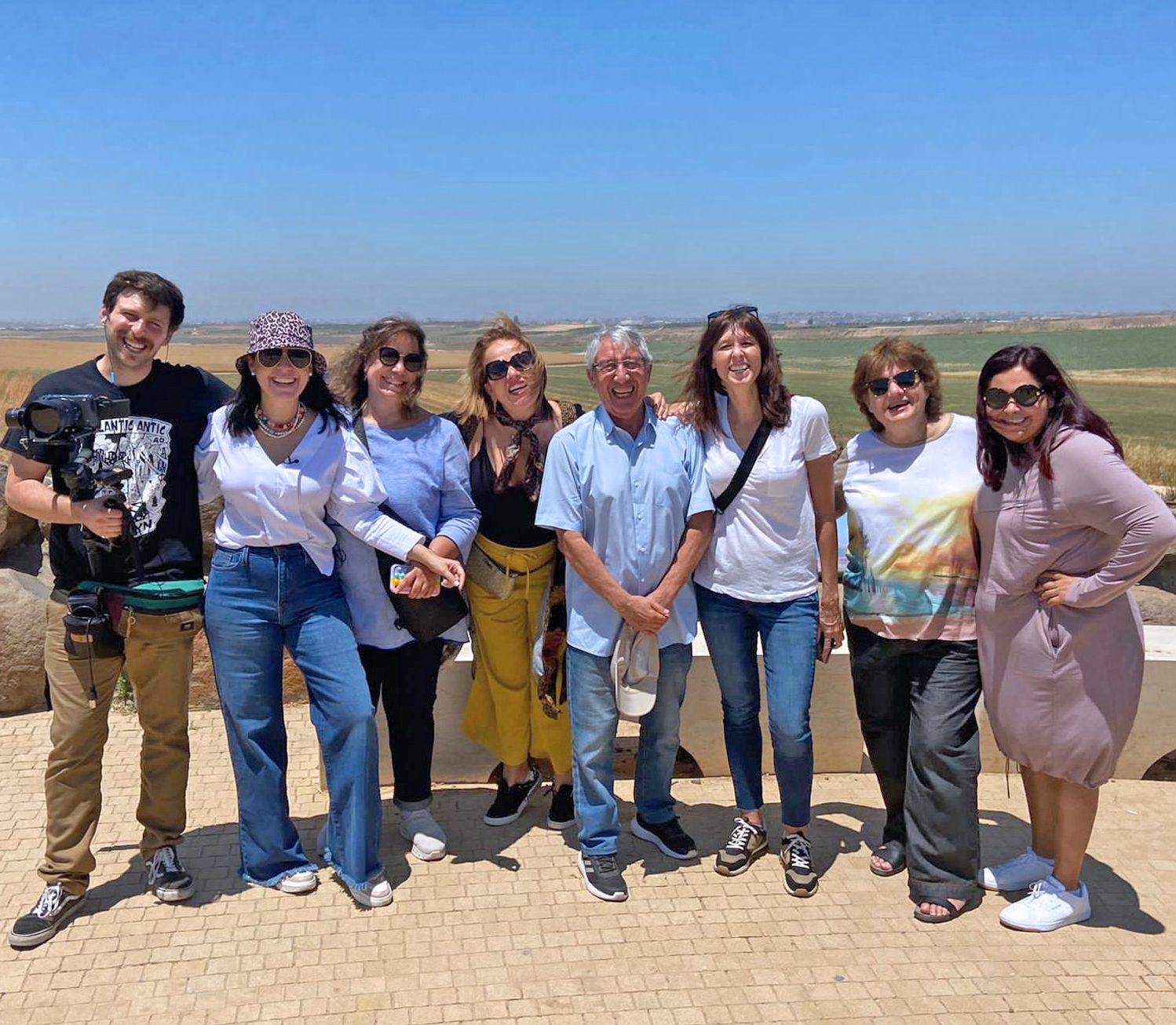
The organization now offers a student version with mentorship and publication opportunities. It produces culturally tailored digital video, operates the Latin-Jewish Media and Entertainment Alliance, and has expanded into longer-form work. In 2025 it produced 10/7: Witnesses of Terror, a Spanish-language documentary built around members of Israel's Spanish-speaking community, and launched the analysis podcast Desde la Fuente.
The customer is a reporter. The audience is everyone else.
Fuente Latina sits in a peculiar part of the media market. Its direct users are journalists, editors, producers, influencers, and increasingly students. Its indirect users are the people who watch, listen to, or read their work. The organization reports that supported stories have reached 300 million Latino news consumers. That claim is cumulative reach, not a count of unique people, but it captures the leverage in the model: help one producer at a major Spanish-language outlet and a small team can travel much farther than its own channels.
This is also the distinction from a conventional newsroom. A newsroom accumulates an audience and sells access to it. Fuente Latina accumulates relationships with people who already have audiences. Compared with a freelance fixer, it offers continuity and a standing international network. Compared with a wire service, it offers cultural and linguistic production rather than a feed of finished copy. Compared with state-backed Spanish networks, it is a US nonprofit that says it takes no government funding.
From kitchen-table experiment to $3.37 million nonprofit
Public Form 990 figures. In 2023, contributions supplied $3.28 million - 97.2% of revenue.
The economics explain the apparent price. A fellowship participant pays neither airfare nor hotel nor meals. The organization's website does not present its work as a commercial subscription or a menu of agency fees. Private donors and philanthropists underwrite it. Fuente Latina's 2023 filing reported $3.37 million in revenue and $2.21 million in expenses; contributions accounted for almost all revenue. The company is therefore better understood as donor-funded public infrastructure for a particular media market.
The useful trick - and the uncomfortable question
Any newsroom can copy the operational insight. Do not begin by producing more content. Find the repeated moment when somebody else's work becomes difficult. Package the translation, source booking, research, and logistics around that moment. Keep the handoff quick. Let the partner keep the byline. Then follow up after publication, because a network compounds only when a one-time favor becomes the next phone call.
The model depends on conditions that deserve scrutiny. Subsidized travel creates access, but access can shape attention. Fuente Latina's stated mission centers accurate coverage of Israel and the Jewish world and countering disinformation and antisemitism. It describes itself as nonpartisan and says facts should speak for themselves. Editors still have to ask the normal questions: Who paid? Which sources were offered? Which were absent? Could the reporter pursue an unwelcome angle? The fellowship works best when the sponsor opens doors and the journalist retains the judgment to walk through whichever ones matter.
Build for an underserved language, solve the deadline bottleneck, maintain a trusted source network, and make your partner look good without demanding the spotlight.
Strong local relationships, cultural fluency, fast response, stable donor support, transparent sponsorship, and journalists who preserve editorial independence.
The cleverest part of Fuente Latina may be hiding in its name. Fuente means a source of information, but also a fountain. One meaning is journalistic; the other describes distribution. Fuente Latina supplies the source, then watches somebody else's story flow outward. The organization does not need to become the newsroom. It needs the newsroom to know whom to call.