The first thing to fail was the newspaper. In 1972, the Newark News, then a large daily with a maritime editor named Barbara Spector Yeninas, stopped publishing. Yeninas had spent her reporting years learning the newly containerized waterfront: the people, the hardware, the grudges, the difference between industry noise and actual news. The presses vanished. The beat did not.
Two years later she made that knowledge billable. Barbara Spector Yeninas Associates opened on August 1, 1974, to explain shipping to a world that depended on it and barely understood it. The name shortened to BSY Associates, or BSYA. The proposition remained unusually clear: if a port, carrier, terminal, chassis provider or trade group needed to be understood, hire the former reporter who already knew why it mattered.
“Shipping I knew.”Barbara Spector Yeninas, founder
The job nobody had named yet
Containerization was reorganizing commerce at planetary scale, but the companies funding ships, cranes, boxes and terminals were not necessarily natural storytellers. Yeninas saw an information problem hiding inside an infrastructure boom. The executives knew transportation. Reporters knew stories. Customers knew delays. Someone had to translate among them.
She had an alternative. The New York Times offered her a chance to revive its maritime coverage. Newly married, she reasoned that one person in the household should have normal hours, so she chose her own business. “It’s never been normal since,” she later joked. What changed her mind was not a pitch deck. It was the combination of a collapsed employer, an entrepreneurial itch and a market she could see more clearly than outsiders could.

A small agency with a very large map
Today BSYA is a boutique B2B communications firm based in Middletown, New Jersey. LinkedIn places it in the 2-to-10 employee range. Its client map is much larger: ocean carriers, ports, terminals, freight forwarders, equipment providers, rail and trucking businesses, logistics technology companies, associations and nonprofits. Past and current names published by the company include Evergreen, Port Houston, Port of Hamburg, SeaCube, Trade Tech, Consolidated Chassis Management and the Maritime Association of the Port of New York and New Jersey.
The service list looks familiar - public relations, brand strategy, websites, advertising, social media, crisis communications and media training. The distinction is not a clever new format. It is accumulated context. A generalist can write a release about a refrigerated container. A specialist knows which trade editor will care, what a shipper will question, how a port will frame it and which claim will collapse under scrutiny.
The transferable playbook
That last step matters to the business model. CEO Lisa LoManto Aurichio has described how small projects became six-month retainers, then broader year-long assignments. At a boutique, the person who wins the account also tends it. Aurichio credits that continuity with helping her double the agency’s size in three years. The firm has not published revenue, funding or a valuation. It sells judgment and execution, not software licenses.
The dinner is also a distribution system
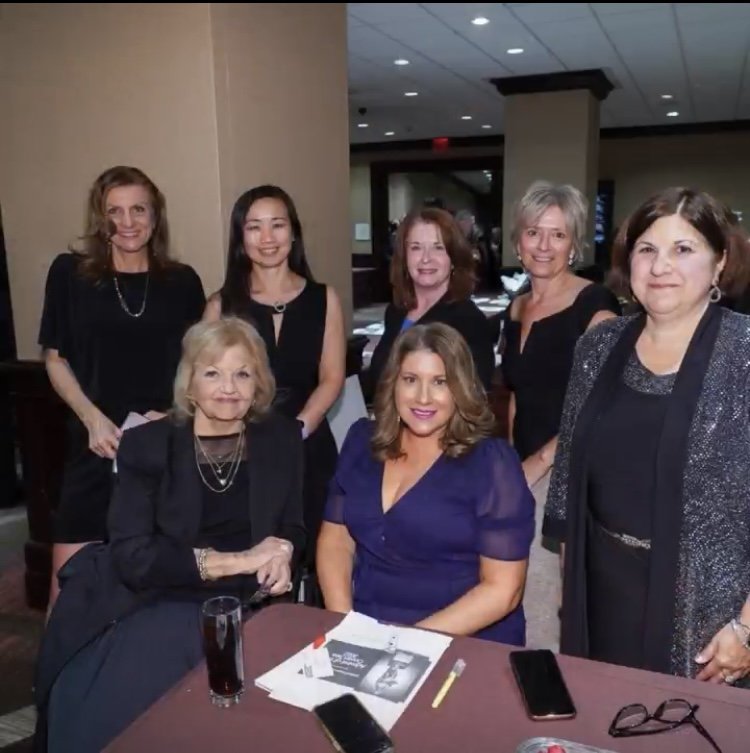
BSYA’s most revealing product may be the industry event. It has coordinated the United Seamen’s Service Admiral of the Ocean Sea Award since 1980 and the Containerization & Intermodal Institute’s Connie Awards since 1985. It also directs the International Maritime Hall of Fame dinner. These are ceremonies, but they are also physical networks: the shipowner meets the port director, the sponsor meets the customer, and the industry decides whom it wants to remember.
Port Houston offers a useful numerical test. Its Houston International Maritime Conference debuted in 2022 with 200 attendees. The port brought in BSYA for support the following year. By 2025, registrations had reached a record 850. The agency’s remit for the 2026 edition covers sponsorship and ticket sales, advertising, promotion, hospitality, panelists and entertainment. That is not simply event planning. It is sales, programming, reputation and logistics stitched into one temporary institution.
HIMC registration growth / 2022-2025
4.25× as many registrations. Port Houston says BSYA’s event expertise and industry connections supported the conference’s growth.
What expertise costs when the invoice is public
Agency fees are usually hidden behind proposals and procurement portals. Port Houston’s 2026 agenda is refreshingly specific. The recommended BSYA contract carries a $70,350 base amount, a 20 percent commission on sponsorship, advertising and ticket sales capped at $153,000, and up to $9,000 in reimbursable expenses. The maximum is $232,350.
A ceiling is not guaranteed revenue. The structure is more interesting than the total: a fixed fee pays for the work, while commission ties part of the compensation to commercial performance. Anyone copying the approach should copy that alignment, not merely the percentage. It works when the agency can influence the audience, the offer and the sponsor network. It is far less persuasive when sales depend on forces the agency cannot touch.
Succession before sentiment
The second thing that could have failed was the handoff. Aurichio began at BSYA in the early 1990s, left for senior work at Hertz, Shandwick and fragrance businesses, then returned in 2012. Yeninas named her president in 2018. When Yeninas died in May 2024, at 84, the plan was already moving. On the firm’s 50th anniversary that August, Aurichio became president and CEO; June Chin moved up to vice president of client services and events; Anna Maria Hubner became creative services director.
That continuity is part of the culture Yeninas built. She mentored women in a field where, early in her career, she was often the only woman in the room. Aurichio describes junior staff being asked to work beyond their comfort zone, and a team expected to develop genuine curiosity about technical subjects. Her operating belief is disarmingly practical: it is easier to create excitement about a subject after you have become excited by it yourself.
“There is a different energy when you are working for an industry you care about.”Lisa LoManto Aurichio, president and CEO
The price of being specific
There are limits to this model. Deep maritime fluency is not a shortcut to mass-consumer fame. Long relationships take years to compound. A tiny team can be unusually senior and unusually stretched. The method also depends on immersion: if an agency cannot enjoy learning why a chassis pool, cold box or port call matters, the specialist claim becomes costume.
But the lesson travels well. Choose a consequential industry that outsiders find difficult. Learn its nouns. Notice where its experts fail to explain themselves. Build gatherings as well as messages. Keep the person who sold the idea near the people delivering it. Plan succession while the founder can still shape it. None of that requires a waterfront. It requires the discipline to prefer useful depth over fashionable breadth.
The Newark News could not keep printing. BSY Associates kept reporting, in a different form, for the companies moving the boxes. The firm’s durable product was never publicity alone. It was the ability to look at an industry everyone uses and few people see, then tell the room where to look.
Go down to the docks
Explore the company, its current work and the channels it maintains.