The most revealing sentence in Omnia’s sales pitch is not about creativity. It is about memory. Some clients, the communications consultancy says, have stayed since it was founded two decades ago. In public relations, where agencies are swapped after a difficult quarter or a new marketing director, longevity is a quietly dramatic claim. It suggests that Omnia sells something harder to replace than a press release: accumulated context.
The firm works in the thicket where insurance, finance, risk and technology overlap. These are industries crowded with abbreviations, regulation and products that resist quick explanation. Omnia’s answer is to keep the team compact and the knowledge deep. Its LinkedIn page listed 35 people in September 2026. They work across London, the United States and Singapore, under two names: Omnia Partners in the UK and Asia, and Omnia Paratus in the US.
“Paratus” means prepared. That is not a bad description of the product. A client is paying for people who already know which journalist covers the issue, which conference matters, which claim sounds inflated and which technical detail might become the story. A generalist starts with a glossary. Omnia wants to start with an opinion.
The firm with two names and one long memory
Omnia is a new name attached to an old working relationship. Its principals trace their collaboration through roles at Lloyd’s and EY, then Lucid Communications, then a period as part of Luther Pendragon. Beth Jarecki opened the US operation in 2010 with Caroline Wagstaff, a former Lloyd’s client. In 2023, the teams adopted the Omnia identity. The American half became Omnia Paratus - “prepared for all things” - while the UK business became Omnia Partners.
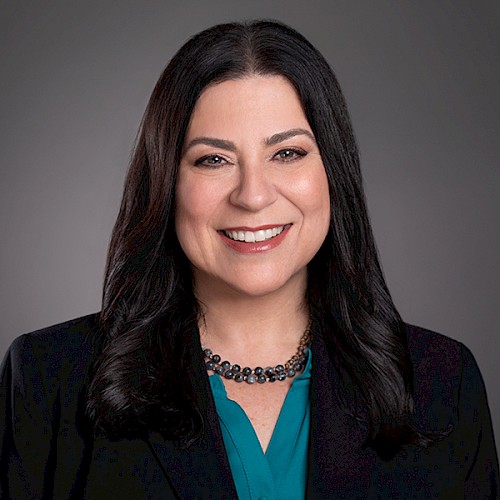
Jarecki’s résumé explains the company’s taste for difficult rooms. She represented Lloyd’s through the aftermath of 9/11, when it was the largest single insurer. She advised Nasdaq during its separation from NASD, helped create its first investor-relations programme and worked on everything from new listings to the launch of QQQ. Omnia’s US directors bring experience from NBC, Nickelodeon, Wiley, Cap Gemini Ernst & Young and specialist financial-services work. This is not a junior team supervised from a distance. Senior access is part of what the firm sells.
“Effective communication takes thoughtful preparation, an agile mindset, and the ability to pivot when necessary.”Beth Jarecki, announcing the Omnia identity
What the work looks like when it works
Consider ACORD, the insurance standards body. In 2018 it had new leadership, a new technology subsidiary and a noisy insurtech market full of competing claims. The pieces existed; the system did not. Omnia reorganized the media-relations process, identified useful thought leadership and established a steadier flow of commentary. The firm says ACORD’s media mentions nearly doubled year over year. More important, ACORD moved from appearing occasionally in a conversation to helping frame it.
AEGIS London had a different problem. It wanted to put its London Market business on the map. Omnia decided the first thing to change was the company’s social posture. LinkedIn became the primary outlet; posts acquired visuals, human interest and employees worth noticing. Omnia says the account’s presence expanded tenfold. The lesson is pleasantly ordinary: people are more interesting than announcements about people.
For Lloyd’s, the assignment was translation. Omnia helped create short “Purpose Stories” about supply chains, geopolitics, ESG and specialist insurance products. More than a dozen went live in 2022. The format replaced technical distance with plain language, showing what the market did and why it mattered. For Baker Tilly International, the work widened: positioning a new global CEO inside and outside the organization, advising on reputation and temporarily acting as CMO while the network recruited one.
Big Ticket’s 2023 launch shows the machinery in motion. Ahead of the Airmic conference, Omnia built a communications toolkit, prepared materials for partner organizations, briefed journalists under embargo, trained the CEO and president, coordinated a press conference and arranged on-site interviews. Omnia reports that the launch produced target-market coverage, social activity and new-business leads. The campaign was not one clever headline. It was sequencing.
The audience leaves fingerprints
In 2024, Omnia worked with the insurance information platform Slipcase to study what industry professionals were reading. The most followed subjects among a sampled C-suite audience were insurtech and technology, M&A, cyber, market moves and financial results. This is useful because executive thought leadership often begins in the wrong place: “What do we want to announce?” The better question is, “Where does our expertise meet something the audience is already trying to understand?”
That overlap is Omnia’s market position. Large network agencies can offer armies of people and offices everywhere. An in-house team offers intimacy and constant access. Specialist rivals offer sector knowledge. Omnia combines the boutique promise - senior people who know the account - with a three-region footprint and a long contact book in insurance and professional services. The trade is equally clear. This model is valuable when the subject is technical, the audience is defined and reputation matters. It is less naturally suited to mass-market consumer advertising, giant paid-media buys or work that needs hundreds of local activations at once.
The part another company can copy
- List the five questions your buyers are already discussing, not the five products you want to promote.
- Find the executive with a real opinion and challenge the first, safest answer.
- Build one useful argument, then adapt it for an article, interview, event, short video and social post.
- Measure whether the right people responded: journalists, prospects, employees and industry peers.
A consultancy sold by the year, not by the stunt
Omnia does not publish a rate card, revenue or outside funding. Its visible business model is the familiar agency mix of retained counsel and defined projects. Some briefs are bounded launches; others become long relationships. Liberty Specialty Markets’ “Unique Perspective” platform began with live events almost a decade ago, migrated online during the pandemic and continues today. That durability is more revealing than a campaign award. A communications idea survived because it kept giving the client somewhere intelligent to stand.
The company’s phrase “prepared for all things” contains a small contradiction. No firm is prepared for everything. Omnia’s real advantage is being prepared for a narrower set of things than most agencies, in greater depth: a difficult result, a regulatory argument, a new insurance technology, an executive who needs to be visible without sounding rehearsed. Specialization reduces the time spent learning the nouns. The saved time can go into deciding what is worth saying.
That may be the whole business. In a louder world, Omnia is not trying to make every client louder. It is trying to make the right sentence legible to the right room, just before the room decides what it thinks.
Go closer
Explore the firm, its people and the work behind the numbers.