At five in the morning, beside the Charging Bull in Lower Manhattan, a man sat above a tank of cold water pretending to be the worst person in your office. Commuters threw balls. A Fox reporter watched. Every successful hit delivered an awful boss to the drink. It was silly, visual and easy to explain before the first coffee of the day.
The stunt was built for Michelle McQuaid, a workplace expert with a new survey about bad bosses. Sixty-five percent of the employees questioned said they would choose a better boss over a raise. The statistic was strong. But statistics do not shiver on live television. So Maracaibo Media Group attached the research to National Boss Day, staged the dunk tank near Wall Street and offered MarketWatch an advance exclusive. Coverage followed across business press, radio, blogs and morning TV.
This is the useful thing to understand about Maracaibo. Its product is not merely publicity. It is the act of turning what a company wants to say into something a newsroom can use. The distinction sounds tiny. It is the entire business.
“Would a reporter care?” comes before “What do we want to say?”
Lynn Munroe started as a television news writer and producer. She later moved into corporate communications and marketing, including senior work at Reader’s Digest and Associated Press Television News, and helped younger companies such as Grandparents.com develop their positioning. In 2006 she opened Maracaibo from a computer at home.
That sequence matters. Newsrooms teach a ruthless habit: an idea must survive the attention of someone who owes you nothing. On its services page, Maracaibo describes taking an unremarkable product and looking for the part that is timely, current or surprising. Sometimes the answer is a modest messaging change. Sometimes it is a new campaign. Sometimes it is a dunk tank.

The firm now sells eight connected services: publicity, strategic planning, brand positioning, social management, media training, events, crisis work and what it calls AI-enhanced PR. The work ranges from writing a bylined article to coaching a nervous executive, coordinating a press event or triaging a public problem. It is custom agency work. There is no public menu of prices; prospective clients describe the assignment and ask for a proposal.
The dunk-tank recipe / copy this
- Begin with evidence. A survey supplied a clean statistic and made the campaign more than a stunt.
- Borrow the calendar. National Boss Day supplied urgency without inventing a news cycle.
- Make the idea visible. A symbolic bad boss falling into water worked on television before a word was spoken.
- Stage the first telling. An advance exclusive gave one outlet a reason to move early.
- Let every format do its job. Data fed business writers; spectacle fed broadcasters; advice fed interviews.
The first thing to fail was the familiar promise
Revo Sunglasses chief executive Cliff Robinson came to the firm after working with several high-profile PR agencies. They had promised fast results and disappointed him. His testimonial says Maracaibo changed his view of PR “in a very short time” by navigating the different audiences in Revo’s fan base and providing attentive service.
That account is revealing because it describes the competitive field from the buyer’s chair. The alternative is not just another boutique agency. It is a large agency selling access, a freelancer selling hours, an internal communications team, or the decision to buy ads instead. Maracaibo’s answer is senior judgment and continuity. The company says many team members have stayed more than a decade. For a client in a crisis, the value of a colleague who remembers the last crisis is difficult to put on a rate card.
“MMG always makes our stories and ideas shine through the lens of earned media.”Tori Labs-Barnett, then marketing director at Movement
The customer list is unusually broad for a compact shop: Natalie’s Orchid Island Juice Company, Baldor Specialty Foods, Movement climbing gyms, Revo, Doherty Enterprises, Blue Fountain Media, authors, athletes and nonprofits. The agency is most legible as a consumer-and-business communications firm rather than a specialist in one narrow vertical. Food, fitness, retail, travel and sports give it things to photograph and demonstrate; finance, technology and professional services need sharper explanation.
Big media is not always the big win
One of Maracaibo’s more sensible published arguments is that companies should stop treating national coverage as the automatic prize. If the assignment is to fill a neighborhood event, a community paper or local television segment may outperform a famous national logo. A niche outlet may bring fewer readers but more of the right ones. This is not anti-ambition. It is an insistence that reach and effect are different measurements.
Choose the outlet by the job / an illustrative fit map
The bars are a decision aid, not company performance data: prestige, authority and action are different goals.
The same logic explains the firm’s move into answer-engine optimization, or AEO. Traditional SEO asks whether a page ranks. Maracaibo’s pitch asks whether credible earned coverage helps a client appear in the answer produced when someone searches a question. The agency uses tools to identify recurring questions, shapes expert material around them and treats a press mention as an authority signal that can keep circulating through search, social and the client’s own channels.
There is a limit to this approach. It works best when the client possesses something worth discovering: evidence, expertise, a credible spokesperson, a visual demonstration or a genuine point of difference. It weakens when publicity is expected to repair a bad product, when leadership will not prepare for interviews, when an organization confuses a prestigious clip with customer action, or when a stunt has no fact beneath it. The tank was memorable because the research gave it a reason to exist.
Twenty years laterThe press clipping learned to travel
Maracaibo’s own case-study materials tell clients not to leave coverage sitting in an archive. A good placement can become a social post, an email to prospects, a trust marker on a website and a note to employees or investors. The press hit is raw material. This is the agency’s business model in miniature: earn credibility once, then put it to work in several places.
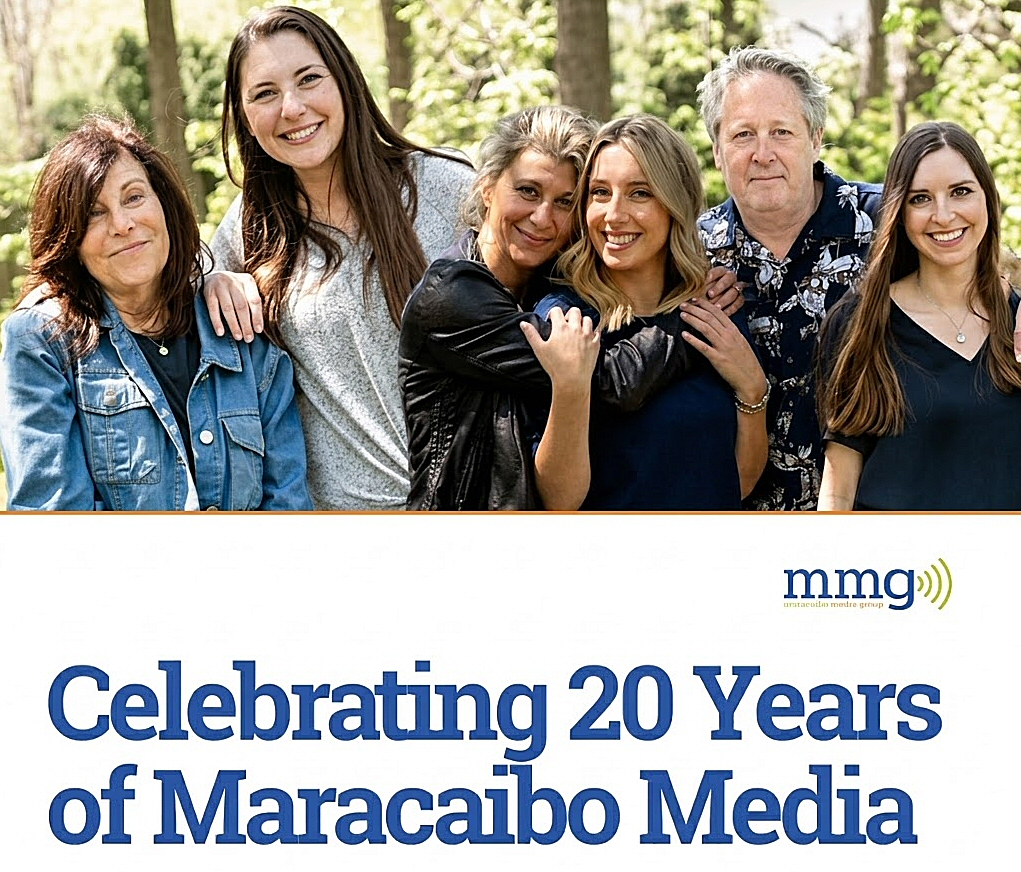
In 2026 the company marked its twentieth anniversary and an expanded presence in Denver, adding to a network that has included New York, North Carolina and other markets. Its headquarters remain in New City, outside Manhattan. The team’s public self-description is disarmingly domestic: pizza on Fridays, laptops by the pool in summer, people scattered across regions. The name itself came not from the Venezuelan city but from a reef in Mexico where members of the team liked to dive.
That informality should not obscure the craft. The memorable Maracaibo campaign has a hard skeleton beneath the colorful surface: find a defensible fact, understand the audience, choose the right moment, train the person who must explain it and design the event for the medium that will carry it. The boss falls into the water. The story, properly built, stays afloat.